
Foreign affiliate networks generally fall into four types: broad aggregators, vertical industry networks, CPA performance networks, and in-house merchant programs. Approval rules, payout thresholds, settlement cycles, and the metrics worth checking vary significantly.
Once a website, blog, YouTube channel, or social media account has steady traffic, turning that traffic into revenue becomes an unavoidable next step. Compared with contacting advertisers one by one, joining a foreign affiliate network has a relatively low barrier to entry and clearer settlement rules: the platform connects merchants, tracks conversions, and pays commissions, while the publisher focuses on recommending the right products to the right audience.
The difficulty is that affiliate networks differ far more than many people expect. Some dashboards contain thousands or even tens of thousands of merchant programs, some focus only on software and SaaS, and others do not sell products at all, paying instead for registrations or form submissions. Choosing a network based only on commission rates can easily lead to a poor fit.
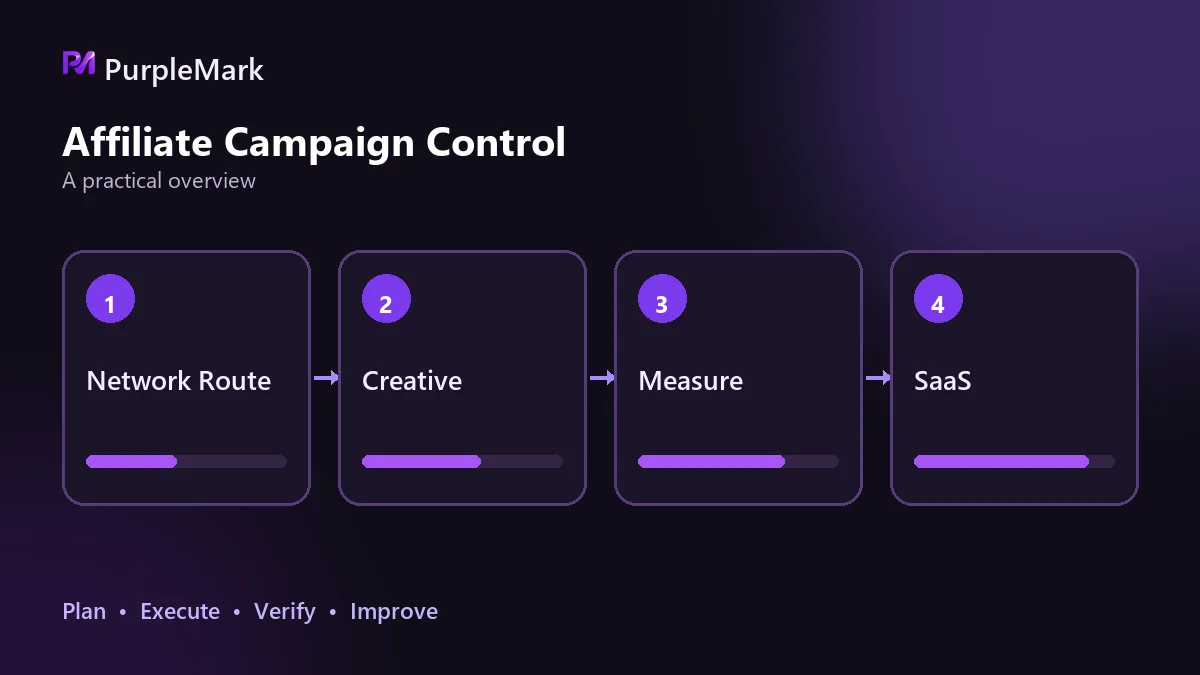
Where an affiliate network sits in the chain
An affiliate network is essentially an intermediary platform connecting merchants and promoters. Merchants list products and commission plans, promoters use unique tracking links, and when users complete specified actions such as purchases, registrations, or downloads, the promoter earns a commission while the platform handles ad management, conversion tracking, and settlement.
You can think of it as the product-selection and payment backend of a commerce promotion chain: you bring traffic with purchase intent, while the platform provides the merchant catalog, link tracking, and payouts. The difference is that affiliate conversions are not limited to orders. Form submissions, trial registrations, and software subscriptions can also count.
Four payment models
Before choosing a network, first understand how commissions are calculated, because that determines the revenue structure.
| Model | Full name | Settlement basis | Characteristics |
|---|---|---|---|
| CPC | Cost Per Click | Paid per click | Low unit value but fast volume, suitable for high-traffic content placements |
| CPM | Cost Per Mille | Paid per 1,000 impressions | Based on exposure rather than actions, suitable for brand-oriented traffic |
| CPS | Cost Per Sale | Revenue share based on sales | Income is tied to completed purchases, and commission rates are often higher |
| CPA | Cost Per Action | Paid for a specified action | The action can be registration, download, or form submission, not only a purchase |
Most networks focus on CPS and CPA, while some merchants also offer CPC or CPM. Before choosing, determine whether your visitors simply consume content and leave or whether they have clear purchase or registration intent, then look for a network with a matching payment model.
Four types of affiliate networks
By operator and product structure, common affiliate networks can be divided into four types. Their approval and settlement rules can differ substantially.
Broad aggregator networks: many merchants in one dashboard
These networks cover industries such as retail, e-commerce, finance, travel, and local services. Merchants range from major brands to small and midsize businesses, and some networks provide access to tens of thousands of merchant programs.
Their main value is convenience. People running multiple niche sites do not need to register separately for every independent program; they can promote different merchants from one dashboard. This model suits shopping guides, coupon sites, SEO content sites, and publishers that need a large pool of merchants.
For access, publishers usually register first and then apply to merchants individually. Each brand may approve or reject applications based on site quality, content relevance, audience, and promotion methods, so joining the network does not automatically grant access to every merchant. Some networks charge a small refundable security deposit at registration, commonly US$1 or the local equivalent, and refund it once the first payout conditions are met. Settlement varies as well. Some networks process payments twice a month, around the 1st and 15th, while others use NET 60, meaning valid commissions generated in March may enter the payout process only after the 60-day cycle has elapsed.
Vertical networks: digital products and SaaS
These networks concentrate on online courses, software, subscription services, and digital content, with B2B SaaS as a typical segment.
Two notable features are commission levels and recurring commissions. Merchants set their own rates, so there is no single network-wide percentage. Digital products and subscription software often pay noticeably more than ordinary physical-product e-commerce. Some subscription products also offer Recurring Commission, allowing promoters to earn additional commissions while the customer keeps subscribing. For sites that consistently publish software reviews, tool comparisons, or productivity-tool recommendations, vertical networks often align more closely with user search intent.
Two details deserve extra attention. First, the exact commission rate, Cookie Duration, and payout conditions are set by each merchant, so review the terms of the specific program instead of relying on a platform-wide assumption. Second, digital-product networks often have an easily overlooked rule: before the first payout, the promoter may need at least five sales and may also need to meet requirements concerning the distribution of customer payment methods. These networks usually support monthly payouts, while accounts eligible for direct deposit may sometimes qualify for weekly payments.
CPA performance networks: action-based payouts and stricter reviews
These networks carry many CPA and CPL offers. Users do not necessarily need to buy anything; a registration, form submission, app installation, service application, or another specified action can generate a commission.
Payout per conversion is often relatively high and monetization can be fast, so these networks attract media buyers and performance marketers. The trade-off is stricter screening. Applicants generally need to explain traffic sources, promotion methods, and previous experience, which makes approval difficult for complete beginners. Payout thresholds are also relatively high, commonly around US$100. New accounts often start on monthly payouts, and after the first payment is completed through an electronic payment method, eligible promoters may move to a weekly schedule.
In-house merchant programs: terms set by the brand
Another category is an affiliate program operated directly by a brand. It resembles a network in structure but has only one merchant, and the brand itself determines the commission rate, Cookie Duration, and permitted promotion channels.
The advantage is a shorter communication chain and a clear content direction because the product scope is narrow. It suits publishers that have already chosen a niche and plan to build deep, long-term content around it. The downside is a single monetization channel: changes to the product line or policy can directly affect income. To diversify revenue, publishers often add programs from the other types of networks.
Differences in approval and settlement
Viewed together, the four categories mainly differ in four areas.
Approval methods vary. Some networks let users start applying to merchants immediately after registration, others manually review traffic sources and promotion experience, and some ask for a website URL, traffic figures, and a business introduction first. Approval often depends on site quality and content relevance, not only traffic volume.
Payout thresholds can be as low as US$5 or as high as US$100, with many programs falling between US$20 and US$100. A higher threshold delays the point at which cash flow turns positive, so lower thresholds are often more practical at the beginning.
Settlement schedules include weekly, biweekly, twice monthly, monthly, and NET 60. Many networks also base actual payment timing on merchant order confirmation, returns and refunds, and the merchant's own payment timing. Clarifying these details before joining is easier than chasing delayed payments later.
Channel restrictions are also common. Many programs clearly list allowed and prohibited promotion methods, with special rules often applying to bulk email, cashback sites, or bidding on brand keywords. Violations can lead to unpaid commissions or, in serious cases, account suspension.
Five metrics to verify when choosing a network
It is not very useful to look only at which network offers the highest commission. A product paying 50% that almost nobody buys may earn less than a product paying 10% with a high conversion rate. The five metrics that really need checking are:
- Whether the product matches your audience. If the audience and product do not fit, every later optimization is compensating for the wrong foundation.
- Commission model. Payment per sale, per action, or on recurring subscriptions determines whether revenue is one-off or can accumulate over time.
- Cookie Duration. The attribution window directly affects whether a conversion that occurs after someone reads your content is credited to you.
- Payout schedule. Weekly payouts and NET 60 have very different effects on cash flow.
- Whether the platform allows your promotion method. This is easy to overlook and one of the most common reasons commissions are rejected.
Environment issues when running multiple affiliate accounts
When one promoter operates multiple affiliate accounts, websites, or social media account groups at the same time, a common technical issue appears: environmental linkage between accounts.
Many platforms use browser fingerprints, Cookies, IP addresses, and similar signals to determine whether multiple accounts come from the same operating environment. If several accounts share one browser environment and IP address, a risk-control trigger on one account may affect the others. A common response is to configure separate browser environments for different accounts, keeping fingerprints, Cookies, and IPs separate so that each account runs in a relatively isolated space. For larger account matrices, multi-account environment tools such as PurpleMark can assign a separate environment to each account, reduce the chance of linkage, and make centralized management and batch operations easier.
Environment isolation addresses the technical problem of accounts interfering with one another. It does not change a platform's compliance requirements for promotional behavior itself. Artificial traffic, fabricated conversions, or other prohibited methods of earning commissions can still result in account restrictions or rejected commissions when detected.
Tips for beginners
Start by getting one network working end to end: complete registration, choose products, generate links, track conversions, and withdraw earnings before expanding.
Commission percentage is not the only metric. A popular product with a moderate rate often earns more than an obscure product with a high rate.
Watch payout thresholds and settlement schedules. High thresholds and long cycles slow cash-flow recovery, so lower thresholds are more practical when starting out.
Keep your traffic data. Knowing which channels and content types produce the best conversions tells you where to add more content next.
Put compliance first. Avoid false advertising, misleading clicks, and fabricated conversions. Accounts are long-term assets, and one violation can undo a lot of work.
Frequently asked questions
What exactly is a foreign affiliate network?
An Affiliate Network is a platform connecting merchants and promoters. Merchants provide products and commission plans, promoters market them through websites, blogs, social media, and other channels, and when users complete actions such as purchases or registrations, promoters earn commissions while the platform handles tracking and settlement.
Do I need my own website for affiliate marketing?
Not necessarily. A self-hosted website is better for long-term operations and SEO accumulation, but many networks also accept social media accounts, YouTube channels, TikTok, Instagram, and similar sources of traffic. Choose according to your own situation.
How are commissions usually paid?
Common payment methods include PayPal, Payoneer, bank transfer, and check. Minimum payout thresholds are usually between US$20 and US$100, with monthly payment most common and some networks supporting weekly payouts.
Who is affiliate marketing suitable for?
Website owners, bloggers, cross-border e-commerce sellers, YouTubers, and social media creators can all use it. As long as you have a stable source of traffic you can reach consistently, an affiliate network can provide a way to monetize it.
Is it easy for beginners to make money?
Earnings depend on traffic quality and the fit between products and the audience. Start with a low-barrier network whose products match your content audience, verify the channel with real conversion data, and then expand gradually.
Summary
Affiliate networks standardize traffic monetization into several steps: product selection, tracking, and settlement. For content creators and cross-border sellers, this can be a repeatable path. The four network types have different strengths: broad aggregators suit shopping-guide and content sites, vertical networks focus on digital products and SaaS, CPA performance networks are geared toward paid acquisition, and in-house merchant programs suit publishers that want to go deep in one category.
The core principle in choosing a network is to match traffic type, target market, and revenue structure. Start with one or two networks, run the entire process, and use real data to decide where to scale. If you operate a multi-account matrix, setting up account-environment isolation from the start can prevent many later complications.


