
In Fully Managed mode, the platform takes charge of pricing, content, traffic, and fulfillment, while sellers focus on supply and inventory preparation. This article explains where the responsibility line sits, which sellers fit the model, the onboarding checkpoints, and why settlement is typically slower than self-operated selling.
The term Fully Managed can make it sound as if sellers have nothing left to handle. In practice, the division is closer to this: sellers make sure the products are ready and supplied on schedule, while the platform is responsible for selling them. Where that line is drawn largely determines whether the model is worth pursuing.
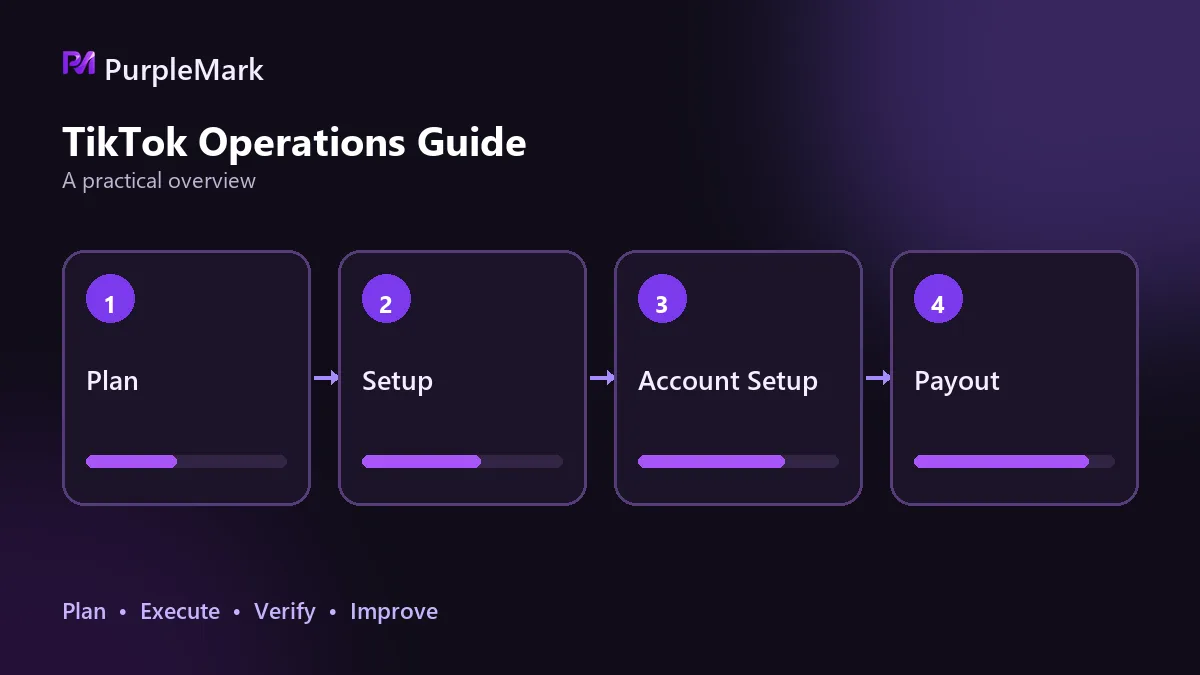
How responsibilities are divided
The boundary becomes much clearer when the full chain is broken down.
At the product-selection stage, sellers propose the assortment and the platform reviews it against the categories currently open. The platform decides what can be listed. Sellers provide product information and qualifications, including any category-required certifications and test documents. Pricing, content, livestreaming, traffic acquisition, and promotion cadence are led by the platform, with little seller involvement. Most fulfillment and after-sales work also sits with the platform, including warehousing, delivery, returns, and exchanges.
What remains with the seller is essentially three areas: supply, the pace of inventory preparation, and supply-chain stability. That may sound light, but each still requires results—stockouts, delayed supply, or quality fluctuations will show up directly in store performance.
The core shift in responsibility is that the seller moves from selling the product to keeping the product supplied. The capability requirement therefore shifts from operations to supply-chain execution.
What kind of sellers are a good fit
Factory-based merchants with stable capacity and a cost advantage are the strongest fit. They have products and room on price, but lack an overseas operations team; Fully Managed fills exactly that gap.
Supply-chain sellers with broad assortments and flexible sourcing can also fit well. If they are willing to trade margin for turnover and volume, multiple categories can spread the risk of testing.
Another group is new entrants that want to test a market at low cost. The main thresholds in Fully Managed are the assortment and qualifications, so there is no need to build a content team first. That makes the model useful for testing whether a market accepts a certain type of product.
By contrast, sellers whose edge is content and branding should be cautious. If they already have a mature livestream team and reliable original-content capabilities, handing those functions over means giving up their strengths; self-operated selling may offer better economics.
What checkpoints are there in onboarding
The official requirements do not set a hard size threshold for applicants, but the direction is clear: a seller has a basic foundation if it has stable supply-chain resources, some cross-border e-commerce operating experience, or a domestic business that wants to supply cross-border channels.
The process has several steps. First, register the intention to join and submit basic information and details of the assortment. The business-development side reviews the assortment sheet against currently open categories and uses the pre-review result to define the selection scope. After qualification review passes, both parties sign a cooperation agreement. After signing, log in to the collaboration system, submit trademark information, complete corporate verification, and apply for the required seals or signatures. Only after the trademark information is approved can products move into the recommendation stage.
The real bottlenecks are concentrated in two places: the assortment must match categories currently open on the platform, and the trademark and business-entity qualifications should pass review without rework. The time cost of redoing qualifications is much higher than the cost of testing products.
Settlement logic
Fully Managed does not follow a seller-controlled collection path. The platform collects customer payments centrally and settles with the seller within the settlement cycle under platform rules. As a result, the seller's finance work centers on two tasks: first, configure corporate verification, signatures or seals, and account information correctly in the collaboration system, because settlement cannot start before that is complete; second, reconcile on schedule and check settlement details transaction by transaction.
Working-capital usage is the most practical issue here. Sellers must fund inventory preparation first, while settlement follows the platform's timetable, so cash flow must cover the gap in between. Calculating this before entering Fully Managed is far more proactive than adjusting the budget afterward. The current platform documentation governs the exact settlement cycle and payment-term rules.
How it differs from self-operated selling
The difference is not simply higher or lower revenue; it is about who takes responsibility for each stage. In self-operated selling, product selection, content, advertising, customer service, and after-sales support all sit with the seller. The seller receives the return from the whole chain and also carries its full cost. In Fully Managed, the seller gives up pricing control and much of the profit space in exchange for lower operating labor requirements and lower trial-and-error costs.
Choosing between them depends on which capability is stronger. A seller with a strong supply chain but weak content may find Fully Managed simpler; a seller with strong content but an externally sourced supply chain can make better use of its strengths through self-operation. The two models are not mutually exclusive. Many merchants use Fully Managed for basic high-volume products while using self-operation for branding and higher-margin products.
Account management when running models in parallel
Teams managing multiple stores and market accounts at the same time should keep the accounts separated. Different stores should use independent profile data and login environments, rather than repeatedly switching logins in the same browser. At the lighter end this can trigger frequent security checks; at the heavier end accounts may be judged as being operated by the same person. In team workflows, assign accounts to specific people and retain operation records.
For teams that need to maintain multiple stores and market accounts at once, PurpleMark's multi-account environment capability can preserve each store's login state independently and manage them centrally, reducing problems caused by environments interfering with one another.
Frequently asked questions
A factory is not required to use Fully Managed, but a stable sourcing channel is. The model competes on supply-chain stability, and unstable supply directly affects store performance.
Settlement in Fully Managed is usually slower than a self-operated seller's own collection path, so sellers need to reserve sufficient cash flow. The platform's current rules govern the details.
Even after operations are handed to the platform, sellers still need to manage their accounts. Supply backends and settlement accounts remain on the seller side, so standardized configuration and permission allocation are still necessary.
Closing thoughts
At its core, Fully Managed exchanges pricing control for easier operations. To judge whether it fits, look at three things: whether you can accept platform-led pricing, whether the economics still work after margin compression, and whether you can withstand the pressure of inventory preparation and stock turnover. If all three checks pass, it can be a relatively low-barrier route into a market.


