
Ad network monetization depends on explainable, real traffic—not idle uptime. This guide covers three integration formats, the two things reviews actually focus on, how impression-, click-, and conversion-based payouts differ, why traffic is deducted, and which network types fit different traffic sources.
What ad networks do is not complicated: they resell advertisers’ budgets to traffic owners and keep a share. Unlike working directly with an ad platform or advertiser, you do not have to find advertisers yourself. You provide the ad inventory, while the network’s system handles matching and bidding.
The most misleading claim around this model is that you can earn a fixed daily income without a website or traffic. Ad revenue always starts with real visits. No visits means no impressions.
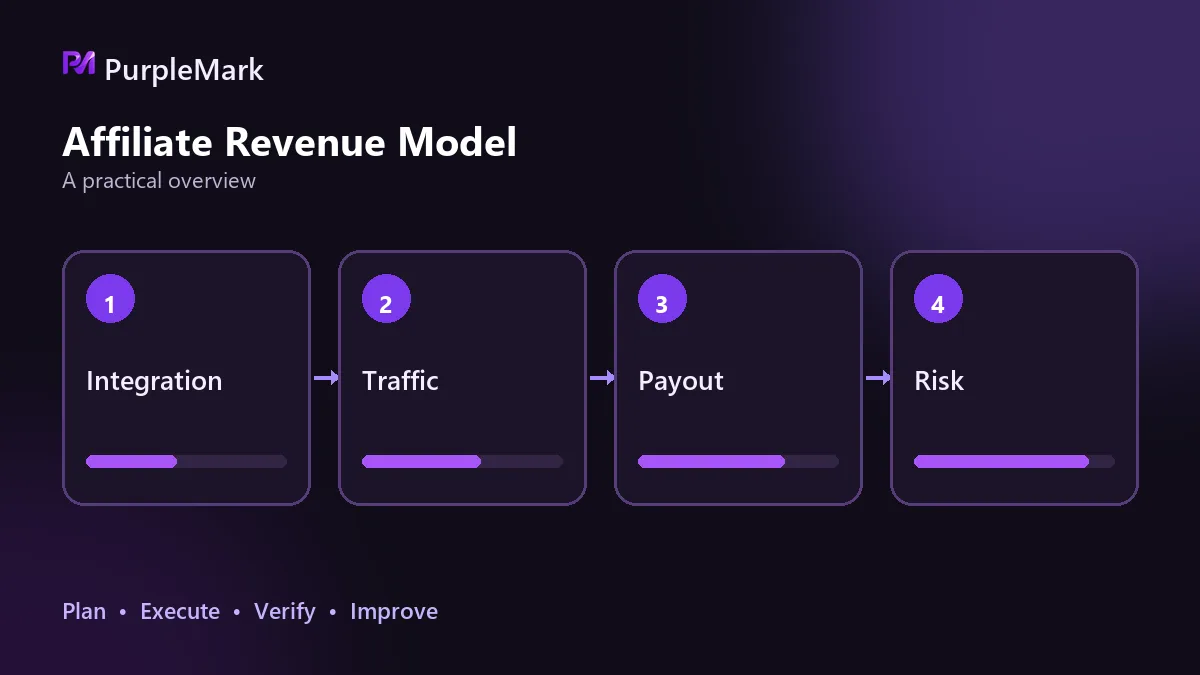
The basic integration process
When registering, choose the traffic-side role—that is, publisher—not advertiser. If you choose the wrong role, you may have to start over. Then enter your site URL and content category. Some networks also ask for a site description and audience profile. After approval, you receive a code snippet or an integration method to place on the site.
Being able to install the code is only the technical part. Whether it generates volume depends on whether people actually view the pages.
What the review process really checks
On the content side, the site must avoid restricted categories, pages must load normally, and the content should not be empty or obviously stitched together. On the technical side, the structure should not be chaotic or packed with redirects and overlays.
Traffic is the core of the review. You need to explain where visitors come from: search, communities, referrals from other sites, or another source. Unclear traffic sources are one of the most common reasons applications are rejected because they determine who will actually see the ads.
Traffic thresholds vary by network. Very small new sites can start with lower-threshold options to build a track record, then apply for stronger partnerships after they have enough data.
Three integration formats, each with a different cost
The most common format is an on-page ad placement embedded in a fixed position. It has limited impact on reading and usually offers middle-of-the-road rates.
Pop-ups and interstitials usually pay more, but they interrupt browsing. If a site depends on returning visitors, these formats need frequency caps—or may be better avoided—because lost users eventually reduce revenue too.
Another format is content supplied by the network and integrated into the site. It can look more natural, but you have less control and the page style can be pulled away from your own design.
Choose based on the site type. Content sites should prioritize standard ad placements; utility sites can test interstitials, but with clear limits.
Different payout models use different logic
Impression-based pricing is usually called CPM and pays per thousand impressions. You can earn even without clicks, as long as the impressions are considered valid.
Click-based pricing is CPC. If users see many ads but nobody clicks, revenue is zero, so ad placement and relevance to the page topic matter more.
Conversion- and lead-based models correspond to CPA and CPL, and some programs share a percentage of completed sales. These models can pay more per event, but conversions must be confirmed, payment cycles are the longest, and traffic intent matters most.
A single network often mixes several models, with different placements using different pricing. The amount shown in the report usually already reflects the network’s share rather than the advertiser’s original price.
Another deduction comes from invalid traffic. Networks filter repeated impressions from the same device and unusually dense clicking. Such deductions are standard in the industry, but they become especially visible when traffic quality is poor. If invalid traffic is too high, monthly earnings may be reduced; in serious cases, the partnership can be terminated and the balance frozen.
Match the network to the traffic
Search traffic has the clearest intent and suits networks priced by clicks or conversions. Landing pages and keywords need to match.
Content-site traffic tends to stay longer and fits display networks priced by impressions. Placements close to the main content usually work best.
Utility-site visits are short and action-oriented. Interstitial or redirect-based networks can generate more volume, but frequency must be controlled.
Community and push traffic is more impulsive and has weaker retention. It is better suited to conversion- or install-based networks rather than stable impression revenue.
Incentivized traffic is different. Users click to receive a reward, so conversion quality is naturally lower. Fewer networks accept it, deductions are higher, and it is not a good primary traffic source.
How to keep the partnership stable
Use one account for one operating entity, and clearly map sites to accounts instead of squeezing several sites into one account. Keep traffic sources explainable and avoid sudden overnight changes in channel structure. That matters more than any optimization trick.
If a team runs multiple sites, each site’s backend account should ideally have a separate login environment and network egress. If accounts are judged to be related because they share an environment, several sites can be affected at once.
Is this route worth using?
There is nothing inherently wrong with monetizing through ad networks; it is a standard way to turn traffic into revenue. Two extremes deserve caution: claims that you can make money without traffic, and advice to run many accounts in bulk. The first has no real revenue base; the second can lead to deductions and may put related accounts at risk.
Build the site properly, keep traffic sources clear, choose a network type that fits the site, and the rest is mainly waiting through the settlement cycle.


