
Platforms that pay rewards for watching ads do exist, but earnings are constrained by how advertising budgets are structured. This guide explains the platform-user revenue split, why each view pays so little, and four practical risks involving withdrawals, account reviews, task supply, and time cost.
Claims that you can spend a few minutes a day watching ads and reliably earn U.S. dollars have circulated in the online-earning world for years. The platforms do exist, and the ads can be genuine, but there is a sizable gap between the actual earnings structure and the promotional pitch. Breaking down the chain makes that gap easier to see.
A common version of the pitch goes like this: watch a 35-second ad and earn $0.30, get $0.46 for the second one, and reach $2.49 after five ads, all in three minutes. The same rules may also say that each account can watch only five ads within 24 hours. Put those two numbers together and the earnings ceiling is already clear.
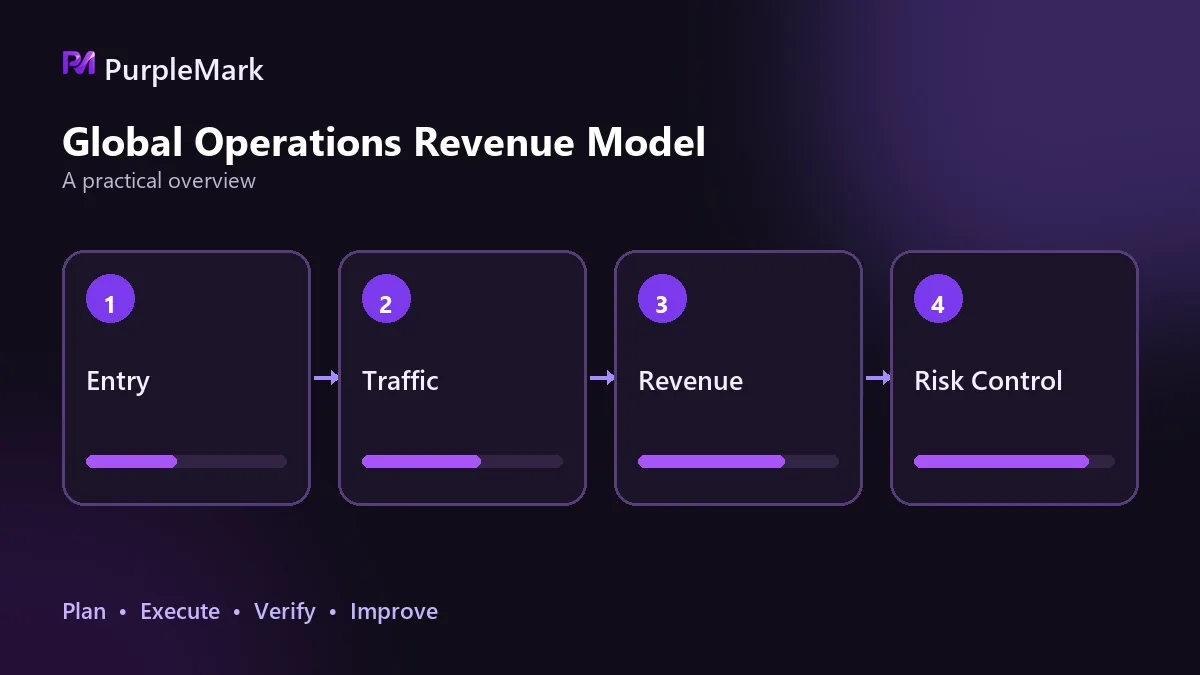
Where the money comes from
There are three parties in the chain. Advertisers pay for placements in exchange for users' attention and viewing data; the platform distributes ad tasks and keeps the difference between placement revenue and the user's share; viewers contribute time and attention in return for the reward allocated by the platform.
Much of the inventory on these platforms is brand advertising, such as international promotions for e-commerce sites or pre-roll ads on video platforms. At its core, this is still advertising priced by impressions. Impressions are basic inventory in the ad industry and are inexpensive by nature. Once the platform deducts operating costs, the amount left for a single view is naturally small.
So where does the claim of $2.49 in three minutes come from? Numbers like this are usually promotional subsidies during a campaign, or totals that include referral rewards. Subsidies are used to attract new users; once that acquisition phase ends, the payout terms tend to change with it. The five-ads-per-24-hours cap follows the same logic: the total amount the platform is willing to pay is limited.
How the platform and users split the money
The platform acts as a middleman, collecting placement fees from advertisers and paying rewards to users. The difference must cover servers, risk controls, payment channels, and profit.
The revenue split, settlement period, and withdrawal threshold are all decided unilaterally by the platform. Users cannot see what advertisers actually paid and have no bargaining power; they see only the number in their own account. When evaluating such a platform, an account balance should not be treated as income in hand. It is only a claim that still has to be settled.
Why the payout per ad is so low
The reasons are straightforward, and together these four constraints leave little room:
- Ads are priced by impressions, and a single impression is cheap to begin with;
- The platform deducts operating costs before anything is distributed;
- Task volume follows advertiser demand, so the task list can be empty when there are no active campaigns;
- Each account has a hard daily limit on how many ads it can watch.
The combined result is a clear but unstable ceiling on daily earnings per account. On top of that, rewards first accumulate as an account balance and can be withdrawn only after reaching a threshold. A balance and cash are not the same thing.
Four real risks
Withdrawal thresholds and rule changes
Early on, a platform may not clearly disclose the withdrawal threshold, fees, or settlement cycle, then reveal extra conditions only after users have accumulated a balance. More commonly, the rules change midway: the threshold rises, settlement takes longer, or the revenue split is adjusted. Before investing time, confirm the threshold and ideally test one small withdrawal. That check is usually worth more than watching a few extra ads.
Account reviews
To earn a little more, some people run several accounts at once. These platforms generally restrict users to one account per person, and enforcement is not based only on registration details. Overlapping device environments and network exits can also be used to link accounts, with the usual consequence being cancellation of all earnings and account closure.
The more practical problem is that the math still does not work well. The earnings base is already small, so multiple accounts add only limited upside, while a full balance wipeout is a concrete risk. Even if a tool such as PurpleMark gives each account an independent browser environment, that changes only how strongly accounts may be linked to one another; it does not change the earnings ceiling for a single account or the withdrawal rules.
Unstable task volume
Task supply depends on advertisers' campaign schedules, and those schedules are set by the market. During slow periods there may be no campaigns at all, regardless of how long you stay online or how often you interact with the platform. Expecting a fixed daily income is therefore not realistic.
Time costs far exceed the return
Count all the time spent watching ads, waiting for tasks to refresh, managing accounts, and handling withdrawals, and the hourly return becomes extremely low. The advertised payout per ad and the real hourly wage are two entirely different measures.
Three questions to ask yourself
- Where does the platform's money come from? If the revenue source is unclear, or cannot cover the payouts, the model does not hold up;
- Do the earnings match the effort? Calculate the real hourly return, not the advertised amount per ad;
- Is it easy to exit? Check whether withdrawals are available at any time, what the threshold is, and whether the rules are stable.
If you cannot answer even one of these three questions, the time investment is not justified.
Conclusion
The core issue with these platforms is not simply whether they are real or fake, but the gap between the earnings structure and the promotional claims. Low per-ad payouts, clear limits, and rules that may change are built into the model and cannot be fixed with operating tricks. Using spare time for activities with cumulative value is a different proposition over the long term.


