
Most affiliate-platform rankings sort by commission rate, but that order may not fit your traffic. Check offer quality, payout terms, tracking and attribution, support responsiveness, and compliance requirements, then weight them according to your traffic type.
After reading enough platform roundups, you start to notice a pattern: they almost all compare commission rates and then rank platforms from highest to lowest. But commission rate is only one variable, and it is usually not the one that determines how much money you actually receive.
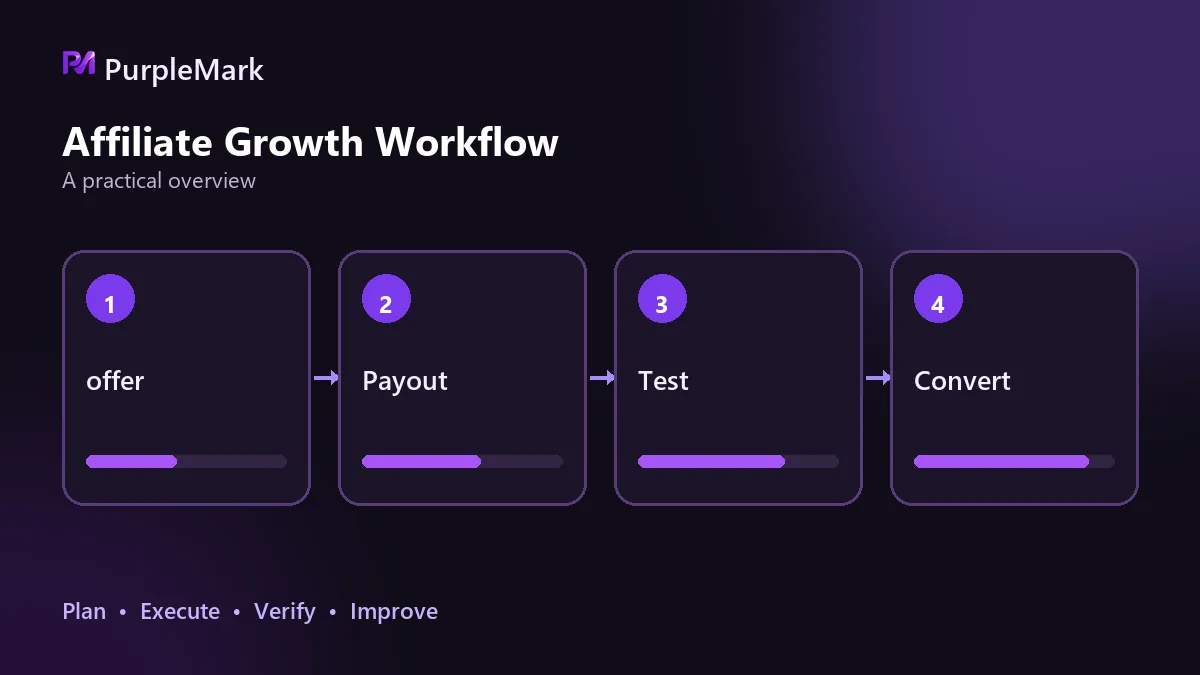
Offer quality
Start with what the platform actually has to promote and whether those offers really sell. Two numbers are worth asking about: roughly what conversion rate this category achieves, and how high its refund rate is.
High-ticket products naturally convert at a lower rate but pay more commission per order. Frequently purchased consumer goods convert more easily at a lower price and rely on repeat purchases for volume. Both models can work, as long as you evaluate the commission rate together with those two numbers instead of looking at the commission rate alone.
The impact of refunds is easy to underestimate. If a customer refunds, cancels, or fails review after placing an order, the platform will usually reverse that commission. A category can advertise a high commission rate, but if its refund rate is also high, the amount you actually receive may be cut substantially. So in addition to reading the written rules, it is useful to ask people who have worked in the same category for a while what reversal rates look like in practice.
Payout terms
- Minimum withdrawal threshold: If the threshold is too high, earnings may sit in the platform account for a long time, which is especially painful during an initial test.
- Payout cycle: Monthly, every two months, or even longer cycles create very different cash-flow rhythms.
- Whether there is a guaranteed floor: Some offers or partnership models provide a minimum settlement or guaranteed amount, while others provide none. This sets a lower bound on revenue and directly affects how confidently you can increase an ad budget.
You can clarify all three before registering. There is no need to wait until you have earned money only to discover that you cannot withdraw it.
Tracking and attribution
This layer determines whether your traffic is actually credited to you.
The Cookie window is a question of time: after a user clicks your link, how long can they wait before placing an order that still counts as your conversion? Windows can range from 24 hours to 30 days. For products with long consideration cycles, a short window can cause you to lose orders that your traffic helped generate.
Deduplication rules are a question of ownership: if the same user clicks two affiliate links in sequence, who gets credit in the end? If the same order appears across several channels, how is it deduplicated? When the rules are unclear, the most common outcome is that each party's backend data fails to match and you have no reliable basis for reconciliation.
Support and responsiveness
The key question is not whether there is an AM, but whether that person responds when something goes wrong. Ask specific questions: What is the process for settlement disputes? Who handles broken links or expired creatives? Will policy changes be announced in advance? Roughly how quickly can they respond across time zones? The way they answer these questions is itself useful information.
Compliance requirements
Review the platform's promotion policies in advance, especially whether paid search may use brand terms, whether social media and email channels are allowed, whether geographic restrictions apply, and whether creatives can be rewritten. Violating these restrictions often leads not to a simple deduction but to an account ban, which can wipe out all the volume you built earlier.
Match the platform to your traffic type
The evaluation dimensions are universal, but their weights depend on the kind of traffic you have.
For content sites and SEO that monetize long-term organic traffic, refund rates and Cookie windows matter most because users decide slowly and return risk falls on you. For paid acquisition that needs rapid validation, payout cycles and guarantees matter more because cash-flow pressure is higher. For email and owned audiences with repeat purchases, focus on percentage commissions and whether repeat orders continue to earn commission. If you are just starting to test, a low threshold, monthly payouts, and available offers in your category matter far more than a high headline commission rate.
So the order should be: identify your traffic type first, score candidate platforms across the five dimensions above, and only then treat commission rate as one weighted factor. Doing it the other way around means letting rankings make the decision for you.
One more point: plan your account environments too
If one team operates accounts on several affiliate platforms at the same time, keeping those accounts separate is a basic requirement. Use a fixed login environment for each platform and vertical so that shared environments do not create cross-account issues. This is also why many people use PurpleMark to create independent browser environments for different accounts: platform selection answers which platform to use, while environment management determines whether you can keep operating reliably over the long term.
Summary
To evaluate an affiliate platform, verify offer quality, payout terms, tracking and attribution, support and responsiveness, and compliance requirements one by one, then adjust the weight of each factor based on your traffic type. Commission rate is the starting point; the amount you actually receive is the destination.


