
Most distorted information in cross-border e-commerce is not fabricated; it is simplified as it gets forwarded. This article explains three common distortions and a repeatable verification routine.
News travels fast in cross-border e-commerce. An industry weekly can go from publication to a simplified conclusion in just one day. Most distortion is not deliberate fabrication; a message gets simplified three or four times as it is forwarded, until the sentence that remains sounds like common knowledge but no longer means what the original did.
A single case gets presented as a general rule
The industry data itself may be fine. The problem appears in the step from data to conclusion.
For example, one research organization analyzed first-year spending behavior on a certain platform using credit-card records from 6.5 million consumers. It found that users over 59 placed about six orders per person per year, twice the rate of the 18-to-26 group. After widespread reposting, this was often reduced to the claim that middle-aged and older consumers were the platform's main buyers. But the finding covered one platform and its first year within a specific period. Change the platform or the year, and the conclusion may no longer hold.
Another example also starts with real numbers: during the 2023 Black Friday and Cyber Monday period, traffic from Chinese sellers on a Latin American marketplace rose by more than 40%, more than 5 million items were sold, and sales volume was up 77% year over year. Those figures describe a major promotional window. Once clipped out of context, they can easily turn into the claim that the marketplace is currently in a high-opportunity phase. A year later, the underlying conditions may already be different.
A simple way to judge this kind of information is to ask whether its conditions traveled with the conclusion. If the conditions disappeared, the conclusion is not usable.
Old rules get treated as current rules
Fees, entry requirements, and testing standards all change. An interpretation that was completely accurate two years ago can put you out of compliance if you follow it today.
A typical case involves qualifications and testing. For some categories, the accepted scope for test reports has changed, with reports recognized only when they come from organizations on an approved list. Sellers who prepared documents using older guides may discover only after submission that their materials are no longer accepted. The original rule may have remained on the official page all along; people simply did not go back to read it again.
This type of distortion is hard to notice because the information itself was not wrong; it was merely outdated. So when a claim involves rules, fees, or access requirements, the first thing to look for is the date, not the conclusion.
Unofficial claims get treated as policy
The most common form of "inside information" is a message in a group chat saying a platform is about to launch a fully managed model or recruit supply-chain service providers. A screenshot then spreads, and each repost makes the claim look more like an established fact.
Sometimes such claims do originate from information encountered by service providers, but more often they mix retelling, speculation, and expectation. Platforms have publicly denied such rumors before. One platform issued a clear statement saying that claims about launching a fully managed cooperation model and conducting supply-chain recruitment were false, and stressed that its cross-border business team only provides onboarding and routine operational support without charging any fees.
The value of that statement is not what it denied, but that it can be traced to an official page. A rumor, by contrast, usually traces back only to a person.
Where verification should start
Order matters more than technique. When you see information that could change a near-term decision, open the official documentation or backend announcement first instead of searching for someone else's interpretation. Platform policies should be based on the official text; notices in the help center and seller center are the primary sources that can be cited.
The second step is to check the timestamp and scope. Announcements usually state an effective date, while policies specify the applicable marketplace and category. Content that lacks these details can only be treated as a reference, no matter how detailed it looks.
The third step is to separate platform policy from personal-experience posts. A policy is a rule and must be followed as written. An experience post describes a method and can be useful, but only after checking its conditions: which marketplace, which category, and when it was tested. The same operation can produce completely different results in different categories. Small, low-cost tests make sense for method-related information; rules do not need to be "tested"—they need to be followed.
A verification sequence worth making routine
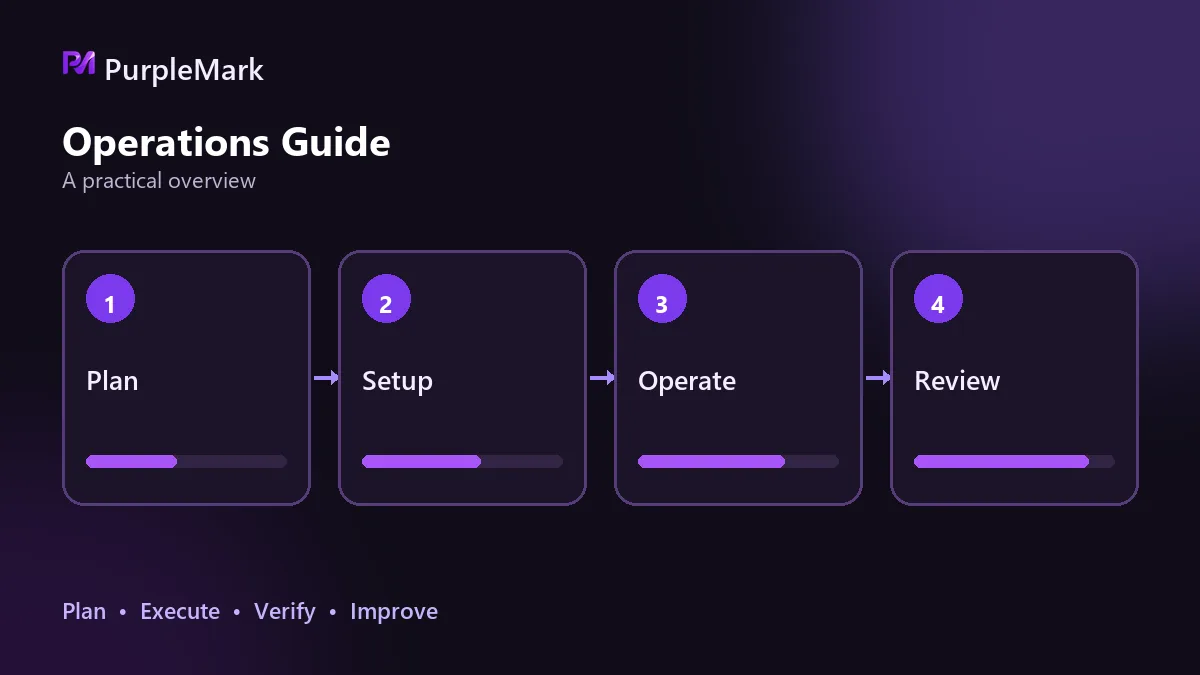
In practice, four steps are enough. Write them down and keep them somewhere convenient.
- Where did this information originally come from, and can you open an official page for it?
- What date is shown on that page, and is it still in effect?
- Does the conclusion have conditions, and are they relevant to your marketplace and category?
- Is there a second independent source confirming it, or has one source simply been reposted ten times?
If you cannot answer the first two questions—original source and timeliness—you should not commit resources based on that information.
Taking in less can make you more accurate
The more information you consume, the easier it is to worry that you are missing an opportunity. The answer is not to keep adding sources, but to define your filters first: follow only a few reliable official channels, act only on information that could change your near-term moves, and leave the rest for later.
Choosing not to act is still a decision, and it is often the lowest-cost one.


