
When a cross-border network issue occurs, immediately switching nodes often wastes time. Troubleshoot layer by layer—local network, DNS resolution, outbound path, and target-site policy—to identify the real cause faster.
When a cross-border network problem appears, the most common reaction is to switch to another node. If nothing changes after the switch, that time was wasted. In practice, problems usually fall into four different layers, each with its own symptoms and diagnostic methods, so working through them layer by layer is much faster than trying random fixes.
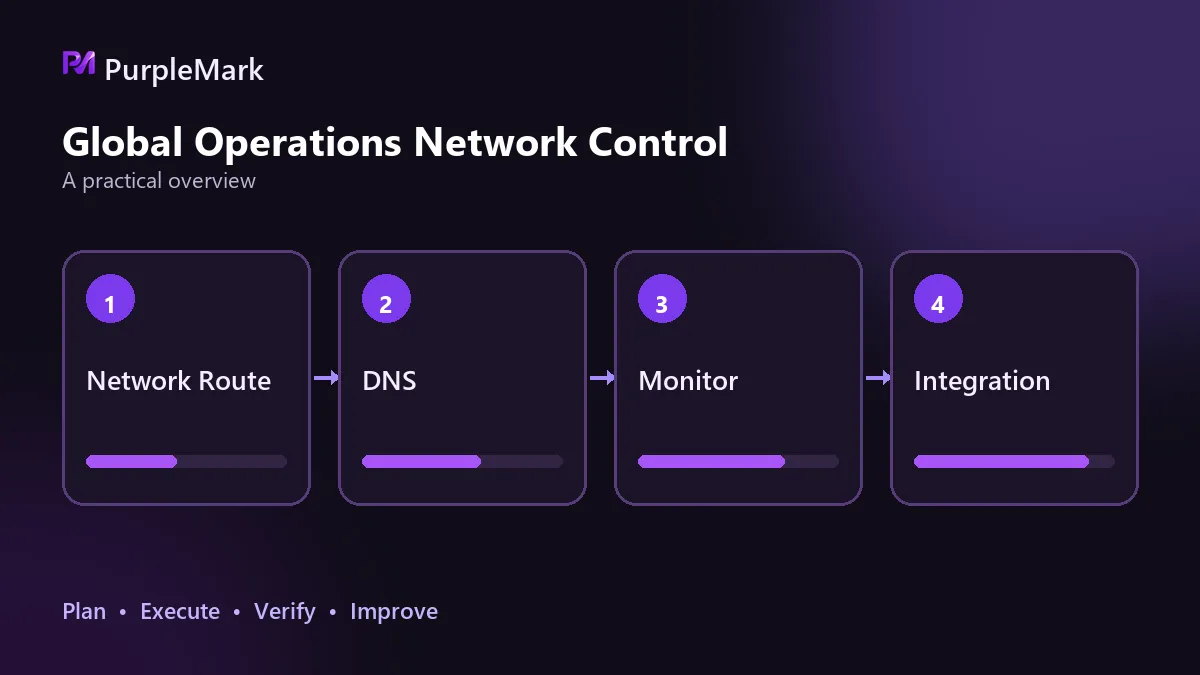
Outermost layer: local network and ISP
This layer tends to have a broad impact. If all overseas sites become slow or unreachable at the same time, and pages stall at the very beginning of loading, the problem likely has not reached the international segment yet.
The check is straightforward: compare against another connection, such as switching to a mobile hotspot and testing the same set of sites. If everything recovers after changing the connection, the issue is on the local access side. Also check the router and modem status, confirm dial-up or uplink connectivity, and measure latency and packet loss. If packets are already being lost on the first local hop, switching downstream nodes will not help.
One layer inward: DNS resolution
The usual symptom is that the domain name cannot be resolved. The browser may report that it cannot resolve the server address even though direct access by IP works; the same domain may behave differently across devices; or the resolved address may clearly be wrong and point to an unexpected region.
Compare DNS results. Query the same domain through the local DNS resolver and a public DNS service, then check whether the returned records match. If the result changes dramatically with the DNS service, the problem is at this layer rather than the outbound path. DNS failures and outbound-path failures can look similar because both can make a page unreachable, but the fixes are completely different, so separating them first saves a great deal of effort.
Outbound and proxy path
Being able to connect but still being identified or challenged is typical of the third layer. Common signs include frequent CAPTCHAs, repeated login prompts, certain features being unavailable, or long-lived applications such as instant messaging and online documents repeatedly timing out or disconnecting.
Several things should be checked here: whether the outbound region matches the market associated with the account; whether the ASN belongs to a residential network or a data-center range; and whether the address appears on relevant lists, preferably checked through multiple channels. After choosing the correct proxy type, such as Socks5 or HTTP, run a connection test first to confirm that traffic actually exits through the intended endpoint rather than looping back through the local network while appearing to use the proxy.
One point is often overlooked: changing an IP does not necessarily mean getting a clean IP. Recycled addresses can carry records left by previous users, so checking ownership and reputation lists is more important than simply confirming that the address can connect.
Innermost layer: target-site policy
At this layer, the issue is on the other side. With the same outbound endpoint and the same environment, Site A may work normally while Site B demands verification immediately after login. The same site may also handle different regions or account types in different ways.
Use controlled comparisons: access different sites with the same environment to see whether the issue is isolated or widespread; switch the outbound region and revisit the same site to see whether it recovers; and try different accounts through the same endpoint to see whether the difference follows the account. These three comparisons usually make it possible to determine whether the issue is in the network path or in the site's policy.
If only some sites fail while others work, which layer is most likely?
This usually points away from the local network and the general outbound path. Link-level failures normally affect many destinations together rather than selectively targeting individual sites.
First check whether DNS resolution has been rewritten or is returning abnormal endpoints. If every service under one domain fails while unrelated domains work normally, DNS is the strongest suspect. After ruling that out, check whether the target site applies additional rules to the current region or network range, especially when failures occur only at identity-sensitive steps such as login or payment; that pattern generally points to the site side.
Principles for long-term configuration
- Keep the outbound endpoint stable: do not switch nodes frequently or jump back and forth between countries;
- Align the region: keep the outbound region, the account's target market, and the browser time zone and language consistent;
- Keep the environment coherent: browser parameters should not contradict outbound information, and WebRTC should not expose the local address;
- One account, one outbound endpoint: do not share the same IP across accounts.
When operating multiple accounts in parallel, a common way to apply these principles is to place each account in an isolated environment and bind it to its own matching outbound endpoint. Before going live, use detection sites to verify region, IP reputation, and environment consistency. PurpleMark provides this type of environment-isolation capability.
The earlier layers can often be fixed by choosing the right connection, while the innermost layer requires aligning the browser environment with the outbound endpoint. This innermost layer is also the one that is most often overlooked.


