
The real barrier in dropshipping is not building a store but supplier screening and fulfillment management. This guide follows the chain from sample checks and inventory and price synchronization to delivery speed, delivery success rate, and returns, showing what to measure at each step and what tends to break first as order volume grows.
Dropshipping really does have a low barrier to entry. You do not need to buy inventory in advance or rent a warehouse. After a customer places an order, the supplier ships it directly, while the seller focuses on product selection and promotion.
That is also why many people put all their attention on store setup and advertising. A store can be built in an afternoon, and there are established frameworks for ad campaigns. What actually constrains the business is the part that comes afterward: from placing an order with the supplier to getting the parcel into the customer's hands. Customer experience, store ratings, and platform trust are all determined by this stretch, even though most of the actions in it are outside your direct control.
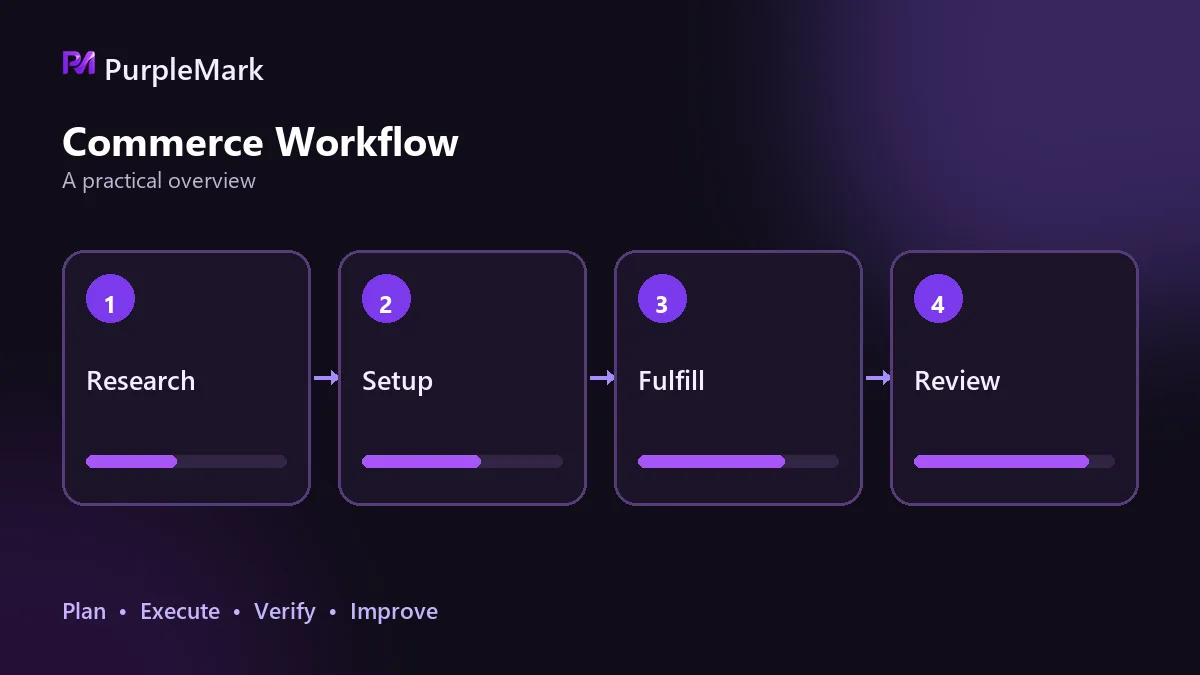
Choosing suppliers: start with three measurable factors
You do not manufacture the products sold through dropshipping, but customers only see your store. A supplier's capability directly determines the level of service you can deliver. When reviewing supplier ratings, there are several indicators that are more useful than the rating itself.
For shipping speed, look at the actual delivery times of historical orders, not the processing time shown on the product page. Prioritize suppliers that can use dedicated shipping lines. Delivery in 7 to 12 days is a relatively comfortable range; if it stretches to a month, even strong ad conversion will not keep customers satisfied.
Test response speed with a real technical question. Before ordering, ask something slightly specific. How quickly the supplier responds and how professionally they answer will usually give you a good idea of how they will handle disputes later.
Clarify the return policy in advance, especially how quality problems are handled and whether the supplier can resend for free or issue a refund. If you cannot agree on this, all later after-sales costs will fall on you.
Once these three points pass, do one more thing: run the full process with a small order. Place the order, pay, watch it ship, follow the tracking, and confirm delivery yourself. Do the sample check at the same stage: receive the item, inspect the packaging and workmanship, and compare it with the product-page description. Any weak point in the chain can turn into a serious problem once volume grows.
Inventory and price synchronization is easy to underestimate
Your store may show an item as in stock even though the supplier has already sold out. The customer pays, but when you try to place the supplier order, you find that it cannot be fulfilled, leaving you to cancel or delay. Both situations increase the cancellation rate, and cancellation rate directly affects store standing. Pricing creates the same type of problem: if the wholesale price rises but your retail price does not, you lose money on every order, and higher volume only makes the loss larger.
The fixes are not complicated. Keep the number of suppliers connected to one store as limited as possible; the more suppliers you use, the more likely inventory will fall out of sync. Set a manual review schedule for core products and regularly confirm stock status instead of relying completely on automatic synchronization. Identify a backup supplier in advance for each core product. Once a product shows stable conversions, moving from pure dropshipping to small-batch inventory is one of the most effective ways to reduce stockout risk.
Watch delivery speed and successful delivery rate together
You cannot control sorting speed in the logistics network, but you can control the information gap. It is better to state a slightly longer estimated delivery time on the product page because a gap between customer expectations and reality is more damaging than the delay itself.
Share tracking updates with customers as soon as they are available instead of waiting for customers to ask. Proactive logistics updates can eliminate a substantial share of complaints. You should also track successful delivery rate as a separate metric: shipping the parcel is not completion; confirmed receipt is. For parcels that remain stuck on the same route for a long time, you should be able to identify the route and supplier at a glance.
If your target market is concentrated, single-item fulfillment from an overseas warehouse can be worth considering. The supplier ships directly from the overseas warehouse, reducing both delivery time and transport cost without requiring you to take on full inventory risk. The trade-off is a narrower product selection, so the decision should be based on data.
Returns and disputes remain your responsibility
When customers have a problem, they contact the store, not the supplier. Shipping delays, lost parcels, quality problems, returns, and exchanges all create communication costs that you must bear.
That is why the rules should be written in advance: when to resend, when to refund, and how quickly each case must be handled. Clear rules prevent every incident from turning into an argument. At the same time, track the distribution of complaint reasons. If the same problem keeps recurring—for example, a cluster of shipping delays from one supplier—that is a supplier issue, not bad luck, and it is time to switch.
What breaks first when volume grows
When order volume rises from a few orders a day to dozens, problems tend to appear in a fairly consistent order.
Inventory synchronization usually breaks first. Manual checks start getting missed at dozens of daily orders, cancellations caused by stockouts begin to cluster, the cancellation rate rises, and store standing falls with it. Customer-service response is the second point of failure because one person cannot cover the time zones and languages of dozens of countries. Logistics often fails last: if the supplier is reliable, parcels will still go out, and a one- or two-day delay is usually not fatal.
This also explains why, when a store is just beginning to scale, it is better to turn review and customer service into regular processes before rushing to increase ad spend.
Once you are managing multiple store backends and multiple advertising accounts at the same time, another infrastructure issue appears. Running many accounts on the same device and network can lead a platform to classify them as associated, and if the conversion data and audience assets accumulated in ad accounts are affected, the loss goes beyond a single campaign. At this stage, the task is to give each store and ad account an independent, stable operating environment without creating association signals between environments. PurpleMark supports this layer of environment isolation, allowing multiple independent operating environments to be managed in parallel on the same device.
This is only an explanation of the operating model and management experience. It is not a promise of returns or investment advice.


