
Automation itself is not a violation. The boundary is whether it handles internal data and workflows or impersonates a person to publish and interact. This guide explains what can be automated, what can trigger enforcement, how platforms detect it, and what can happen afterward.
Automation itself is not the problem, and the platform has not banned everyone from using tools. What determines an account’s risk is where automation is applied: organizing data and running internal workflows are one thing; replacing a real person for publishing and interaction is another. If that boundary is unclear, the easier the tool is to use, the more risk the account may face.
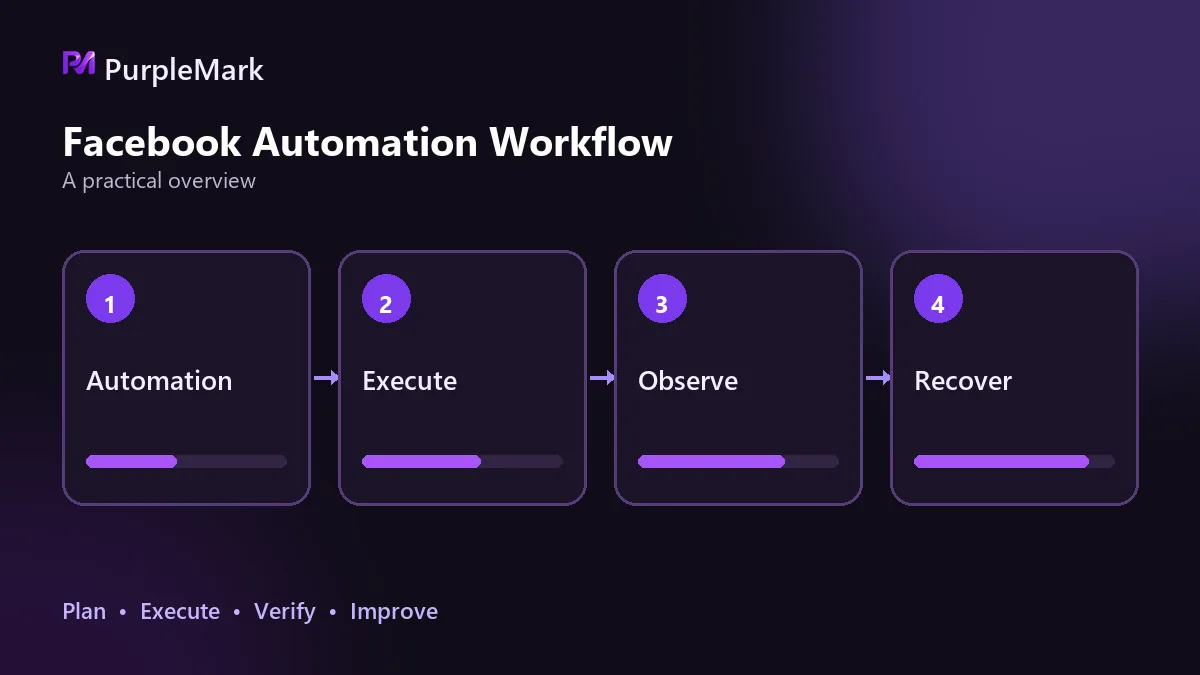
What can be automated
Start with work that happens outside the platform. Exporting ad-console data daily, compiling daily or weekly reports, and syncing it to a dashboard you built are all operations on data in your own systems and can be automated. Internal creative review, ad-approval workflows, and inventory or order synchronization are similar because the resulting actions do not appear on the platform as interactions.
You can also use capabilities the platform provides directly, such as official ad-management APIs, scheduled publishing through official or authorized tools, and public data APIs. The practical test is simple: does the automation produce a report for your own use or an internal workflow for your team, or does it produce content that pretends to come from a person?
What may be treated as a violation
The first category is simulating a real person’s publishing and interactions. Automated login, browsing, likes, comments, follows, bulk friend requests, and bulk private messages all fall into this area. The platform expects authentic interaction rather than data that merely looks like interaction, so these behaviors can be associated with fake engagement and spam.
Bulk actions are even more conspicuous. When multiple accounts perform the same action in the same time window, or scripts are used for mass registration or mass submissions, the pattern is more obvious than repetitive actions from a single account. Buying accounts to increase volume does not solve the problem either: the registration information is not yours, and if something goes wrong, even the origin of the accounts may be difficult to explain.
How the platform can detect it
Human behavior includes pauses, uneven intervals, and differences in sequence. Scripts tend to have a regular rhythm: the same gaps between actions, the same order, activity continuing late at night and through holidays. When a group of accounts behaves in a highly synchronized way, the platform can use that synchronization to examine them as related accounts.
The content layer is also difficult to hide. Repeatedly publishing the same copy can prompt the platform to flag it as duplicating a previous post. In addition, execution traces left in pages by automation frameworks, along with device and environment characteristics shared across multiple accounts, can become part of risk-control decisions. These signals do not require especially complex techniques to detect; once enough accumulate, they can trigger enforcement.
What can happen after detection
A lighter consequence is reduced distribution: reach drops and a published post may be seen by almost no one. A further step is temporary restriction of account functions, such as posting, messaging, or adding friends. More serious cases can involve account disablement, restrictions on Pages and linked ad accounts, and interruption of active campaigns while billing does not necessarily stop at the same time.
An appeal requires a person to provide supporting information, explain that the account is genuinely theirs, and clarify where the abnormal activity came from; automation itself is difficult to explain away. This is also why, within a group performing similar actions, newer accounts with lower trust may run into problems first, followed by other accounts linked through the same environment.
Compliance prerequisites for multiple accounts
When a business genuinely needs to manage multiple accounts, each account should have an independent, stable environment and network exit, and the account itself should comply with the platform’s real-identity requirements. Using PurpleMark to create isolated browser environments for different accounts is about preventing accounts from affecting one another, not about making automation harder to detect. Those are fundamentally different goals.
If you want accounts to last, the direction is to make their use authentic: real users, real interactions, and a real human rhythm. Making automation more elaborate only shortens the time before it is recognized.


