
What should you verify before putting a configured environment into use? Check timezone versus exit location, language, resolution, WebRTC leaks, and Canvas/WebGL, and watch for contradictions across parameters.
A configured environment that can open websites normally is not necessarily ready to use. Real acceptance testing should happen before launch: check the key parameters one by one and see whether they all tell the same story.
One point should be clear first. A red result can have two causes: the environment really has a problem, or the detection site uses a database whose definitions differ from your configuration. The second case is not rare, but both possibilities still need investigation. Do not skip a warning just because it may be a false positive.
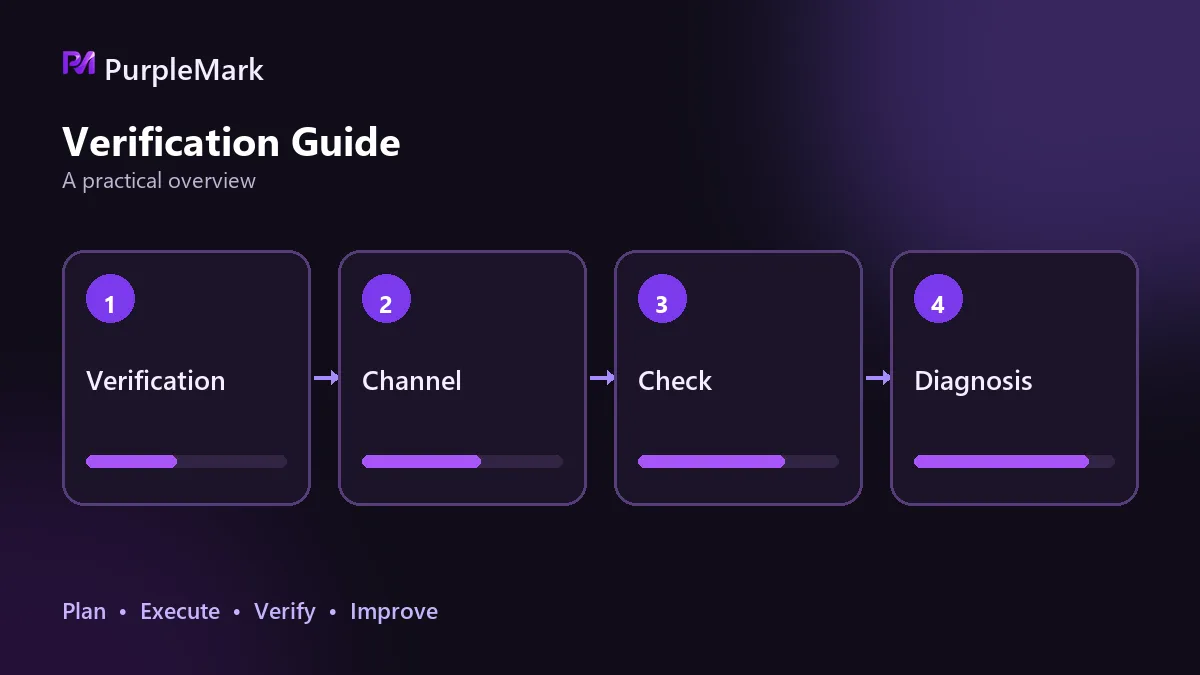
Five items to check
First, compare the timezone with the exit location. If the exit IP is in a certain country and city, the system timezone should correspond to that place. A mismatch between these two is one of the easiest combinations to detect because it costs very little to evaluate.
Second, check language and region. Ideally, the browser language, system language, and the market in the account profile should agree. An environment exiting in the United States while another interface language is set as the top priority already leaves traces of manual configuration.
Third, check resolution and device type. A desktop environment should use screen dimensions within a reasonable desktop range. Combinations such as a mobile user agent with a desktop resolution are easy to spot. Window size and pixel ratio in the same environment should also match the configured device.
Fourth, check WebRTC. When WebRTC establishes peer-to-peer connections, it can expose local and public addresses. If it is handled incorrectly, the real network exit can leak through it. The check is direct: compare the WebRTC address shown by the detector with the access IP. If they differ, the isolation configured earlier has effectively failed.
Fifth, check Canvas and WebGL characteristics. These parameters reflect graphics hardware and rendering capabilities. If the system identifies itself as one brand of computer while WebGL reports a different hardware profile, that is a typical contradiction. If the environment allows custom hardware parameters, align the vendor and model with the configured device.
Contradictions stand out more than imperfect realism
Many people focus on whether each individual value looks realistic enough, but a set of values that conflict with one another is usually a bigger risk.
Real devices do not contradict themselves. Exit location, timezone, language, and system settings naturally move together; device type, resolution, pixel ratio, and graphics information also appear as a coherent set. These relationships form naturally on real devices, and they are also where a simulated environment is most likely to make mistakes. Conversely, if the parameters are internally consistent, one value that is slightly uncommon will not necessarily attract immediate attention.
So the recommended review order is the reverse of what many people expect: find contradictions first, then inspect individual values.
How to use detection scores
An overall score is a reference, not an exam grade. It reflects how much the environment resembles a real device, not whether an account is safe. If the score is below 90%, it is worth opening the details, but a high score does not mean unrestricted operation is safe, and a low score does not automatically mean there is a real problem.
What matters most is where the abnormal result appears. If only one detection site reports an issue, first suspect a difference in data sources. If several sites consistently report the same issue, the configuration is very likely the cause.
Troubleshooting order when an anomaly appears
Start by checking whether WebRTC exposes the real exit because this has the most serious consequence and is easy to confirm. Then look for conflicts among the system identity, timezone, language, and hardware information. Next, consider whether a recently installed extension changes browser behavior. Extensions can override environment settings and become part of the fingerprint themselves, so disable them one by one and test again. Finally, check the data source and consider whether a particular IP geolocation database has not been updated in time.
Most anomalies that look serious can be traced to one specific parameter by following this order.
About reusing parameters
Using the same fingerprint parameters across multiple environments effectively makes multiple accounts point to the same device in a detection system, which is the opposite of isolation. Each environment needs an independent, stable parameter combination that remains consistent over time. Frequent changes can create new anomalies instead. PurpleMark fingerprint environments support configuring and saving parameters separately for each environment so one environment's settings do not overwrite another's.
Running these five checks yourself after configuration is much easier than dealing with platform warnings after launch.


