
Bought followers may make the number look better, but they do not support partnerships and can weaken the account itself. This guide explains four major risks, the signals platforms use to spot abnormal growth, and safer organic alternatives.
Not having enough followers—and worrying that potential partners will overlook you—is where many people start considering buying followers. The concern is understandable, but the conclusion should come first: buying followers is one of the highest-risk and least predictable moves in account management. You may waste the money and even push an otherwise healthy account into reduced distribution.
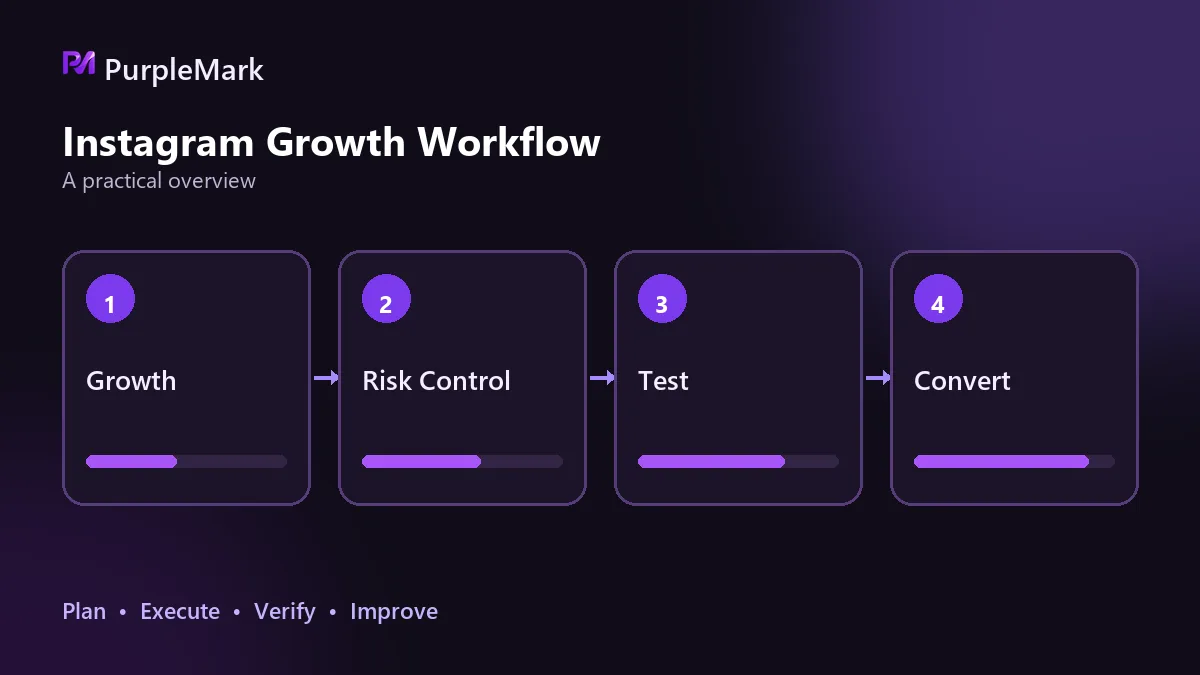
How platforms spot abnormal growth
Platforms identify fake engagement by looking at several signals together: the shape of the growth curve, the ratio between followers and likes or comments, and the quality of newly added followers. Purchased followers are often empty accounts created in batches, with no profile photo, no posts, no interaction history, and follows concentrated in a very short period.
Of those signals, engagement rate is the most damaging. What platforms care about is the relationship between audience size and interaction, not the absolute follower count. An account with 50,000 followers and only a few dozen likes per post looks far less healthy to the algorithm than one with 2,000 followers and more than 100 likes per post. Purchased followers do not engage, so the more of them you add, the more they dilute engagement rate. That is a structural problem that cannot be fixed by adding even more followers.
Four types of risk
Zombie followers do not enter the distribution pool; they lower engagement rate instead. These accounts do not meaningfully see posts, like, or comment, and after following they are usually inactive. Their only effect in the follower list is to increase the denominator. When the denominator rises while interactions stay flat, engagement rate falls—and engagement rate is a direct signal for whether content can be shown to more people.
Once the platform detects abnormal growth, it may restrict exposure. The consequence is often not an immediate ban but a subtler reduction in reach: content stops being recommended to non-followers, reach drops sharply, and the dashboard may provide no explicit warning. You notice it only through deteriorating data.
Paid follower data cannot support real conversion. Once the audience profile is contaminated, analytics can no longer reliably tell you who the real audience is, where they come from, or what content they prefer. Audience targeting, product selection, and content strategy can all drift in the wrong direction, causing more money to be spent on bad decisions. This is one of the easiest risks to overlook.
Account credibility can also suffer. Professional partners look at engagement rate, comment quality, and audience profile—not just follower count. When follower numbers and interaction do not match, the account is more likely to be treated as having unreliable data, weakening long-term negotiating power. Platforms also periodically remove bot and inactive accounts, so the follower count may fall again while the record of abnormal growth remains in the system.
Claims about “real” followers
Many services claim to provide real people who follow manually, or to deliver followers in batches to imitate organic growth. Two points matter: buying followers itself violates platform community rules as prohibited fake engagement; and staggered delivery only spreads abnormal data over a longer timeline so the curve looks smoother. It does not change the underlying violation. There is no way to buy followers that is both effective and compliant.
An alternative path to organic growth
Improving engagement rate is the direction that both algorithms and professional partners can recognize.
At the content level, publish consistently around a clear topic so the account can be found through search and recommendations; short-form video remains an effective format for reaching non-followers. At the engagement level, reply seriously to comments and participate in conversations with accounts in the same niche. Engagement is two-way, and genuine participation can bring return visits. At the paid level, if budget allows, use official advertising tools with follower-growth objectives; this is a platform-recognized way to pay for attention and still obtain real audience data. At the environment level, when managing multiple accounts, give each one an independent and stable login environment, with its own browser fingerprint and network exit, to reduce cross-account linkage and collective downranking. PurpleMark supports this account-environment isolation layer so each account can run long-term as an independent device identity.
What if you have already bought followers?
Stop buying more; the less additional abnormal growth you create, the more room the account has to recover. Avoid aggressive cleanup, because manually removing followers in bulk can itself look abnormal. Shift the focus back to content and use four to eight consecutive weeks of genuine publishing and engagement to rebuild the engagement rate. Watch non-follower reach in analytics. If it is still close to zero after several weeks, the account's distribution weight may be heavily damaged; in that case, starting over in a new environment may be more economical than continuing to spend effort on the old account.
The only thing follower buying reliably purchases is a better-looking number—and that number does not fool the algorithm or truly professional partners.
This article explains platform rules and operational risks only. It is not operational advice and does not recommend any third-party service.


