
When ad accounts run into trouble, the problem is often not a poor environment but an environment that keeps changing. Keep account and payment details consistent, make login locations explainable, log team actions, and limit switching.
When an agency manages dozens or even hundreds of advertiser accounts, the biggest fear is not failing to scale spend. It is one account running into trouble and pulling a chain of others into the same issue. The loss is not only budget, but also the client’s trust in the agency’s ability to deliver.
Most people focus on environment quality: whether the fingerprint looks realistic and whether the IP is clean. Those indicators matter, but in media buying, the things most likely to cause problems are often elsewhere.
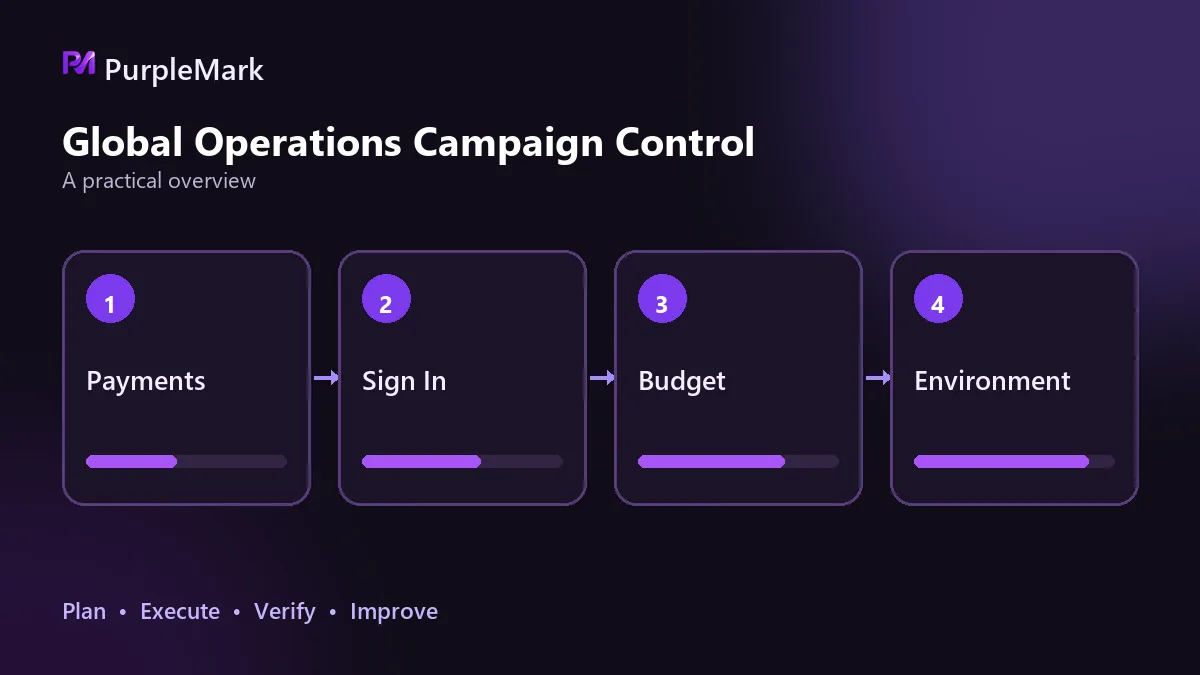
Account and payment information need to stay consistent over time
An ad platform does not judge an account only by the device used to log in. It also looks at whether the business information behind the account is stable: the account entity, linked payment method, billing information, and contact details. When these stay consistent over time, the account presents a clear history to the platform. Frequent changes, especially a sudden switch from one payment setup to another, can easily trigger manual review.
Another point is easy to overlook: when multiple accounts share the same card or the same payment profile, the platform may view them as connected. When an agency runs campaigns for different advertisers, payment information should be separated by advertiser. This supports compliance and reduces the chance that unrelated accounts affect one another.
Login locations should make sense
If an account advertising in the U.S. repeatedly logs in from a region with no connection to the business, that pattern needs an explanation. A platform may not suspend the account solely for that reason, but it can become part of the account’s risk history and may be reconsidered when behavior or content later raises another issue.
A more reasonable approach is to maintain a clear relationship between the login location and the campaign market. If an account mainly targets one market, its login exit should, where practical, stay close to that market. When a team works across multiple cities, this relationship should be designed in advance rather than patched after a problem occurs.
Team collaboration breaks down when nobody can explain what happened
Agency teams usually divide work by function: one person creates advertiser accounts and handles onboarding, another manages creatives and bid optimization, and another handles landing pages. If everyone shares one environment, problems tend to cluster in three areas:
- Someone changes a bid or target region, and later nobody knows who made the change
- Environment notes or proxy settings are overwritten, so handoff information no longer matches
- When an account has a problem, it is unclear whether the setup stage or the optimization stage was responsible
Role-based permissions solve much of this. A setup role can create environments, bind IPs, and enter onboarding information. An optimization role can change creatives and bids but cannot alter environment parameters such as the IP or time zone. A lead can view all environments and operation logs. Beyond permissions, an audit trail is even more important. The team should be able to see who logged into which environment, when they did it, and what parameters they changed. This may seem unnecessary in a small team, but once several clients are being served at the same time, responsibility is hard to define without a record.
Frequent environment switching can be riskier than a mediocre environment
This is the least intuitive point. An average-quality environment that stays unchanged is usually safer than a well-configured environment that changes IP, device, or time zone every few days.
The reason is that platforms look at change when assessing risk. If one account repeatedly jumps between login locations in a short period, or presents different device characteristics each time, those variations become anomalies in its history. In contrast, when the environment remains stable, even an ordinary residential IP gives the platform less reason to scrutinize it.
So the main goal of an environment strategy should be to minimize unnecessary changes. Once an account is bound to an environment, do not migrate it casually. Change the IP only for a clear reason, such as a failed node, rather than rotating it regularly just to look cleaner. During multi-person collaboration, avoid logging the same account in from different members’ devices in turn.
A practical way to implement this
- Create environments by client and platform, and use a consistent naming format such as platform, client, and region, then manage them in groups. Once the number of environments grows, naming standards become essential.
- Give each account on the same platform its own independent environment, configure fingerprints differently, and fully isolate cookies and local storage. PurpleMark provides this kind of environment isolation, allowing hundreds of environments to be managed on one computer without sharing login information or environment data between them.
- Before launching, review the creative from an environment in the target region and check for prohibited wording and local fit, reducing the chance of rejection after launch.
- In the environment notes, record the bound IP, account purpose, and owner so handoffs and troubleshooting are easier.
The account itself still has to be compliant
Environment isolation addresses technical interference between accounts. It does not change the requirement that each account must comply with platform policy. Account qualifications, creative standards, and landing-page compliance do not become less important because the environment is well configured. The purpose of account infrastructure is to help multiple legitimate accounts run steadily, not anything else.
This article only shares account-management experience and does not constitute campaign or earnings guidance.


