
Cross-border operators often need an overseas phone number that can receive SMS and remain stable over the long term. This guide covers popular eSIM options in Hong Kong, the United States, Europe and other regions, along with low-cost number retention, activation requirements, Wi-Fi Calling and other key considerations.
Anyone working in cross-border e-commerce, TikTok operations, overseas advertising or independent websites will almost inevitably need one thing: a stable overseas phone number. Mainland China +86 numbers may be rejected or flagged as high risk when registering on some overseas platforms, completing secondary verification or recovering accounts; free SMS-receiving platforms often use recycled, shared numbers; and physical overseas SIM cards are inconvenient to ship and swap. That is why real carrier numbers that support eSIM have become a mainstream choice: they can be activated remotely, make multi-SIM management easier, and can receive SMS while you are in China. Below is a regional overview of popular options.
Hong Kong numbers
- Club Sim (under CSL): supports eSIM. At present, about HK$15 can keep the number valid for 365 days, while the initial activation price depends on the actual plan shown in the app;
- csl: supports eSIM. Some products are promoted at around HK$68, and certain prepaid cards can extend validity with top-ups starting from HK$20;
- SoSIM (under 3HK): supports eSIM. A new card starts at around HK$33, and extending validity for 365 days costs about HK$200;
- 游惠宝: supports eSIM/physical SIM cards and WeChat Mini Program operations, with Hong Kong number service at about HK$36/year.
Other choices include 3HK and China Telecom Hong Kong. Compare them based on roaming, SMS and number-retention needs.
US numbers
- Saily: an eSIM with a US number, with subscriptions starting at about US$0.99/month; SMS, calls and data may be charged separately;
- Tello: supports eSIM, with plans starting at around US$5/month and flexible options;
- Red Pocket: a common MVNO. Current low-cost plans are generally more expensive than the US$30–36/year figures found in older online guides, so it is better to watch for official annual-plan promotions.
Europe and other low-cost options
- VOXI (UK): supports eSIM and mainly offers monthly plans from around £10/month. Pay attention to UK local activation requirements;
- CTExcel (UK): supports both physical SIM and eSIM, with occasional new-user or channel promotions. Refer to the current official offer for pricing;
- O2 (Germany): the account can be kept active through periodic small top-ups;
- Skinny (New Zealand): the minimum top-up is about NZ$5. Under current rules, topping up at least once every 12 months can keep the number active. Pay attention to regional requirements for first activation;
- DITO (Philippines): low initial cost, but the account must remain active and may expire after a long period without a top-up;
- Simyo (Netherlands): prepaid accounts can remain active with one paid activity every 6 months, making it suitable for low-frequency, long-term use.
If you only need verification codes, consider cloud numbers
If your main needs are platform registration, receiving SMS verification codes and centrally managing multiple numbers, you can also consider cloud numbers. They do not rely on a physical SIM card and can be managed online, avoiding the hassle of swapping cards. When choosing a cloud-number service, you should still evaluate number quality, stability and provider qualifications to avoid repeatedly triggering verification because of previously abused numbers.
Keep the environment stable when applying for overseas eSIMs from China
When applying for an overseas SIM/eSIM from China, registration errors, payment failures or extra verification do not necessarily mean there is a problem with the SIM or bank card. The browser and network environment can also matter. Some carrier websites consider multiple signals during registration, payment and login, such as IP region, browser time zone, language, geolocation and WebRTC. If you use a European or US IP while the browser still clearly shows a China time zone and Chinese regional settings, the mismatch may increase the chance of additional verification.
If you need to apply for and manage multiple overseas numbers over the long term, consider creating a separate environment in PurpleMark for each carrier. For example, bind UK and US SIM accounts to proxies in the corresponding regions, let the time zone, geolocation and language match the IP, set WebRTC to replacement mode, and preserve cookies and login status. When topping up, checking bills or accessing the account later, reopen the same environment instead of reconfiguring it every time. For numbers intended for long-term use, try to keep registration, payment and subsequent logins within the same stable setup rather than frequently changing IPs, browsers and devices.
Note that a browser environment can only reduce extra verification caused by environment inconsistencies. It cannot guarantee that registration or payment will succeed. Identity information, billing addresses, bank-card details and other information must still be provided truthfully according to the carrier's requirements and in compliance with platform and carrier rules.
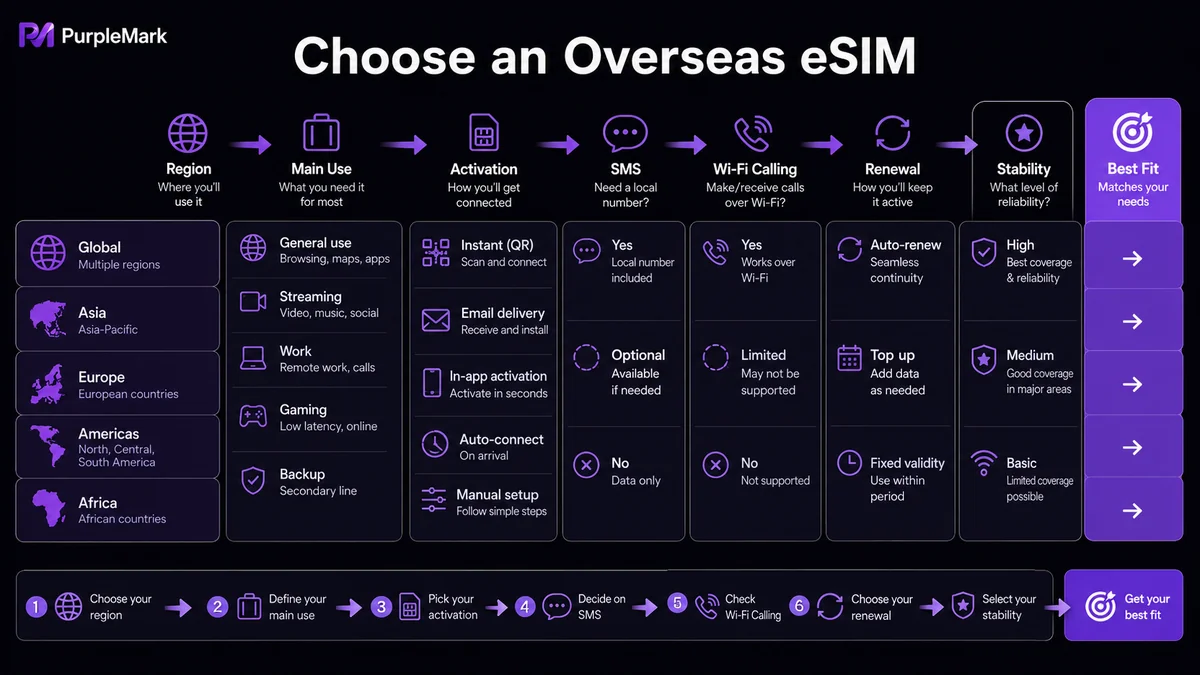
eSIM usage tips
- Do not bind every important account to one SIM: prepare a primary number plus a backup so that a single suspended or expired SIM does not affect all accounts;
- Check recent carrier stability: search for the latest user feedback before buying instead of relying only on outdated guides;
- Check activation and SMS-receiving conditions: some numbers have requirements for activation region, IP or payment method. It is best to confirm whether Wi-Fi Calling is supported, because it affects long-term usability and SMS reception while in China;
- Do not look only at the cost of keeping the number active: also consider verification-code success rate, number stability, roaming support and how platforms identify the number;
- Policies change quickly: make decisions based on the latest official rules together with recent real-user feedback.
Final thoughts
The right overseas eSIM depends on your actual needs: low-cost number retention, receiving SMS in China, or long-term stability with Wi-Fi Calling support. Price is only one reference point; validity, activation conditions, roaming support and stability are equally important. Treat it as a genuine number that you can maintain over the long term, and platform registration and verification are likely to be much smoother.


