
The list of scraping tools keeps growing, but success depends more on choosing the right capability model. This comparison covers four approaches across anti-bot effort, dynamic content, concurrency cost, and compliance boundaries.
Building a scraping script that works once is not hard; keeping it stable for months is. Compared with a few years ago, there is more to handle: JavaScript-rendered pages, CAPTCHAs, rate limits, Cookie checks, and device fingerprinting. As the tool list grows, the first question is not which product to choose, but which capability model your task belongs to.
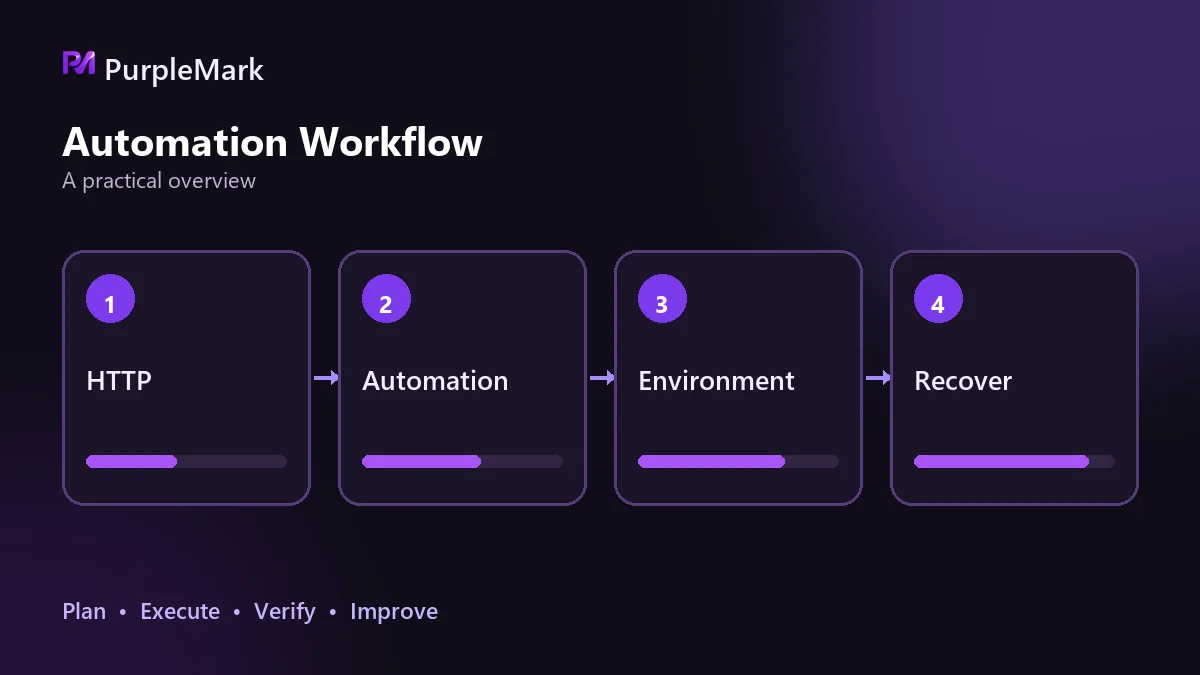
Pure HTTP request libraries
These libraries fetch HTML directly without launching a browser. They generally cannot retrieve dynamic content, and anything rendered by scripts may be missing. Their strengths are concurrency and cost: a single machine can sustain high parallelism with minimal resource use. The trade-off is that anti-bot handling is entirely yours—headers, sessions, proxies, and rate control all need custom work, and when the target site changes its detection strategy, you must adapt. Compliance issues can also arise most easily here, because uncontrolled high-frequency requests put direct load on the target site and can readily violate terms.
Browser automation frameworks
These frameworks drive a real browser to click, type, wait, and read the DOM. They provide the most complete support for dynamic content, including JS rendering, interactive flows, and login. Concurrency has a real cost: every instance consumes memory and CPU, and at scale you must build process management, crash retries, and resource cleanup yourself. That operational work can exceed the effort of writing the scraping logic. For anti-bot defenses, you receive real rendered output, but automation signals can still be detected, such as automation flags or traces of headless mode, so they need separate handling. Compliance risk is relatively manageable; problems mainly arise when automation is used in ways that violate site terms.
Browsers with environment isolation
Building on browser automation, each scraping identity gets an independent browser fingerprint, Cookies, local storage, and network egress. Fingerprint settings can be aligned with the IP geolocation, so the timezone and language match the IP region. Dynamic-content support is the same as in the previous category. Concurrency adds another cost layer: environments should start on demand and be released after use, or idle environments will consume resources. For anti-bot defenses, the value is cleaner identity separation and a lower chance of correlation caused by a single shared environment. It does not increase scraping speed or handle a target site's rules for you. From a compliance perspective, isolation keeps multiple legitimate identities from interfering with one another; it is not a way to bypass rules. PurpleMark belongs to this category, providing isolated and centrally managed browser environments, with one independent environment per scraping identity.
Cloud scraping services
These services bundle proxy rotation, page rendering, and human-verification handling behind an API: you send a URL and receive content. Dynamic content is usually supported, although rendering is often a separate mode billed per request or by usage. They are the fastest to start with and require no infrastructure maintenance, but they have the highest per-request cost, which becomes a major expense at volume. Anti-bot handling appears easiest, but in practice it becomes a dependency: when a target site changes its design or detection strategy, you cannot intervene directly and must wait for the provider to update, tying your business pace to the vendor. Compliance responsibility can also seem blurred, but using a managed service does not transfer responsibility for the scraping activity.
Answer four questions before you start
Do you need a logged-in session? If so, pure request libraries can largely be ruled out. Do you need a regional viewpoint? If so, the environment should bind IP, timezone, and language together; changing only the network exit while leaving internal parameters unchanged adds little value. How much concurrency do you need? Once you move beyond a few dozen concurrent identities, prioritize an approach with environment management and scheduling instead of simply adding machines. Can the data value cover the unit cost? Cloud services can be acceptable for small, high-value batches; large, low-value workloads generally require self-hosting to control cost.
Compliance boundaries
Scraping should follow the target site's robots rules, terms of service, and local laws. Do not collect personal information, bypass technical protection measures, or disrupt normal service operation. Identity isolation is about keeping multiple legitimate identities from interfering with one another, not about evading rules.
For technical research and development practice only. Use the relevant technologies only in a lawful and compliant manner.


