
TikTok monetization can be grouped into five paths by entry requirements: creator rewards, LIVE gifts, affiliate commerce, brand partnerships, and off-platform traffic. This guide explains the thresholds, regional limits, and revenue structure of each.
TikTok offers many ways to monetize, but the real difference is not how profitable they sound—it is what you need to get started. Some require a certain follower base, some need a supply chain, and some can begin as soon as you have content. Check the requirements first, then decide which path fits.
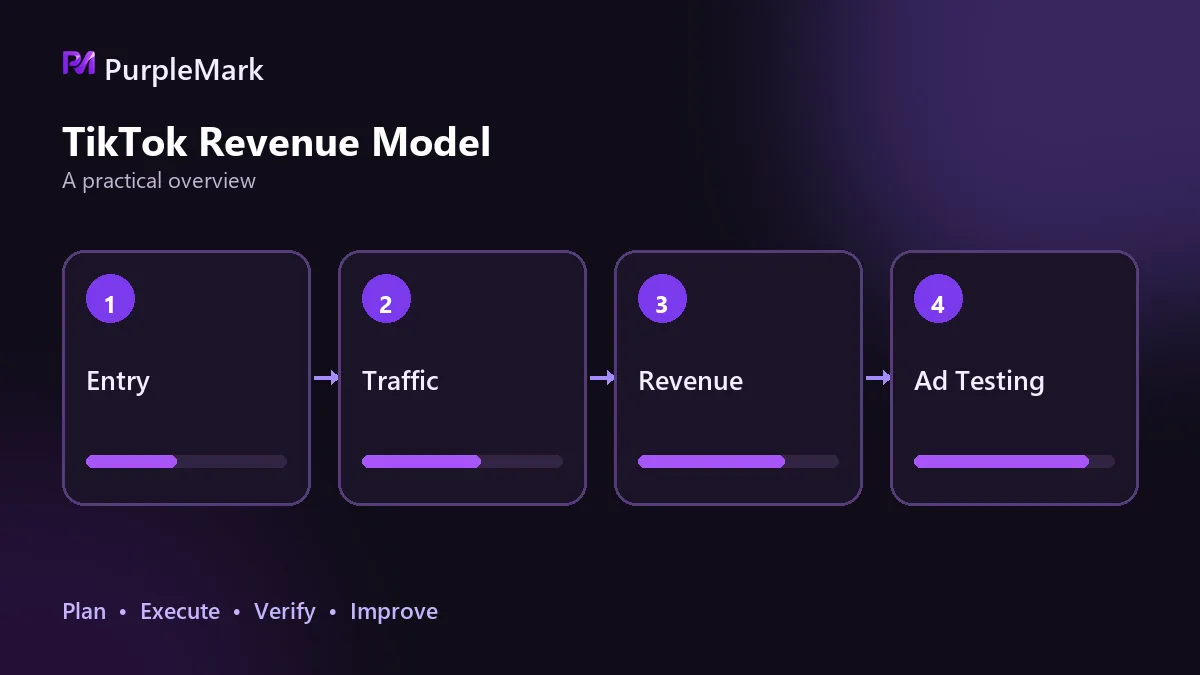
Platform revenue share: Creator Rewards Program
This path has the clearest hard thresholds. An account needs 10,000 followers, at least 100,000 video views in the past 30 days, and an owner aged 18 or older. The account must also be registered in an eligible market, currently the United States, United Kingdom, Germany, Japan, South Korea, France, Mexico, or Brazil.
There are strict content requirements too: only original videos longer than one minute count. Earnings consist of a standard reward plus an additional reward, which together determine RPM, or revenue per thousand views. Two videos with the same 100,000 views can pay very differently depending on completion rate, retention, and search value. Tutorials and reviews that answer user questions usually have a higher RPM than purely entertainment content.
Regional eligibility is easy to overlook. If the registration region is not on the list, even excellent content cannot enter the program.
LIVE gifts
During a LIVE, virtual gifts sent by viewers are converted into Diamonds, which can then be withdrawn as cash. This path depends less on polished content production and more on real-time interaction: whether you can maintain a consistent LIVE schedule and build relationships with viewers.
Income is also highly volatile. Concurrent viewers, watch time, and audience loyalty can directly affect a night's earnings. Among similar streamers, one session may cover several months of living expenses while another can run for two hours without earning anything.
Showcase and affiliate commissions
There are two main approaches to commerce. The first is affiliate promotion without owning products: add product links to content and earn a commission when viewers buy. There is no inventory pressure and no after-sales handling, making it a practical starting point for beginners. The second is running your own shop, which requires a business license, legal-representative documents, and a payment account. Domestic companies can apply for cross-border shops, while local companies can apply for local shops.
How much commission or gross margin you can earn depends partly on product selection: products need real demand and reasonable commissions to have meaningful upside. The other half is content. TikTok users come to consume content, not ads, so hard-sell product displays usually convert poorly.
Local shops also add an identity requirement. The platform evaluates whether you are genuinely a local merchant, so long-term use of a clean, stable local residential connection and consistent regional logins matters. Sharing the same browser and network across multiple shops can easily cause them to be identified as linked accounts.
Brand partnerships and advertising
Brands provide products or fees, and creators publish promotional content. These collaborations often take the form of recommendations or product seeding, which audiences tend to accept more readily than hard ads. A common brand-side matching tool is the Creator Marketplace, where brands can filter creators by industry, audience, and performance data, send invitations, and track campaign results.
For creators, pricing depends on follower count, niche, audience location, and past performance. The real prerequisite for steady partnerships is having strong work and credible analytics, not follower count alone.
Sending traffic off-platform
The previous paths earn money inside TikTok. Another option is to use TikTok as the top of the funnel: attract viewers with videos, then direct them to your own courses, consulting, ebooks, or independent store. Knowledge products are usually one-time transactions and suit people who have concrete results they can deliver. Subscriptions charge monthly, with the platform taking a share and creators keeping the larger portion; they rely less on a single viral hit and more on consistent output and audience loyalty.
This path usually has the longest payback period, but it is less dependent on a single platform's monetization policy. Even if an account changes direction, the audience relationship can still carry over.
How to prioritize the paths
If you do not yet have many resources, start with options that require the fewest extra conditions. Affiliate commerce and UGC gigs have relatively low entry barriers, letting you learn platform rules while testing content directions. Once your content skills are stable, consider platform revenue sharing, which rewards sustained high-quality output rather than one or two viral posts. Add your own products when you have supply, because supply-chain operations are a separate capability. Off-platform traffic and the value of the account itself are built over time.
More important than the order is keeping the account healthy. When several accounts or shops run in parallel, a common practice is to bind each browser fingerprint, Cookie set, and independent connection to a fixed environment. Tools such as PurpleMark provide environment isolation and centralized management for this type of setup, reducing cross-account linkage. Conversely, any revenue gained by bypassing rules rests on conditions that can stop working at any time.


