
Ad networks, affiliate marketing, content-platform revenue sharing, and direct deals use different payout triggers, cycles, and risk rules. This guide explains how to match each model to your traffic type and when a model may not fit.
The main obstacle in traffic monetization is usually not whether you can monetize at all, but choosing the wrong model. You may have search-driven content traffic yet use an affiliate program that only pays on completed sales, or have comparison traffic with strong purchase intent but run only display ads. The four mainstream approaches use very different settlement logic, so identify the nature of your traffic before deciding which one to use.
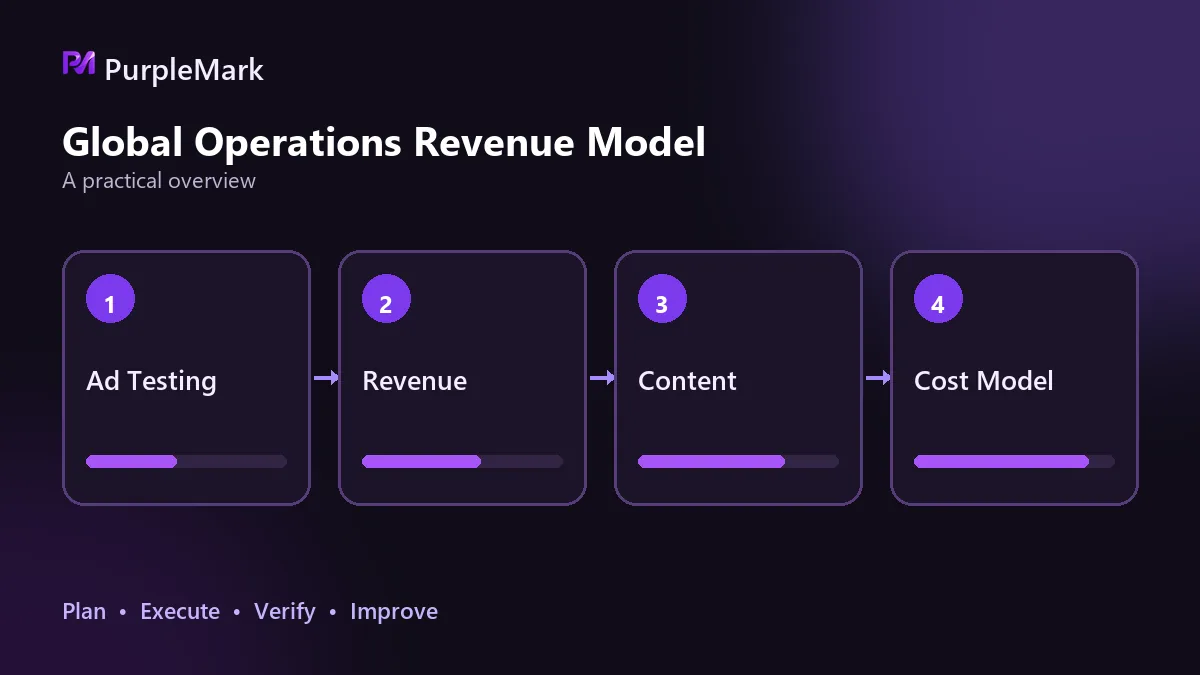
Ad networks: let a third party sell your ad inventory
You place ad code on a website or app, and the network fills the inventory and pays based on impressions or clicks. This has the lowest entry barrier of the four models: an accessible site and compliant content are often enough to apply. Payout schedules are fixed, commonly monthly, and minimum payout thresholds are usually low.
The downside is that you do not control the unit price. For the same placement, visitor geography, content category, and device type can cause large differences in value. Networks are also highly sensitive to invalid traffic. If impressions or clicks are judged not to come from real users, earnings may be clawed back and the account may be terminated. This model is therefore best suited to content and utility sites that already have stable organic traffic.
Affiliate marketing: earn a commission only after a conversion
You publish links to another company's products or services. You earn a commission only when a user clicks through and completes a purchase or subscription. The value per conversion is usually about an order of magnitude higher than for display ads because the advertiser is paying for an outcome rather than exposure.
The trade-off is a longer cycle and higher requirements. Conversions take time, and completed transactions often enter a confirmation period before they become payable after the refund window closes. Programs differ in their rules for traffic sources, promotion regions, and minimum payouts, and some explicitly reject certain types of traffic. Affiliate marketing fits traffic with clear purchase intent and a realistic ability to convert.
Content-platform revenue sharing: let the platform handle settlement
On video, article, and similar platforms, you publish content and receive a share of revenue based on views, reads, or subscribers. This is the simplest model operationally: you do not need to find advertisers yourself or manage contracts and invoices. The platform pays monthly or once a threshold is reached.
The cost of that convenience is that pricing and rules are entirely controlled by the platform. When the rules change, the revenue structure can change with them. Eligibility requirements are also common, often covering originality, account status, follower count, or content length. This model is most suitable when the audience already lives on the platform and the account can follow its built-in revenue-sharing system.
Direct deals: the highest rates and the most work
Sponsored content, custom services, and selling ad placements on a monthly basis all fall into this category. Rates are the highest of the four because there is no third party taking a cut in the middle.
The real barrier is not traffic size but whether you can show advertisers convincing evidence: audience profiles, historical data, content samples, and results from previous partnerships. Payment terms are negotiated directly and may include prepayment, installments, or milestone-based payments; timing and risk depend on the contract. You also handle collections, reconciliation, and invoices yourself. Direct deals fit accounts with a focused audience, clear positioning, and credible case studies.
What to compare in settlement terms
When the four models are placed side by side, the most important questions are: What triggers payment—an impression, a click, a conversion, or a contract term? How often is settlement made? What is the minimum payout? Are there clawbacks for refunds or invalid traffic? Are any traffic sources restricted? The first two shape cash flow, while the latter factors shape risk.
Match the model to the traffic type
Organic traffic from search and content usually fits display advertising and platform revenue sharing most naturally. Traffic from communities or private channels with clear purchase intent can be more valuable under conversion-based affiliate programs. For accounts with focused audiences and a track record, direct deals tend to offer the best value for the effort. If you are just starting and traffic is still unstable, building content first is usually more practical than optimizing monetization too early.
One more caution: using batches of accounts or simulated clicks to inflate earnings crosses directly into the invalid-traffic rules used by ad networks. The usual result is that both the earnings and the account are voided, not that revenue multiplies. Settlement systems are designed for genuine traffic.
Frequently asked questions
Can I choose a platform just by looking at the revenue-share percentage? Not by itself. A higher percentage often comes with stricter trigger conditions and a longer confirmation period, so the payout cycle and clawback rules need to be considered as well.
Does a higher minimum payout matter? It does when cash flow is tight. If you use the same monetization model over the long term, the threshold mainly changes when you receive the money, not the total amount earned.
Can the same traffic use several monetization models at once? Yes, but they can compete with one another. Ad inventory, page experience, and user patience are all limited, and adding too many monetization elements can reduce conversions instead.
Summary
None of the four models is universally better or worse. They differ in what triggers payment, how long settlement takes, and who bears the risk. Understanding your traffic type first and then choosing the settlement logic that fits it is more useful than simply chasing the highest revenue share.


