
X and Facebook differ greatly in positioning, audience, and interaction style. This article compares the two across platform positioning, audience, engagement, and advertising, then offers product-based guidance to help cross-border sellers decide where to invest their marketing resources.
For cross-border sellers, both X (formerly Twitter) and Facebook are important marketing channels, but they differ greatly in positioning, audience, and how they are used. Putting marketing resources on the wrong platform can significantly reduce results. This article breaks down the differences across four dimensions and offers a practical framework for cross-border sellers.
X (Twitter): A Fast Lane for Real-Time Information
Founded in 2006, X is known for short-form content and strong timeliness. Users commonly turn to it for news, trending topics, and industry updates. Its value lies in “speed”: product launches, promotions, and industry viewpoints can spread widely in a short time, making it suitable for quickly joining market trends, responding to customer questions, and expanding reach through influencers.
Facebook: A Social Network Connecting the World
Founded in 2004, Facebook is one of the world’s leading social platforms by user scale and is deeply embedded in everyday life, with users typically spending more time on it. Its value lies in “depth”: brands can build loyal audiences through Pages and Groups, while its mature advertising system supports precise targeting and deeper content marketing.
Key Differences Between the Two
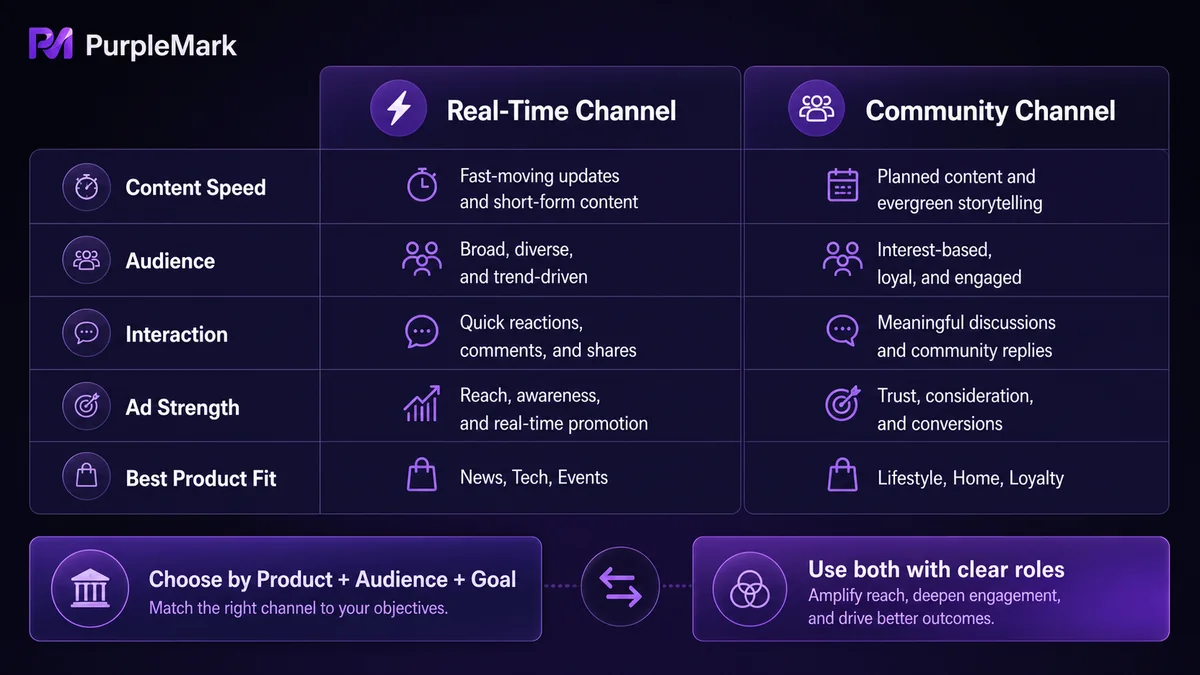
1. Platform positioning X is more like a “news and public conversation hub,” where information and opinions dominate. Products bought through more rational decision-making, such as consumer electronics, technology, and professional services, can more easily influence decisions through data and analysis. Facebook leans more toward personal social connections and entertainment, and its relaxed content environment gives fashion and lifestyle products more room to shine.
2. Audience X users tend to be younger and include professionals, opinion leaders, and people highly sensitive to new trends, making it suitable for quickly testing new topics and product categories. Facebook has a more diverse age structure, and its middle-aged and older user segments have grown noticeably in recent years. Products aimed at mature audiences, such as health products, home goods, and travel, may perform better there.
3. Interaction Facebook offers a wider range of engagement tools, including likes, comments, shares, and polls, making it suitable for building long-term user relationships. X interactions are simpler and more direct, with reposts, comments, and quotes enabling rapid distribution, which suits trend-driven content and real-time conversations.
4. Advertising Facebook has a mature ad system with detailed targeting, making it suitable for long-term brand building and precise conversion, although costs are usually higher and campaign setup is more complex. X ads can spread quickly and are relatively lightweight, making them suitable for campaigns seeking immediate exposure and short-term momentum. Actual costs and results vary by industry, audience, and campaign timing, so real campaign data should be the final reference.
How Should Cross-Border Sellers Choose?
When X (Twitter) is a better fit: Your product has news value, is tied to specific events or trends, and targets technology enthusiasts or industry professionals. For example, a new digital product can quickly reach early adopters by sharing reviews and industry updates.
When Facebook is a better fit: Your product is more lifestyle-oriented and requires long-term customer relationship building. For example, custom home goods or handicrafts can build repeat purchases and word of mouth through brand communities and scenario-based content.
When using both makes sense: Many cross-border brands operate on both platforms, using X to follow trends and build visibility, while using Facebook for conversion and audience retention. This allows the strengths of the two platforms to complement each other.
Running Both Platforms Without Messy Account Management
For cross-border teams operating on two or even multiple platforms, account management is often where the real complexity appears. X and Facebook each have their own accounts, which may also correspond to different regions or store entities. When login environments are mixed together, teams can easily open the wrong account, post the wrong content, or lose track of which business each platform account belongs to.
In this situation, placing accounts for different platforms in separate browser environments can make management much clearer. In the PurpleMark web workspace, you can create separate browser environments for X, Facebook, and accounts belonging to different markets or entities, bind the corresponding logins, configure proxies, and group them by business. When you need to publish on a particular platform, simply open the corresponding environment to reduce wrong-account logins and switching errors. For team collaboration, assigning member permissions by platform or client also makes it clear who is responsible for each account. When needed, open PurpleMark on the web and first organize each platform’s account environments into groups.
Summary
X and Facebook are not substitutes for each other; they are two channels with different strengths. X is fast, trend-focused, and more oriented toward professional audiences, while Facebook supports deeper relationship building and broader reach. Cross-border sellers should choose a primary platform based on “product type + target audience + budget goals.” If multiple platforms are needed, organize account environments and responsibilities so content and operations can work together effectively.
Frequently Asked Questions
Which is better for cross-border sellers, X or Facebook? It depends on the product and target audience. Time-sensitive technology and professional products tend to fit X, while lifestyle products and products requiring long-term customer relationships and precise advertising tend to fit Facebook. If resources are limited, it is better to focus on one primary platform first.
Can both platforms be operated at the same time? Yes. Many brands operate on both platforms and use each for its strengths. However, accounts on different platforms should have clear operational roles and permission assignments to avoid publishing content on the wrong platform.
With a limited advertising budget, which should I prioritize? If the goal is to generate visibility and exposure quickly, you can test X first. If the goal is precise conversion and long-term repeat purchases, Facebook has a more mature advertising system. With a small budget, start with limited tests, evaluate real results, and scale only after the data supports it.


