
Product selection often decides whether a cross-border business gains traction. These six sources help solo sellers and small teams find ideas and validate them with less guesswork.
For a solo cross-border seller, the right product makes promotion easier; the wrong one can waste a limited budget. Use several independent signals instead of relying on intuition.
1. FireBox: ideas for unusual products
This UK store focuses on creative and personalised goods, from gifts and home accessories to food, books and smart VR gadgets. It is a useful place to spot distinctive product concepts.
2. Wirecutter: professional review signals
The New York Times-owned professional consumer-electronics review site combines editorial testing with shopping guidance and is also a representative type of channel for driving traffic to Amazon from off-site. Sellers in electronics, home and children’s categories can study both well-received products and the criteria behind the recommendations.
3. GearHungry: multi-category reviews
GearHungry covers home, apparel, outdoor gear, technology and fitness. Its in-depth reviews reveal consumer needs, selling points, drawbacks and trade-offs.
4. Kickstarter: emerging demand
Crowdfunding is a window into early trends. Find an interesting Kickstarter product, then check Facebook, AliExpress and other channels for similar listings and ads. Few comparable ads can justify deeper research, not an automatic launch.
5. YouTube creators: early popularity signals
Relevant YouTube creators continually demonstrate and review products. Watch what they have been promoting recently and what ads accompany it to spot potential breakout products; identifying and listing a promising product ahead of competitors may provide a longer sales window.
6. Maintain a workable information environment
Research means moving among reviews, competitor ads and supply sources. When operating multiple stores or accounts for different sites, using separate, isolated browser environments for each account can help reduce the risk of accounts being judged as associated. You can also install product-research and data-analytics extensions in the browser to make the product-finding, validation and price-comparison workflow smoother.
Conclusion
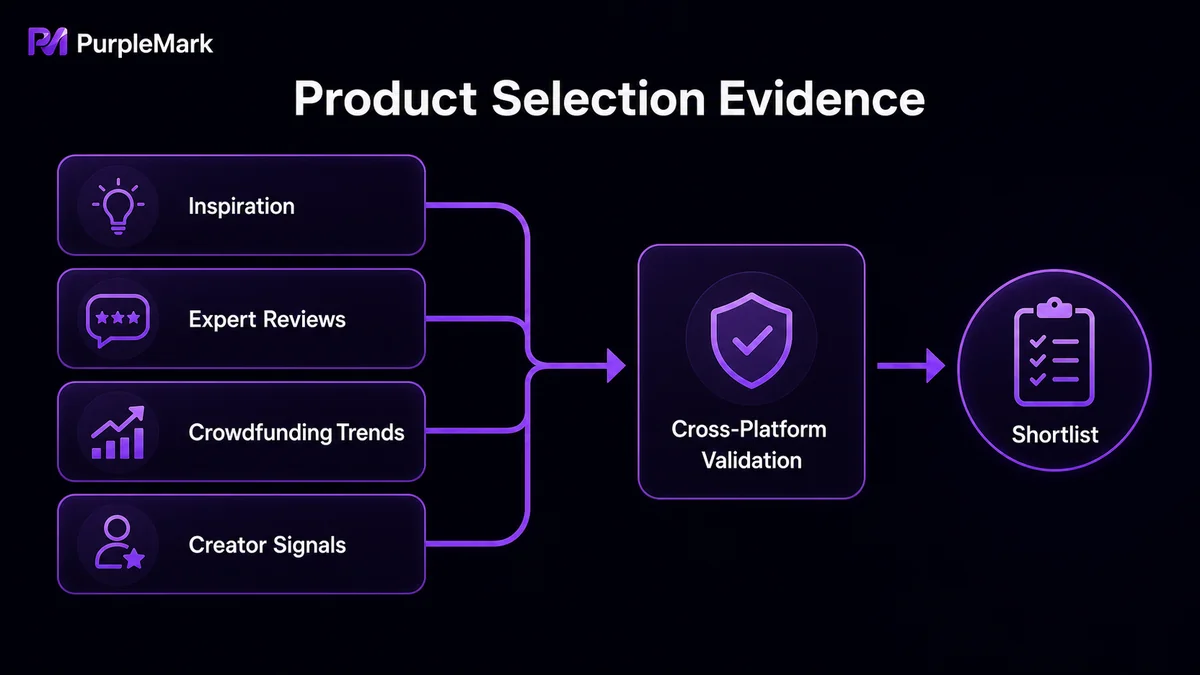
There is no permanent formula for product selection. Creative shops provide ideas, professional reviews reduce risk, crowdfunding reveals trends and creators provide demand signals. Combine them with cross-platform validation so selection becomes a repeatable method rather than luck. For solo sellers, browsing widely, comparing and validating are among the most worthwhile investments.


