
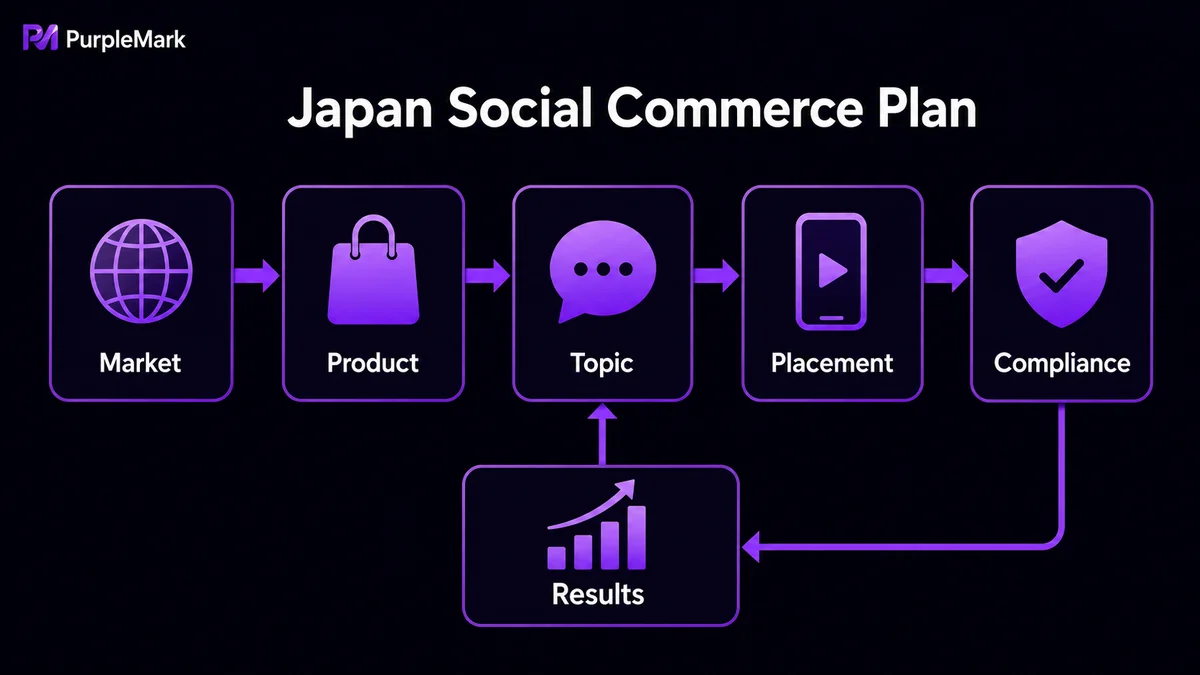
Japan is one of the world's leading e-commerce markets. TikTok Japan's young, highly active audience creates a new opportunity for cross-border sellers. This article covers market characteristics, product directions, content topics, ad placements, and compliant operations.
Japan is one of the world's leading e-commerce markets, where Amazon Japan and Rakuten are already well established. In recent years, however, TikTok Japan's large, highly active young audience has become an entry point that cross-border sellers cannot ignore. Understanding the market's character and playbook first makes it much easier to build a business there.
Start by Understanding TikTok Japan
TikTok Japan brings together many young people who enjoy sharing and exploring new things. Unlike shelf-style marketplaces such as Amazon Japan and Rakuten, it has a highly participatory, entertainment-led ecosystem. Sellers can use short videos and livestreams to show products clearly and interactively, letting users buy while they scroll for fun. That is social commerce in practice.
Much of the content is user generated. Sellers can also work with local creators and influencers, using their creative content and the trust of their followers to promote products more naturally than a hard advertisement.
Product Directions for Japan
Japanese consumer preferences differ substantially from those in Europe and the United States, so local culture deserves research first. These directions have performed well on TikTok Japan:
- Multifunction consumer-tech products: TikTok Japan has a relatively high share of male users interested in technology. Practical, tech-forward items such as multifunction smartwatches can be appealing.
- Seasonal and creative gifts: Gift giving is deeply rooted in Japan. Around Christmas, Valentine's Day, Mother's Day, and other occasions, personalized accessories, custom art, and smart lifestyle gadgets can sell well.
- Women's beauty and cosmetics: Demand for skincare and makeup remains strong. Product selection should emphasize quality, results, and fit with local skincare habits.
- Automotive products and smart home: Car accessories and maintenance tools have a market among male users, while smart-home products such as automatic cleaning and intelligent lighting also attract attention.
Content Topics That Can Ride Trends
Many TikTok Japan users are Gen Z or millennials, and several topics naturally draw traffic:
- Vlog-style daily life: Beauty and fashion brands can launch challenges that invite users to share looks; home brands can invite people to show their spaces. Authentic content feels more approachable.
- Anime: Anime has deep roots in Japan. Ads with storytelling and a strong anime-inspired visual impact often capture attention better than ordinary commercial ads.
- Video games: Gameplay, new-game recommendations, and funny gaming clips attract substantial views. Brands selling peripherals or related merchandise can integrate products thoughtfully.
How to Plan Ad Delivery
Three placement types are commonly considered for promotion on TikTok in Japan:
- TikTok main-app placements: These reach young users. Short-video creative is best kept to 5–15 seconds. Japanese users value genuine comment feedback, so comment management matters for reach.
- News-app inventory (such as TopBuzz and BuzzVideo): Audiences are often adult men with stronger purchasing power. Conversion costs can sometimes be lower, but available scale is limited, so this works better as a supporting channel.
- Pangle placements: More e-commerce advertisers have used these placements in recent years to reach high-potential buyers. Reported conversion returns make them worth monitoring.
Two Practical Challenges to Face
Cross-border selling on TikTok Japan has two unavoidable realities.
First is network and account environment. Platforms use many signals to assess an account's location and operating environment. If multiple accounts are crowded onto the same IP address and device environment, they can be treated as linked; trouble with one may restrict the others.
Second is compliant operation. Use compliant, stable network and account environments that can support long-term work. Do not force the issue with gray-area methods such as location spoofing or removing SIM cards; detection can create greater risk.
For sellers maintaining several Japan-market accounts, a useful approach is a multi-account browser tool that gives each account an independent, isolated sign-in environment. Keeping fingerprints, cookies, and proxies separate reduces the likelihood of an association finding. Automation can handle repetitive operating tasks where appropriate, leaving time for content and meaningful engagement.
Conclusion
TikTok Japan offers real opportunity, but it requires refined operations: understand Japanese product and content preferences, select suitable ad placements, and keep account environments orderly within compliance boundaries. For sellers expanding into Japan, it deserves serious consideration as an incremental channel.


