
Before growing a new Instagram account, it helps to understand how its recommendation system works. This article breaks down the algorithm logic behind Feed, Stories, Explore, Search, and Reels, then gives practical account-growth ideas for each so you can avoid common detours.
Instagram is a traffic platform that cross-border sellers and content creators can hardly ignore, but it is also famous for being difficult to figure out. Its underlying logic is not actually mysterious—once you understand how recommendations work in each section, you have a clearer direction for growing a new account. This article starts with five key sections and then turns those ideas into practical operating recommendations.
Instagram Does Not Have “One Algorithm”—Each of Five Sections Has Its Own
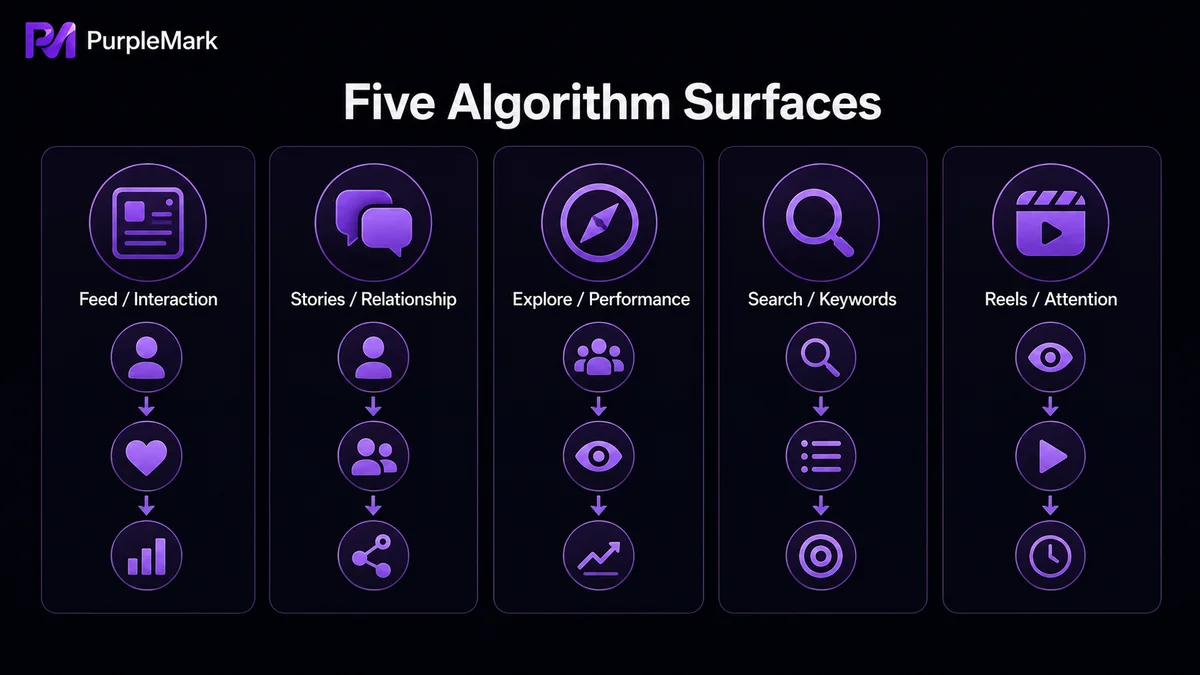
Many people assume Instagram uses one unified recommendation system. In reality, its five major sections—Feed, Stories, Explore, Search, and Reels—each have their own algorithms. What they share is this: the richer and more consistent your interaction signals are on the platform, the better the system can match you with users who have similar interests. That is why “posting consistently + interacting actively” is a basic requirement for account operations.
1. Feed
Most posts you see in the Feed are “personalized recommendations” based largely on your viewing and interaction history. For ranking, important recent interactions such as shares, saves, and comments usually carry more weight than older activity. In other words, accounts that consistently generate high-quality engagement are more likely to appear near the top of followers’ feeds.
2. Stories
Story recommendations depend more heavily on “relationships”: Stories from accounts you visit frequently or subscribe to are more likely to be prioritized for your followers. The system can also expand distribution through the social graph—people followed by your friends, and people followed by accounts you follow, may also encounter related Stories. Building genuine relationships with core followers and accounts in the same niche can therefore help Stories gain secondary reach.
3. Explore
Explore works like a “public square” and is closer to intelligent content recommendation, using your past behavior and interests to suggest content. Compared with other sections, it places more emphasis on the performance of an individual post—the more likes, comments, shares, and saves it receives, the better its chance of appearing on Explore. If you want more people who do not know you yet to discover your content, focus on creating posts people genuinely want to share.
4. Search
Many people do not realize that Instagram also requires “on-platform SEO.” Search is directly related to keyword placement: when accurate keywords are incorporated naturally into post copy, titles, and descriptions, your content may rank more prominently when users search for those terms within Instagram. Keywords are not only a Google concern; on-platform search is also an important traffic source.
5. Reels
Reels is the most entertainment-driven section, so whether your content can grab attention is crucial—visual impact and background music often determine whether users stop scrolling. Reels is a key placement for breaking out of the “only followers can see me” limitation, and when handled well, it is often recommended to large numbers of people who do not follow you. If you want to reach new followers, Reels deserves focused effort.
Practical Tips for the Account-Startup Stage
Once you understand the algorithms, you have clear levers to work with:
- Define your “account identity” and “audience” first: Who is the account for, and what problem does it solve? Those answers shape your content direction and also make it easier for the algorithm to find the right audience for you.
- Post consistently instead of disappearing for days: Algorithms favor accounts that are active and consistent. A predictable posting rhythm matters more than occasional bursts of activity.
- Work on both content and keywords: Place keywords in titles, body copy, and descriptions so you can support both on-platform search and Feed recommendations.
- Prioritize 1–2 sections first: Do not try to master everything at once. Start by producing consistently in the formats you are strongest at, such as Reels or image-and-text Feed posts.
- Keep engagement genuine: Thoughtfully replying to comments and proactively interacting with accounts in the same niche is more useful than mechanical engagement boosting, and it is also more aligned with platform rules.
If you operate multiple accounts at the same time—for example, an account matrix or accounts targeting different markets—it is better to prepare a separate, clean login environment for each account. This can reduce the chance of accounts being judged as linked and also makes it easier to manage posting schedules consistently.
Summary
Instagram’s algorithms are not magic; they are a combination of “content + engagement + keywords.” Understand the logic of the five sections first, then publish consistently according to your positioning and interact sincerely. Over time, the account can build momentum. Do not rely on shortcuts: solid content and healthy operating practices are what the algorithms can reward over the long term.


