
Mercari US and Mercari Japan are two separate markets with very different rules, seller requirements, and fulfillment models. This guide explains the real identity requirements for Mercari US sellers, the differences between the US and Japan marketplaces, and what cross-border sellers should prepare for compliant participation.
Over the past two years, more cross-border sellers have shifted some attention from Amazon and eBay to C2C secondhand marketplaces. Mercari, a leading platform in Japan, also has a sizable user base in the United States. Many tutorials say “go sell on Mercari US,” but they often skip one important premise—Mercari US and Mercari Japan are completely separate marketplaces with very different rules and entry requirements.
This guide explains in plain language what Mercari is, what Mercari US actually requires from sellers, how it differs from the Japan marketplace, and what cross-border sellers should understand before trying to participate compliantly. By the end, you should have a clearer idea of whether this route fits you and why claims such as “just get the documents and you can start selling” can be misleading.
What Kind of Platform Is Mercari?
Mercari was founded in Japan in 2013. At its core, it is a secondhand marketplace built mainly around consumer-to-consumer (C2C) transactions: individuals list items they no longer need, other users buy them, and the platform facilitates the transaction and payment. Unlike Amazon or eBay, which also emphasize professional stores and brands, Mercari focuses more on lightweight selling, quick transactions, and value. Categories include clothing, home goods, electronics, collectibles, toys, and more, with everyday products and low-to-mid-priced items making up a large share.
One point requires special attention: Mercari US (mercari.com, launched in 2014) and Mercari Japan are operated as separate marketplaces. Accounts, fees, shipping systems, and rules are not interchangeable. You cannot use a Mercari Japan account to sell in the US marketplace, or vice versa.
The Biggest Differences Between Mercari US and Mercari Japan
Many sellers assume that “one Mercari account works everywhere,” but that is not the case. Two differences are especially important:
Entry and identity requirements are different. Mercari US primarily operates for US-based sellers. Registration and payouts involve US tax identification (such as an SSN or ITIN), a US bank account, a US address, and related identity and financial verification. Mercari Japan uses a separate system for the Japanese market with its own registration and tax logic. Accounts and identity information cannot be mixed between the two marketplaces.
Fulfillment and shipping methods are different. Mercari Japan is highly localized, with specific expectations around shipping times and logistics checkpoints. Sellers on Mercari US generally ship through US logistics options under the platform’s rules, while payouts and tax reporting also follow US requirements. The idea of “selling globally from one account” does not apply to Mercari.
The Real Seller Identity Requirements on Mercari US
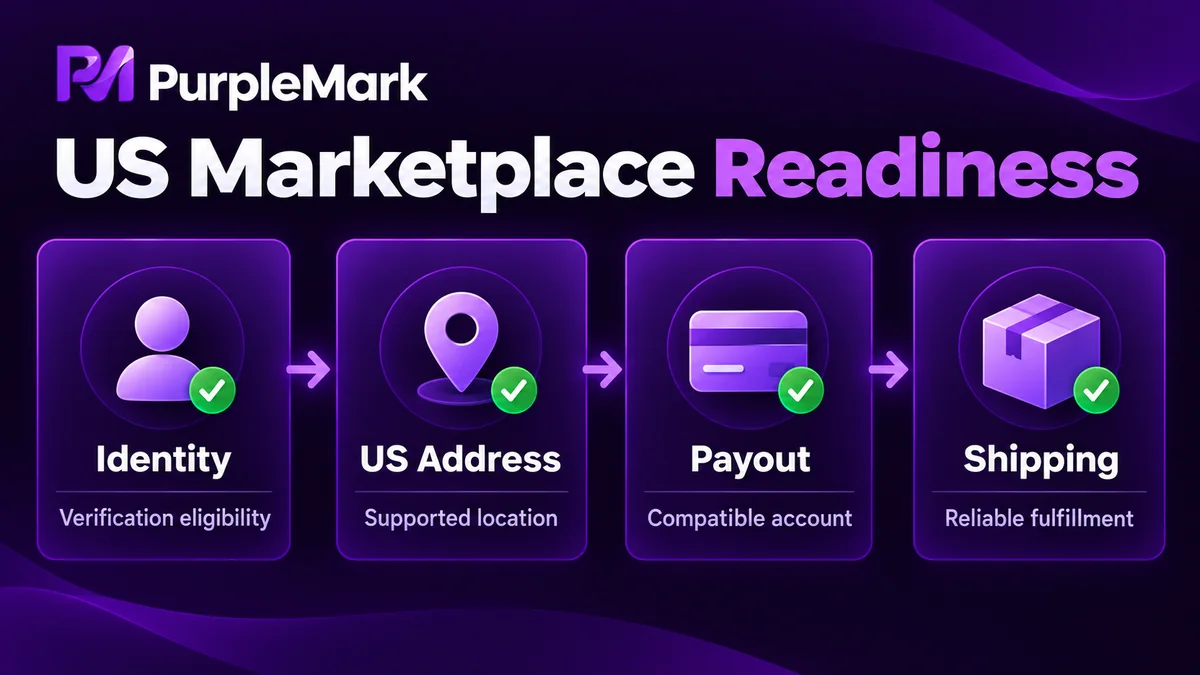
If you live outside the United States and do not have a valid US identity setup and bank account, directly registering as a Mercari US seller is generally not a viable route. A compliant setup normally requires the following:
- Verifiable identity information: You must be at least 18 and provide genuine identity and tax information that meets the platform’s requirements (US individuals may need an SSN/ITIN; businesses may need an EIN, or Employer Identification Number).
- US contact information: A US phone number capable of receiving verification codes.
- US mailing address: An address used by the platform for returns and logistics.
- US payout method: A US bank account that can receive payouts, such as via ACH, or another payment method accepted by the platform.
- One account per person: The platform explicitly prohibits operating multiple accounts, and the information provided must be genuine and consistent.
In other words, the legitimate entry point is that you or your partner entity first has real, compliant US qualifications. Any service claiming it can “prepare a full set of US documents and open an account for you” may be encouraging the use of false identity information to bypass platform rules. That can violate Mercari’s terms, involve identity fraud, put the account at risk of suspension, and jeopardize funds. It is not a route to take.
What Cross-Border Sellers Should Understand First
Instead of focusing on “how can I open a US account while I am in China,” start by answering these questions:
1. Which market are you actually trying to serve? Mercari Japan and Mercari US are two different businesses. The US marketplace is designed around local US sellers, while the Japan marketplace serves Japan. First determine which one fits your supply, target customers, and fulfillment capability, then consider entry—not simply which marketplace seems easier to register for.
2. Do you have a compliant entity and payment flow? If you genuinely want to operate on Mercari US compliantly, you, your company, or your US partner must have a real US identity or business entity and a legitimate payout channel, while meeting the platform’s tax-reporting requirements. Without that foundation, there is no compliant onboarding path.
3. Understand the platform’s lightweight operating model. Mercari is a C2C marketplace, not an Amazon-style advertising machine. Its rhythm is closer to “consistently running a small secondhand stall”: provide accurate product information, process orders and shipping promptly, and keep the account normally active. This is more sustainable than suddenly uploading a huge volume of listings. The platform uses AI and manual review to detect violations and counterfeit goods, so treating accounts as “unlimited clones” for volume is the wrong direction.
4. Plan account management and environment isolation in advance. If you genuinely operate several real accounts that you or your organization legitimately control—for example, accounts for different marketplaces, product categories, or team members—it is easier to manage them when each runs in a clean, separate environment. PurpleMark’s web workspace can place each account in its own browser environment, configure proxy, Cookie, and fingerprint settings, and group environments by marketplace or team. For collaboration, member permissions, sharing, and activity logs make it clear who manages each environment instead of forcing many accounts to be switched back and forth inside one browser on one computer.
To be clear, PurpleMark is an environment-isolation and account-management tool. It helps you organize multiple accounts that are genuinely yours and compliant; it is not, and will never be, a tool for fabricating identities to open accounts. Identity compliance must be solved through real people or legitimate entities. A tool cannot replace that requirement.
Basic Listing Skills for New Sellers
If you already have a compliant entity, these practical details matter when entering the US marketplace:
- Start with simpler products: Lower-risk categories such as accessories, stationery, and small home goods can be easier starting points than categories with complicated after-sales issues.
- Use local search language in titles: Use terms US buyers actually search for, such as “Anime Figure” rather than a direct untranslated term, and keep photos simple with the product itself clearly visible.
- Do not try to scale overnight: Use a new account normally, build genuine transaction history, then increase listings gradually. Moving from fewer listings to more over time is healthier than posting hundreds of items on the first day.
- Keep fulfillment reliable: Update logistics information promptly and route funds through compliant payout channels.
Frequently Asked Questions
Can I open a Mercari US seller account without US identity credentials? Not through the standard compliant process. Mercari US is designed for US-based sellers and involves US tax identification, a bank account, and an address. Registering with someone else’s or fabricated information violates platform rules and can carry legal risk. If you want to participate, first establish a compliant US entity or consider a market that better matches your qualifications and supply chain.
Can one Mercari account sell on both the US and Japan marketplaces? No. Mercari US and Mercari Japan are separate marketplaces with different accounts, identity information, and settlement systems.
Does Mercari charge sellers a fee? Mercari US currently charges seller fees on completed transactions, generally calculated as a percentage of the item price plus buyer-paid shipping. Buyer protection fees may also apply, and 1099-K tax reporting can be relevant. Check Mercari’s current official disclosures for exact rates because policies can change over time.
Is the common advice to “warm up an account before listing” legitimate? What platforms want is genuine, consistent usage history. If “warming up” means bulk-registering accounts with fake identities and disguising their activity, that is a violation. If it simply means a real seller browses normally, builds reputation, and gradually starts listing, that is just a healthy operating rhythm. The two are fundamentally different.
Conclusion
Mercari US and Mercari Japan are two different paths. The real prerequisite is whether your legal entity and payment flow are compliant, not merely whether you have “a complete set of documents.” First decide which market you want to serve, whether you have a genuine eligible entity, and whether your supply and fulfillment can support it. Only then should you think about listing pace and account-environment management. When the direction is right, tools such as PurpleMark can help keep multiple environments and accounts organized; when the direction is wrong, no tool can fill a compliance gap.
(Compliance note: Always follow Mercari’s current official terms and operate using genuine, personally authorized, and compliant information.)


