
DDP and DDU are logistics terms that appear constantly in foreign trade, while D2C is an increasingly common business model. This guide explains in plain language how responsibilities and costs are divided under DDP and DDU, their pros, cons, and suitable scenarios, then introduces the value of direct-to-consumer sales and practical directions for traditional sellers moving toward D2C.
People new to foreign trade are often confused when abbreviations such as "DDP" and "DDU" appear in quotations and contracts. These terms determine who pays freight and duties, who bears the risk, and therefore directly affect your costs and profit. In recent years, another term—"D2C"—has become common, but it refers to something completely different. It is not a shipping term; it is a way of selling. Here is a clear explanation of all three.
DDP: the seller delivers the goods with duties paid
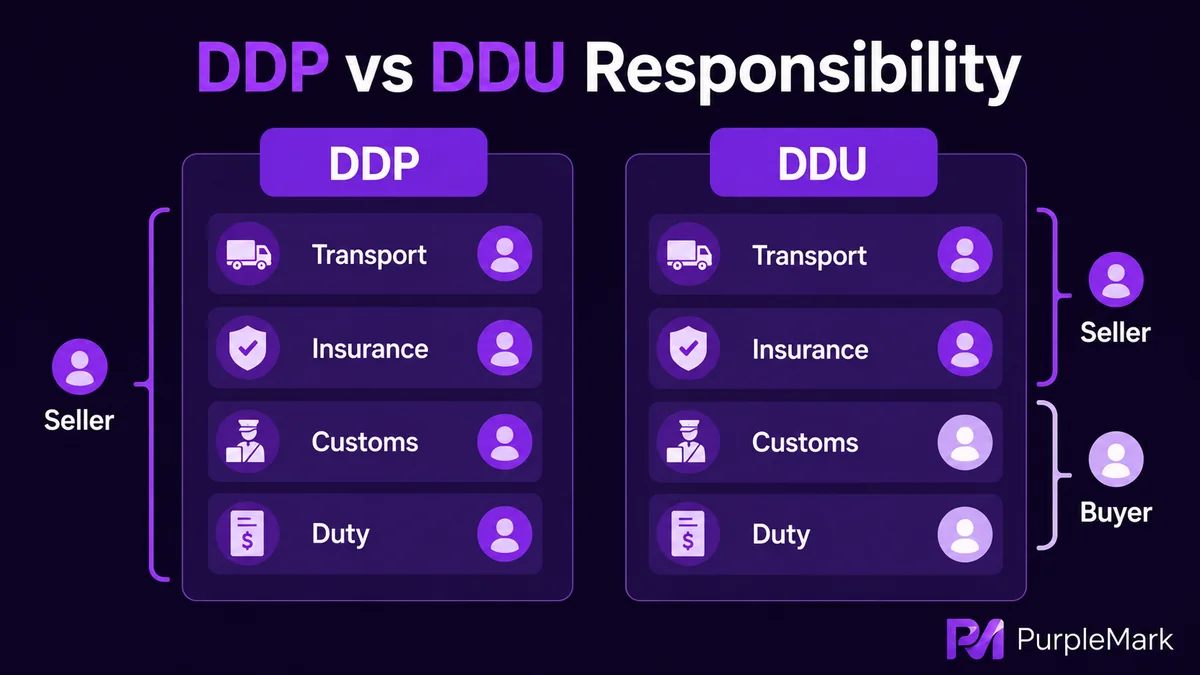
DDP stands for Delivered Duty Paid. Under this term, the seller takes on the greatest responsibility: the seller must not only deliver the goods to the buyer's specified destination, but also cover transportation, insurance, customs duties and other taxes in the destination country, as well as handle customs clearance.
For the buyer, the biggest advantage of DDP is convenience. When the shipment arrives, there is no need to worry about extra charges or customs clearance because all costs have already been included in the transaction price. The process is simple and transparent, which can also help build trust. For the seller, however, transportation, insurance and duties must be calculated accurately in the quotation, otherwise the deal can easily become unprofitable later.
DDP is suitable for sellers who understand the destination market, tariff policies and customs procedures well, especially when selling high-value products or offering end-to-end service to improve the customer experience.
DDU: the seller delivers, but the buyer handles duties
DDU stands for Delivered Duty Unpaid. The key difference from DDP is that the seller delivers the goods to the buyer's specified destination and covers transportation and insurance, but does not handle the destination country's customs duties, taxes or customs clearance. The buyer takes care of these after the goods arrive.
For sellers, DDU reduces risk because they do not have to take on duties or customs-clearance obligations. Buyers, meanwhile, have more flexibility to choose their own customs broker and payment method. The downside is that the buyer must bear the extra time and cost of customs clearance. If the buyer is unfamiliar with tariffs, unexpected charges may arise, leading to disputes or even reducing repeat purchases.
DDU is generally better suited to buyers who understand customs duties and clearance in the destination country, or transactions in which the buyer prefers to control the clearance process.
How to choose between DDP and DDU
The core difference can be summarized simply: with DDP, the seller covers everything including duties; with DDU, the seller delivers the goods but the buyer pays the duties.
| Comparison | DDP (Delivered Duty Paid) | DDU (Delivered Duty Unpaid) |
|---|---|---|
| Responsibility | Seller handles transportation, insurance and customs clearance | Seller handles transportation; buyer handles customs clearance |
| Costs | Seller pays freight, insurance, customs duties and taxes | Buyer pays customs duties and clearance costs |
| Risk | Seller bears transportation risk and the risk of duty changes | Buyer bears customs-clearance-related risk |
| Best suited for | Seller knows the destination market and wants to provide end-to-end service | Buyer understands customs clearance and is willing to handle duties |
When choosing, sellers should consider how well they understand tariff regulations and customs procedures in the target market, and whether they can bear transportation and duty risks throughout the process. If they can and want to use an "all-inclusive, transparent and convenient price" as a selling point, DDP may be appropriate. If they prefer to control risk and keep costs easier to calculate, DDU may be the better fit.
After the logistics terms, what is D2C?
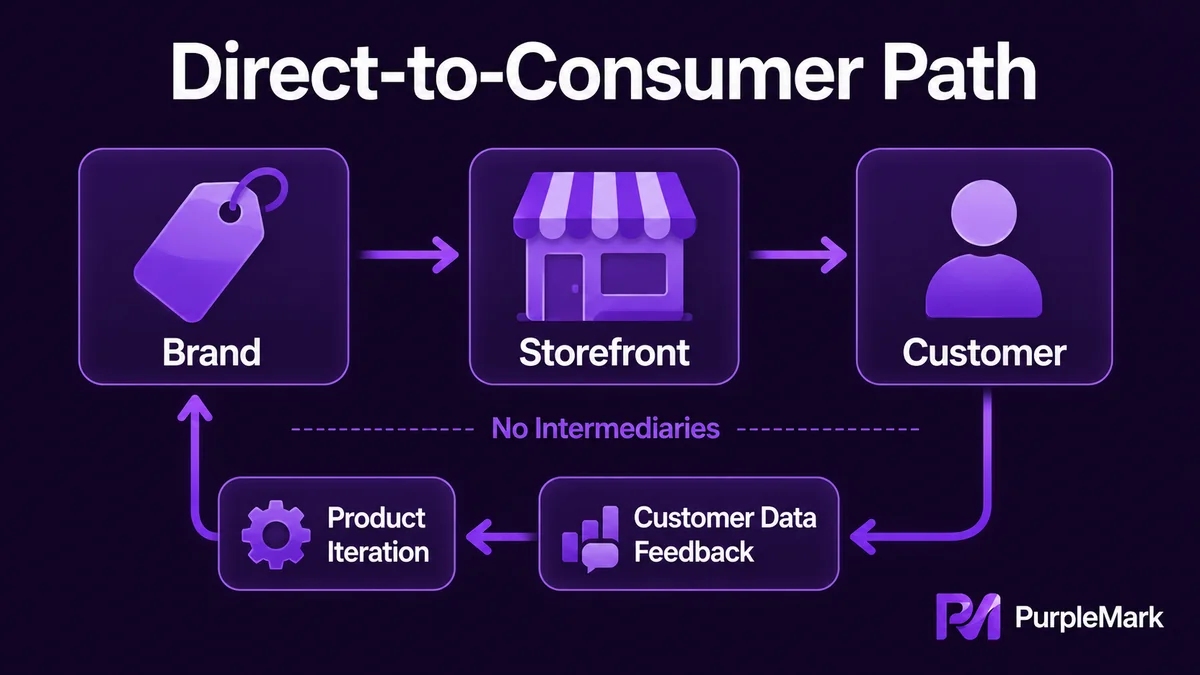
DDP and DDU answer the question of "how the goods are delivered," while D2C (Direct-to-Consumer) answers "who the product is sold to and how it is sold". It is a model in which a brand sells products directly to consumers through its own channels—such as an official website, e-commerce platforms or social media—without relying on wholesalers or other intermediaries.
D2C has received a great deal of attention in cross-border commerce because it reduces brands' dependence on intermediary channels. Brands can obtain customer data directly, interact with consumers themselves, and adjust products and marketing strategies more quickly. The U.S. market is a good example: D2C e-commerce has continued to grow in recent years, and brands such as eyewear company Warby Parker, men's grooming brand Dollar Shave Club and mattress brand Casper are well-known examples built around direct relationships with consumers.
Compared with traditional retail, D2C has several practical advantages: brands can interact directly with consumers and build loyalty; use data to make decisions and optimize products and advertising; improve margins by removing middle layers; and adjust products and marketing quickly based on market feedback. The disadvantages are equally clear: traffic acquisition, customer service, logistics and after-sales support all have to be handled by the brand itself, making the initial setup more demanding.
Where can traditional cross-border sellers start when moving to D2C?
If you currently rely mainly on marketplace distribution and want to move toward D2C, two directions are usually a practical starting point:
First, optimize the product line around the target market. D2C requires a strong understanding of consumers instead of passively waiting for a platform to send traffic. Use market research, surveys, social-media feedback and competitor analysis to identify what the target market really needs, then adjust product categories, specifications and pricing. Before launching a new product, run small-scale tests, collect feedback and iterate to reduce the cost of trial and error.
Second, make social media the main channel for direct consumer engagement. Brands can use platforms such as Instagram, TikTok and Facebook for content marketing—sharing customer stories and product-use scenarios, while responding promptly to comments and direct messages to gradually build their own audience and customer base. With sufficient budget, social advertising can also be used for more targeted reach.
One point to keep in mind: many D2C brands operate accounts on several platforms and serve different markets at the same time. That is normal, but social platforms may monitor device information and browser fingerprints. If multiple accounts are all signed in from the same environment and device, the platform may identify them as related and restrict them. A more orderly approach is to give each legitimately operated account its own browser environment and login state, keep account sessions separate, and, when a team is involved, organize accounts by owner and group to reduce operational mistakes and avoid one account problem affecting others.
Summary
DDP and DDU are delivery terms about "who pays the duties and who handles customs clearance," while D2C is a business model about "how a brand sells directly to consumers." They solve different problems, but both are important in cross-border business. Understanding when to use DDP or DDU helps keep quotations and costs under control; understanding and testing D2C may open a path that brings the business closer to customers and potentially improves gross margins.


