
Still relying on blunt Facebook ads for cross-border e-commerce? This guide covers precise advertising, content-led engagement, and cross-platform distribution, replacing mass-comment spam with legitimate lead generation while protecting the operating environment for your accounts.
For cross-border e-commerce operators, Facebook is almost unavoidable. Its enormous user base makes it one of the most direct ways to reach potential customers. But abundant traffic does not automatically mean easy customer acquisition; the real question is how to turn visibility into qualified customers. This article breaks down several proven lead-generation paths and discusses account security, an easily overlooked prerequisite.
Decide first: do you want visibility or harassment?
A supposedly effortless tactic is often promoted online: use tools to post comments in bulk under other people's posts and groups, forcing a store link into the conversation. It may appear to create huge exposure, but it is classic low-quality traffic acquisition. It will likely be treated as spam; at best, people ignore it, and at worst it triggers platform risk controls and puts the account at risk.
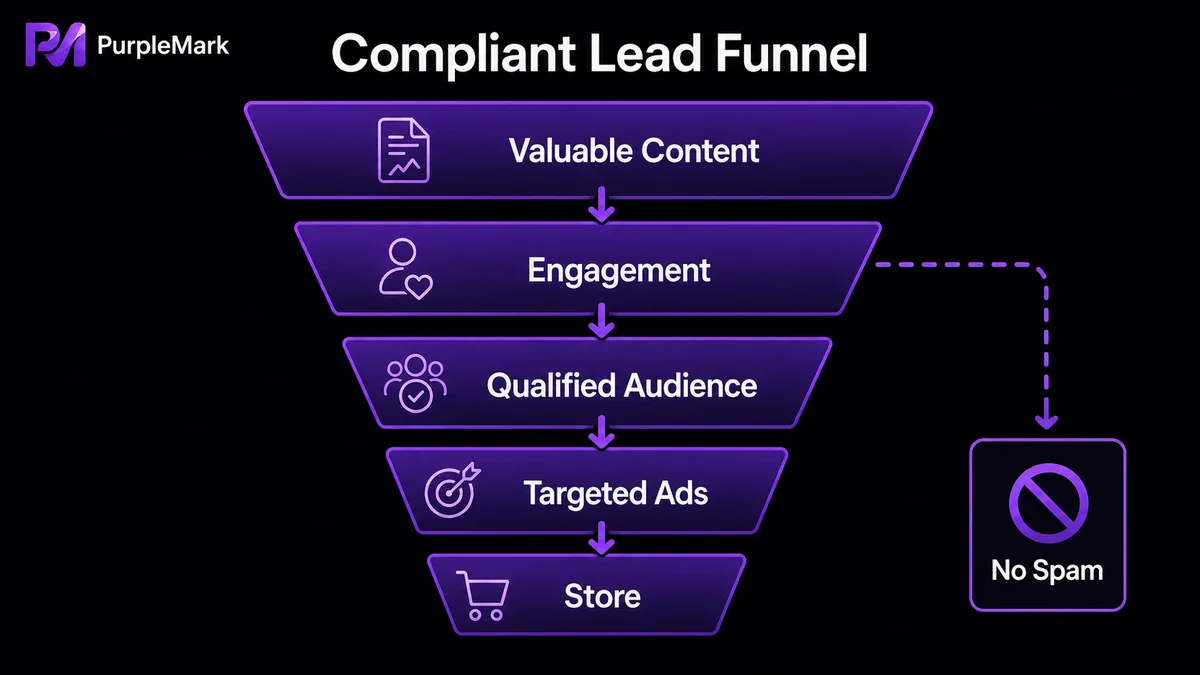
Legitimate lead generation begins with genuine interest from the person you reach. Rather than flooding every possible audience, invest in relevant content and precise outreach.
Spark interaction with content, not a barrage of links
What keeps people on social platforms is interaction, not one-way promotion. When you consistently publish discussion-worthy topics or visuals that make people smile, users will naturally like, comment, and share, creating additional reach. To make participation more controllable, run lightweight activities such as giveaways or check-ins that give users a reason to join.
The key is two-way communication. A prompt, sincere reply to a question in the comments builds more trust than ten more advertisements. When appropriate, creators in the same field can add valuable social proof. These actions deserve far higher priority than disruptive promotion at scale.
Spend ad budget on the right people
Paid advertising magnifies customer acquisition, but only when it is accurately targeted. Refine three dimensions:
- Creative: Capture attention at first glance; avoid the same template image everyone uses.
- Timing: Deliver ads when the target audience is active rather than wasting budget in low-attention hours.
- Audience: Segment and define audiences so ads reach people who actually have a need.
Advertising is not a one-off purchase. Watch feedback data in the ad dashboard and adjust creative and strategy continuously so every unit of budget works harder. Facebook's auction system rewards operators who understand targeting and optimization with more meaningful exposure.
Distribute content across more platforms and connect the journey
Do not leave a strong piece of content only on Facebook. Reformat it as images or short video and distribute it on other social platforms to broaden reach. Connect social profiles with your independent website and store pages so users can move smoothly between platforms and ultimately join channels you control. Since each platform has its own character, adapt the material to fit rather than broadcasting the identical post everywhere.
Do not overlook the foundation: a secure account environment
Even energetic lead generation is wasted if the operating accounts cannot remain stable. Facebook scrutinizes account security and account association. Frequently signing into many accounts on the same device can lead to linked-account detection, collective restrictions, or even bans.
That is why many sellers prepare isolated sign-in environments for separate business accounts. One environment runs one account, while network settings, cookies, and fingerprint parameters stay independent, reducing the chance of being classified as associated. Teams managing several regions, pages, or collaborators benefit from a unified workspace for accounts, networks, and device parameters.
With a multi-account browser tool, for example, you can create a dedicated environment for one operating account, attach an appropriate proxy and login cookies, and centralize team permissions and activity records. This supports Facebook's need for independent accounts while clarifying responsibility in collaboration and preventing basic errors such as opening an account in the wrong environment or contaminating configurations.
Conclusion
There is no shortcut to Facebook customer acquisition, but there is a repeatable method: create sincere content that earns interaction, show ads to the right people, and extend good content across platforms. At the same time, protect account security by operating multiple accounts through isolation and clear procedures. That is the kind of acquisition system that can run for the long term. Put these ideas into practice in your own accounts, then keep improving them over time.


