
Twitch income splits into on-platform and off-platform. This covers the thresholds and splits for subscriptions, Bits, and ad revenue, the differing requirements for Affiliate and Partner, how to negotiate affiliate sales and brand sponsorships, and what the realistic income structure looks like.
Money on Twitch comes from two sources: what the platform pays you directly, and what you negotiate outside the platform. The first requires status, the second does not, but it leans far more on content and trust. Once this split is clear, thresholds and payment terms fall into place, and your expectations will not end up in the wrong place.
How Affiliate and Partner Differ
Affiliate is the entry level, and the requirements are very specific: 50 followers in the past 30 days, 500 total minutes streamed, 7 streaming days, and an average of 3 concurrent viewers. Meet all four and you can apply directly from the dashboard, after which the qualifications for subscriptions, Bits, and ad revenue share open at the same time.
Partner is a level up. The reference line the platform gives is 25 hours of streaming, 12 different streaming days, and an average of 25 concurrent viewers. Meeting it only lets you submit an application; final approval is a manual review, and the platform also looks at content direction, community activity, and long-term consistency. Passing the reference line does not guarantee approval.
The difference between the two levels is not only in what can be unlocked; it also shows in the negotiating room on the revenue split, the range of available ad display options, and the badge on your channel page. When you are just starting out, there is no need to fixate on Partner. Get the four Affiliate numbers stable first, and the income channels will open on their own.
The Three On-Platform Income Sources
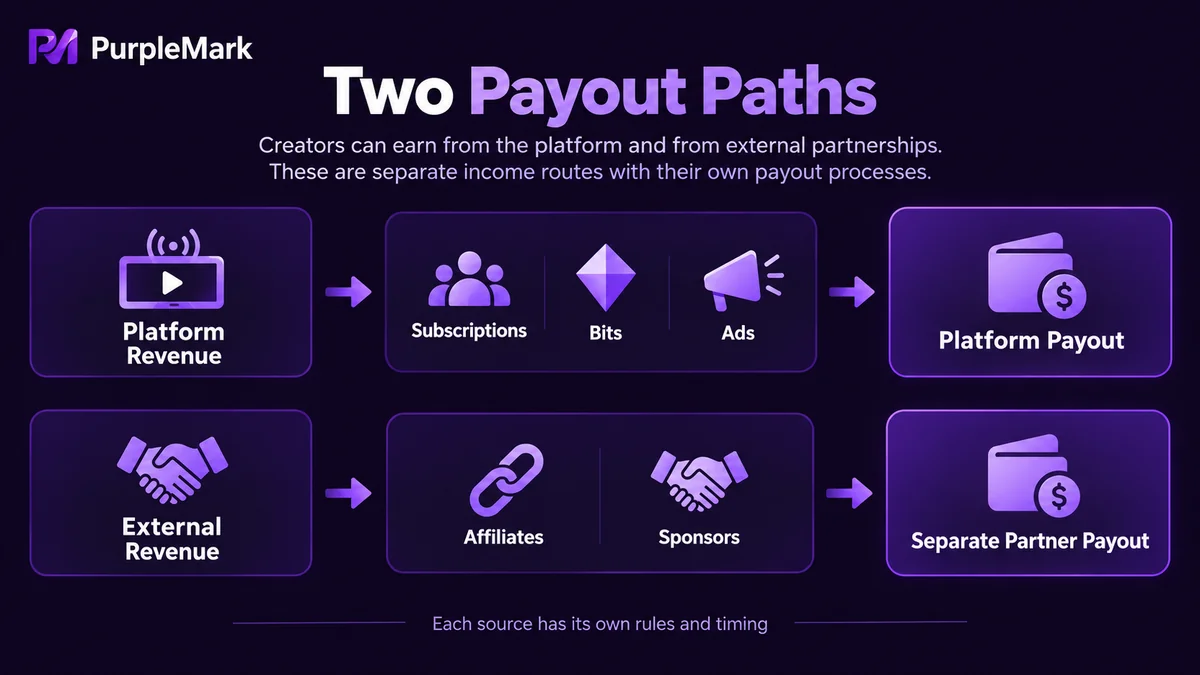
Subscriptions are the foundation. Viewers pay monthly and the streamer takes a share, 50/50 by default; higher subscription tiers cost more, and Partner can negotiate a higher percentage separately. The value of subscriptions is predictability: this month's income will most likely still be there next month. Beyond subscribing to themselves, viewers can also gift subscriptions to each other, and that counts toward subscription income as well. Prompting for it during a stream is often more effective than simply asking for donations.
Bits are the virtual currency viewers use to tip in chat, and the streamer gets 1 cent for every Bit received. The unit price is low, but the advantage is immediacy: viewers can give the moment their feelings run high, and for many small and mid-size streamers this is the first money they see. Tying tips to a specific interaction, such as promising to read the name out in chat, is more concrete than calling for support into the void.
Ad revenue is priced per thousand impressions, and the rate fluctuates with game category, viewer region, time slot, and watch duration. The longer you stream and the steadier your audience, the more ad impressions there are, but mid-roll ads hurt the viewing experience, so the pacing has to be weighed yourself. The ad settings on your channel also directly determine how much this income amounts to.
The Two Off-Platform Paths
Affiliate sales mean putting product links in a panel or in chat and earning a commission when viewers order. This path requires no platform status at all; the whole threshold is whether viewers are willing to trust your recommendation.
Brand sponsorships are negotiated per stream or per month, and the quote depends on viewership data, audience profile, and content fit. Before negotiating, it is best to have data others can understand; simply saying you have a lot of fans is not persuasive.
How the Money Arrives
On-platform income is settled monthly, but it is only paid out after you have filled in your tax and payment details in the dashboard and your account balance reaches the minimum withdrawal threshold the platform sets. The first withdrawal usually comes with an extra waiting period. The supported payment methods differ by region, so before choosing, confirm which one works where you are, so you do not save up enough and then find you cannot withdraw it. Off-platform income is settled separately, with payment terms set by the partner; a few weeks to a few months is common, so write the payment timing into the agreement when you negotiate.
The Realistic Income Structure
Top streamers take most of the income; for the majority in the long tail, a month may only cover equipment or a few meals. Subscriptions are the foundation for most people, ad revenue and tips fluctuate widely, and sponsorships and affiliate sales only become workable once your audience reaches a certain scale. Once the platform's cut, taxes, equipment, and time costs are all counted in, the numbers on paper and what you actually take home are two different things. What truly sets people apart is often not one viral stream but the group of long-time viewers who show up every time; they set the floor for subscriptions and tips.
One more thing that is often overlooked is streaming consistently. Data looks at trends; streaming three hours today and taking a week off tomorrow will make your average concurrent viewers and impressions look bad. A fixed schedule and a fixed duration are more useful than an occasional big stream.
One word on the bottom line as well: buying view counts, idling to pad stream hours, and buying or selling accounts are all actions the platform explicitly prohibits, and penalties usually include wiping out income or even a ban. Not worth trying.


