
TikTok Shop has enormous traffic, but many newcomers do not know whether to begin with a local or cross-border store, or which market to choose. Rather than covering complicated registration steps, this article helps you make the entry decision: choose a store model, match it to your qualifications, select a product direction, and build an account.
TikTok's traffic needs little introduction. That is why more cross-border sellers are turning to TikTok Shop: content creates demand and transactions can happen directly. Yet a newcomer who has not entered the market often first asks: Which type of store should I start with, and which market should I enter first?
Instead of rushing into how to fill out a store-application form, this article helps you clarify the entry decision. The direction you choose before joining can matter more to how far you go than the steps you take afterward.
First distinguish: Local Shop or Cross-border Shop
TikTok Shop currently has two main store models. Their entry thresholds differ considerably, so decide which situation fits you before choosing.
Local Shop
- Entity requirement: The store entity must be a company registered in the target market. For example, to serve the UK market, you need a UK company as the operating entity.
- Best for: Sellers who already have a company entity or local partners in the target country; they need faster logistics and local fulfillment, and can stay closer to local consumers.
- Key point: Its local nature can usually earn more consumer trust, but obtaining and maintaining a local company entity has a threshold.
Cross-border Shop
- Entity requirement: There is generally no strict restriction on where the entity is registered. Chinese companies, including mainland qualifications, are commonly supported, making it closer to the model of selling globally from China.
- Best for: Most sellers starting in China who want to use TikTok traffic to expand overseas.
- Key point: The threshold is relatively friendly, making it the first stop for most newcomers.
A simple rule: First check whether you have a company entity in the target country. If you do, consider a Local Shop; if not, start with a Cross-border Shop. The available markets and entry methods for both models keep changing, so always follow TikTok Shop's latest official recruitment policies before acting.
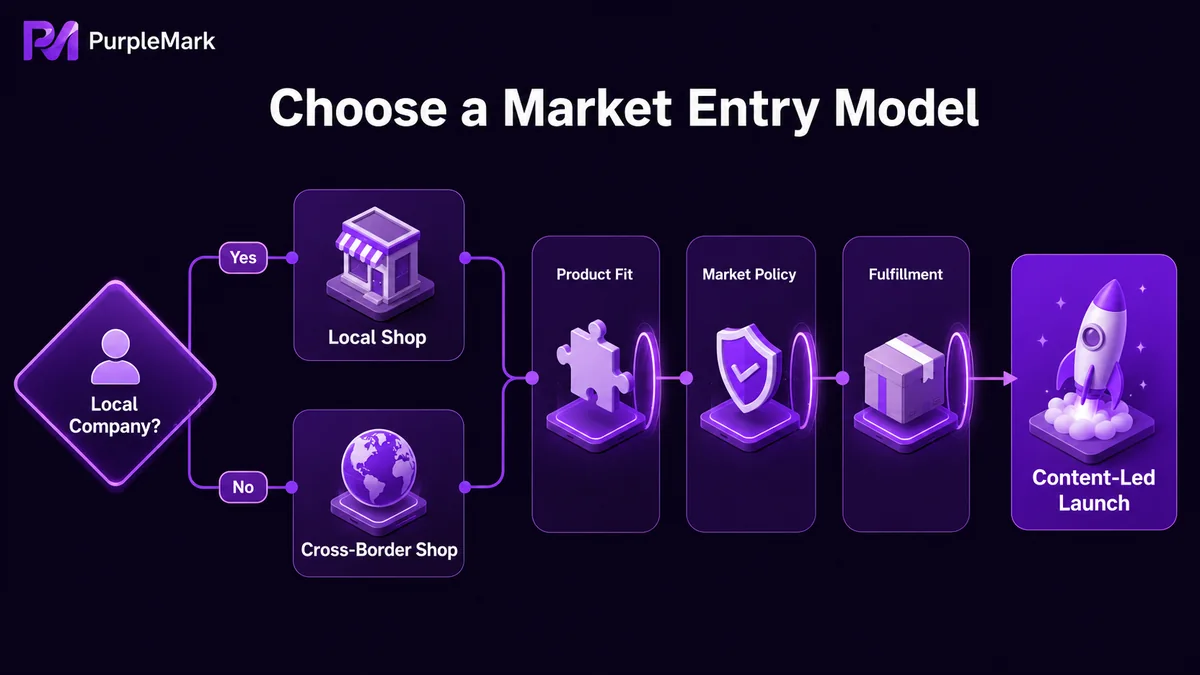
Do not rush in: clarify three things first
Once the store model is set, three questions are more important than registering immediately:
- Category: What will you sell—home goods, apparel, beauty products, or pet supplies? TikTok is driven by content-led purchases, so products with strong visual appeal and conversational potential work better. Niche products with little to show or discuss can struggle here.
- Positioning: Decide who you want to reach before choosing products. If you sell cat supplies, for example, the account name, avatar, and bio can revolve around “cat,” aligning content, audience, and products so recommendations become more accurate.
- Supply and fulfillment: Where will your inventory come from, and how will it ship? Cross-border stores commonly involve shipping from China or overseas warehouses; delivery times and return policies directly affect buyer experience.
How to operate an account instead of merely posting ads
A TikTok Shop is not a place where you add a link and automatically get buyers. It relies on account content and trust. New sellers often treat an account like an ad board, which earns neither views nor trust. A more practical approach is:
- Build account basics: On a new account, browse normally and interact in moderation so the platform gradually understands your preferences and positioning. Do not begin with frequent hard-sell activity.
- Keep content consistent with products: Continually publish useful, relevant short videos around your category and turn content interest into purchase interest.
- Actively manage the profile: Let your avatar, name, bio, and background clearly show the category direction and provide clear contact information, reducing the chance that users finish viewing without knowing whom to buy from.
Running several accounts? Keep their environments separate
Many newcomers test categories and directions through several accounts or stores at once. That idea is reasonable, but it contains an often-overlooked risk: cross-account environment overlap.
If you switch among several TikTok accounts or stores on the same computer and browser, browser fingerprints, cookies, and login sessions can overlap in one environment. TikTok or the platform may use that to judge whether accounts have abnormal associations, potentially resulting in reduced reach or linked account action.
If you operate multiple TikTok accounts or stores, you can look into PurpleMark browser. It creates an independent browser fingerprint, cookies, and local-storage environment for each account, separating accounts, proxies, and operating spaces. That lets you log in to and manage multiple accounts independently on one device; account groups also make multi-account product testing and matrix operations clearer and more controllable.
Reminder: Follow TikTok and local e-commerce-platform policies. Account environment isolation is for normal operations and clean multi-account data, not for mass account warming or evading platform rules.
Conclusion
For cross-border TikTok, the real first step is not registration. It is clarifying the entry point: Local Shop or Cross-border Shop, which market, which product category, and how to operate the account. Defining the direction before entering is far more efficient than registering impulsively and then feeling lost. For specific entry procedures and market details, always follow the platform's latest policies and keep up with changes.


