
The same IP can receive opposite verdicts from different checking tools. This article explains how database coverage and update frequency create discrepancies, how to cross-check multiple sources, and what to investigate when tests look normal but real-world use still has problems.
You buy a proxy, finish the setup, and the connection shows as successful, yet the account still runs into problems. Most people first check the IP; if the location looks correct and there is no proxy flag, they assume the environment is fine and start looking elsewhere.
The problem is that a single lookup can answer only a limited set of questions, and even its conclusion may not be reliable.
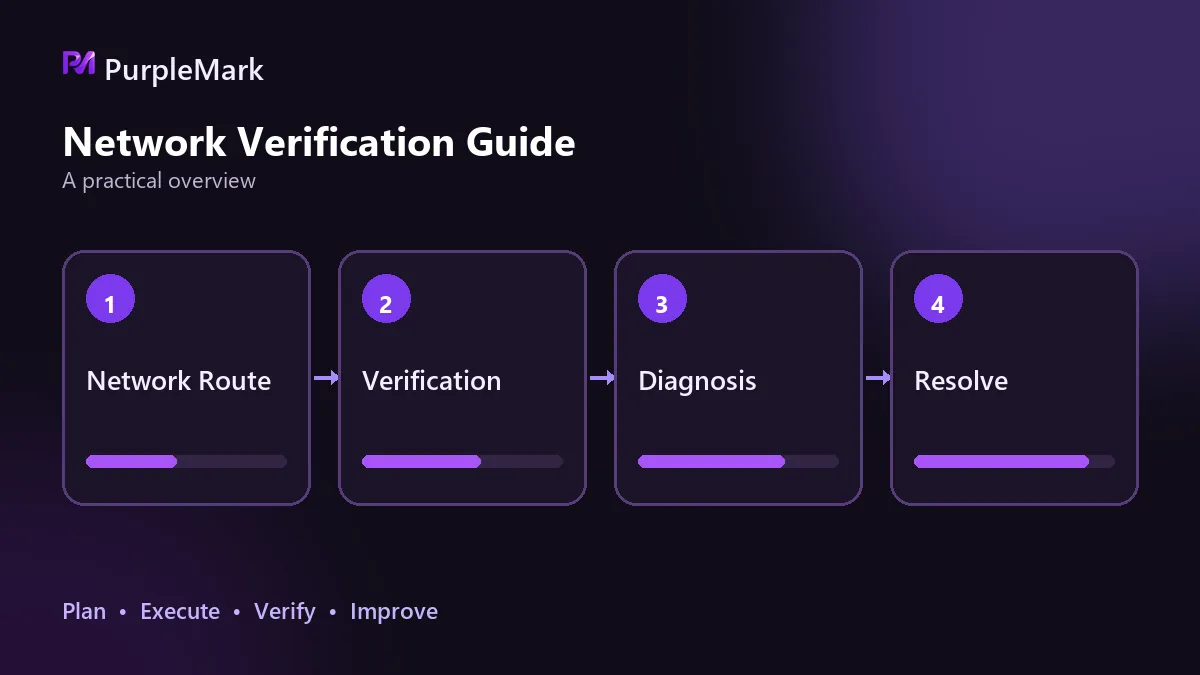
The same IP can get different answers from different tools
Tools commonly used for IP checks are often answering different questions.
One category checks geolocation and ownership, returning the country, city, ISP, ASN, and time zone. Another checks proxies and risk, judging whether an address is residential or data-center based, whether it shows proxy characteristics, and what fraud score it receives. A third category checks leaks, such as whether WebRTC or DNS exposes the real IP. These three types of information are not interchangeable: an IP can have the correct location and no proxy flag while the browser still leaks the real IP through WebRTC, something a geolocation lookup will never report.
Even tools in the same category often disagree. There are several reasons: they may use different data sources, such as ISP registration records, active probing and honeypot networks, or user reports; their coverage differs, so one database may contain an IP that another does not; update frequency differs, so a database can keep returning an old owner after the IP changes hands; and decision thresholds vary, because each provider defines for itself how much suspicion counts as high risk.
When these differences add up, one tool may mark an IP red while another marks it green. So do not rush to a verdict. Treat tools as different information sources, not different judges.
How to perform cross-validation
The first layer is multi-source comparison. Check the same IP with at least two tools that use different coverage logic. The goal is not to decide which tool is right, but to identify where the disagreement occurs. Large differences in geolocation suggest weak ownership data; large differences in risk assessments suggest that the IP itself sits in a gray area and should be treated more conservatively.
The second layer is to review ownership and carrier information together. Matching the city is not enough; you also need to see who owns the ASN. A residential ISP ASN and a cloud provider ASN look like two completely different things to a platform: the former resembles a real user, while the latter resembles a server. If an IP appears to be in the target city but its ASN points to a data center, a correct location does not make it more trustworthy.
The third layer is real-world behavior. The country assigned to an IP and whether your way of using it is internally consistent are separate questions. An IP may show the United States while the browser uses an Asian time zone, a Chinese interface language, and mismatched content preferences. Contradictions like these are often easier to detect than the IP itself. Details such as time zone, language, currency display, and common search habits should align with the IP location as a set. A database lookup cannot verify this layer; you need to visit the target platform and test it in practice.
All checks pass, but the account still has problems
When you troubleshoot further, the order matters more than the tool.
First confirm that the proxy is actually in effect. Do this independently and specifically check WebRTC and DNS for leaks; these issues are unrelated to whether the IP itself is clean. Many apparently clean IPs fail at this step.
Next, check whether the device identity and network identity are consistent. If parameters such as IP, time zone, language, and resolution contradict one another, general-purpose checking tools may report no problem, while a platform's risk-control system can still treat the mismatch as an abnormal signal.
Then examine account-side signals. Test a small batch of configurations on the target platform and watch whether CAPTCHA frequency rises, unusual-login warnings appear, or content reach and recommendation volume decline. These changes often show up before formal throttling or bans. Passing a general check does not mean the platform itself accepts the environment, so this step should not be skipped.
Finally, review the current state of the IP itself. IP reputation changes: an address that is clean today may not stay clean next week. Shared IPs are especially exposed to this because a previous user's behavior can place the address on a gray list, and residential IPs can also be flagged by mistake. When test results and real-world behavior do not match, this is worth checking again.
High-risk scenarios need a regular retesting schedule instead of checks only after something breaks. Record the key metrics each time so that, when a problem occurs, you have a baseline for comparison rather than relying on impressions about whether conditions became worse or were always the same.
The layer beyond IP testing
Even with a clean IP and no leaks, an account can still run into problems because risk controls evaluate overall consistency. Network identity, device identity, and account identity have a simple relationship: the first two should be internally consistent, while accounts should remain independent from one another.
A mismatch in any one of the three can create an abnormal signal. At the device-identity layer, giving each account an independent browser environment and matching the IP, time zone, and language as a set is a common way to align the network and device layers. PurpleMark provides environment isolation at the device-identity layer; each environment runs independently, and its parameters can be configured according to the IP's location.
As for the tools themselves, none can be comprehensive and perfectly accurate, and identifying high-grade residential proxies is inherently difficult. A practical approach is to keep a fixed combination of tools, retest on a schedule, retain the results, and then make the final judgment together with small-scale real-world tests on the actual platform.
This is only an explanation of technical methods and tool categories and does not constitute a recommendation of any tool or service.


