
Want to use LinkedIn to develop overseas B2B clients but do not know where to start? This guide explains a steady path for beginners, from warming up a new account and connecting only with target prospects to daily posting, engagement, and later multi-account role allocation.
Many people in international trade register a LinkedIn account, upload a profile photo, fill in a few details, and then have no idea what to do next. They send a few outreach messages, get no replies, and gradually stop using the account. In reality, whether LinkedIn brings you clients does not depend on adding huge numbers of people immediately. It depends on operating the account with a steady rhythm. The approach below breaks down several steps beginners often overlook and makes the process much more stable.
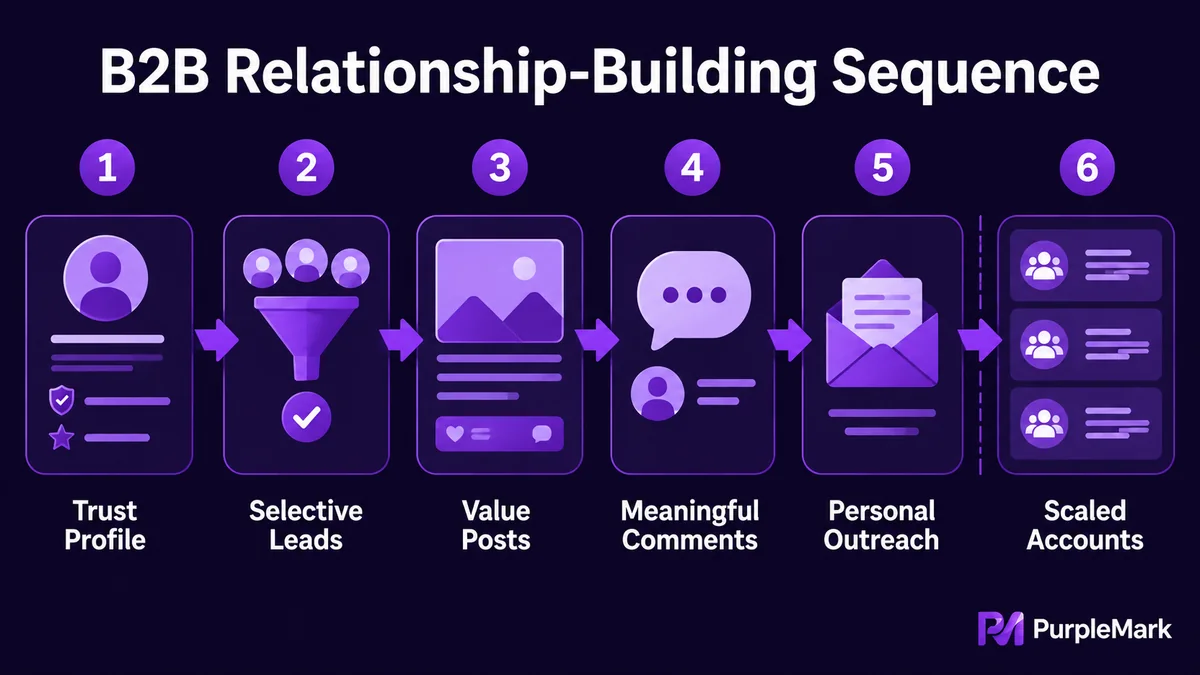
Do not rush to add people on a new account; build credibility first
LinkedIn is sensitive to large numbers of connection requests or batch invitations in a short period. If a newly registered account immediately starts adding people aggressively and mass-sending messages, it can easily be treated as a marketing account. In lighter cases, connection features may be restricted; in more serious cases, the account can be suspended. So during the first one or two weeks, the goal is not to find clients but to make the account look like a real, active professional profile.
A steadier rhythm is to complete your photo and profile summary on day one; over the next few days, add work experience and education, follow a few companies, and like or comment on posts from people in your industry. Only from around day three or four should you start adding a small number of connections. If possible, let established accounts with mutual connections help the new account gain activity first, then gradually connect with credible people in your industry after about a week. Do not rush. Keep both connection requests and likes at a modest level so the account can build a natural activity history.
Another key point at this stage is the environment. If the same email address, phone number, or browser environment is used to register and log in to multiple LinkedIn accounts, the platform may associate those accounts. If one runs into trouble, another may also be restricted. Getting into the habit of keeping each account in a separate network and browser environment is an important foundation for managing multiple accounts over the long term.
Be selective with connections: add clients, not a random social circle
A common beginner mistake is accepting or sending requests indiscriminately and adding everyone shown under “People you may know.” But the people you connect with early on often become important seeds for later recommendations of relevant prospects. If you connect in the wrong direction, LinkedIn's recommendations can drift further away from your target audience. Your network becomes full of people unrelated to your business, while the buyers and decision-makers you actually want become harder to find.
A better approach is to add only two types of people: those who are clearly potential clients, and people around those potential clients, such as suppliers, downstream partners, industry peers, or people who can introduce you. It is better to add only a few highly relevant contacts each day than to chase volume. A small but steady pace produces a cleaner and more useful network over time.
Besides searching by name and company, you can also use LinkedIn's recommendations based on the industry and job title in your profile. When you see overseas contacts that genuinely match your business, consider adding them. Valuable prospects are often hidden among people whose work already overlaps with yours.
Instead of mass-sending outreach messages, let prospects notice you first
Many export salespeople copy and paste outreach messages as soon as they get a prospect's contact details. The results are often poor, and some prospects block them immediately. LinkedIn is a social platform. Building familiarity before talking business usually leads to a much better chance of conversion.
A practical approach is to publish consistently: post at least one update each day related to your industry or products, and actively like and comment on posts from target clients and peers. Comments should say something useful and show that you understand the industry, rather than simply writing “Great post.” When prospects repeatedly see your name in their feed and comments, they gradually become familiar with you. At that point, a direct message or connection request is much more likely to succeed.
If you want to reach a group of prospects you have not connected with yet, search the LinkedIn feed using industry keywords. Identify potential clients who have posted relevant content, then start with low-interruption actions such as likes and thoughtful comments before sending a connection request. This takes only a small amount of time each day. Consistency matters more than intensity.
Once the client pool grows, use multiple accounts to spread operational risk
When one account has matured and its number of connection requests is approaching platform limits, some export businesses choose to register additional accounts and divide prospects by market or product line. This can expand coverage while avoiding dependence on a single account. If one account is restricted, others can still continue normal work.
At the stage where several LinkedIn accounts need to be managed at the same time, the most important thing is to keep their environments separate. Many teams use fingerprint browsers to create independent browser environments for different accounts, with separate proxies, login states, and fingerprint parameters. Accounts can then be grouped by market or business line so it is clear who is responsible for each one. This makes it possible to open several accounts on one computer and serve clients in different regions without mixing login information.
Some repetitive actions during account nurturing, such as liking target clients' posts every day or maintaining a regular engagement rhythm, can be time-consuming if done manually one by one. Teams can turn these processes into automation tasks that run according to preset rules, while people review key steps and follow up with prospects who are genuinely ready for sales conversations.
Conclusion
For B2B exporters, LinkedIn can be a client source worth investing in for the long term, but it rewards patience and method. Build credibility on a new account first, connect only with target prospects, use content and engagement to establish a presence, and once the client pool grows, use multiple accounts and environment separation to spread risk and improve efficiency. Do not chase speed at any step. Steady, disciplined execution is what gives LinkedIn a real chance to bring you orders.


