
For SaaS expansion overseas, content marketing should move in stages: build the keyword foundation, layer content around the decision journey, distribute and repurpose it, then use data and sales feedback to guide future topics.
When discussing content marketing for SaaS expansion overseas, the easiest mistake is to treat traffic as the goal. Subscription revenue depends on continued retention, so an article viewed by 100,000 people but generating no trial sign-ups still contributes zero on the conversion report.
The value of content has to be judged across the full decision journey. Users move from recognizing a problem to comparing options and then deciding whether a company is trustworthy, with several searches and browsing sessions in between. Content should give them something useful at every step.
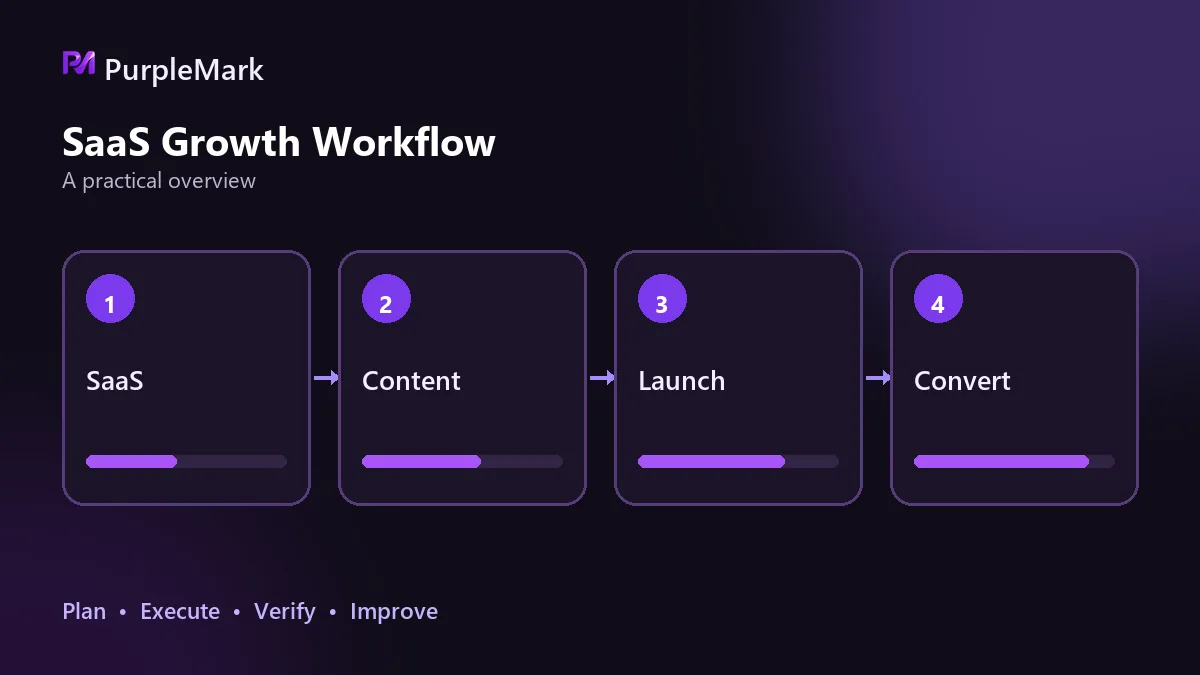
The sequence can be divided into four stages: first build the keyword and content-map foundation, then layer content around the decision journey, next distribute and repurpose it, and finally use data and sales feedback to work backward into topic selection.
High-traffic articles have limited impact on SaaS conversion
High-volume keywords usually reflect broad intent. They can bring readers, but most are only passing through: they are not decision-makers and may have no budget. People who actually sign up for trials are more likely to search for scenario-specific questions such as the difference between two solutions, whether a tool integrates with an existing system, or how long migration takes. Those queries have lower volume but much higher conversion potential.
Another problem is content that is disconnected from the product. An educational article may explain a concept and stop there, leaving readers convinced but unsure what to do next. SaaS content should always provide a next step, such as a trial entry point, template, comparison table, or cost estimate.
Build the keyword and content-map foundation first
At the beginning, do not rush to spread across channels. Decide two things first.
First, segment the audience. A SaaS company going overseas naturally has more than one reader group: cross-border practitioners in China often use Chinese search, WeChat public accounts, and Zhihu; local users abroad rely on the company blog, LinkedIn, and YouTube; and another group lives overseas but still consumes Chinese content, mainly through Google and social media. Their language, channels, and concerns differ, so one content set cannot serve all three well.
Second, build a keyword and content map. Organize product-related questions by search intent into informational, comparison, and transactional layers, then map each layer to article types. Once that framework is set, topic planning for the next few months becomes much less arbitrary.
Layer content into three parts of the decision journey
Once the foundation is in place, create three content layers, each with a different job.
The problem-awareness layer is for people who do not yet know this type of solution exists. Cover industry patterns, common pitfalls, and cost structures so they recognize the problem. This layer usually attracts the most traffic and converts the slowest; its purpose is broad search coverage.
The solution-comparison layer is for people already evaluating options. Explain differences between solutions, suitable use cases, migration costs, and even situations where your own product is not the right choice. SaaS purchasing decisions usually involve more than one person, and users, technical leads, and budget owners care about different things, so this content needs to address each role.
The brand-validation layer is for people close to buying but still hesitant. Publish customer cases, implementation processes, pricing logic, after-sales support, and data compliance information. At this point users often search directly for the brand name, and content quality strongly affects whether they trust the company.
How much content to allocate to each layer depends on the product stage. Early on, it can make sense to focus more on the middle and lower layers, then add upper-funnel coverage after traffic becomes stable.
Distribution and repurposing after publication
The search value of an official blog takes time to accumulate, so it is unrealistic to expect large short-term traffic from it.
The method is straightforward: break one long article into several short visual posts for social reach, turn operational sections into video, and republish the same article on third-party content platforms to borrow some platform authority and help a new site get indexed faster. LinkedIn reaches B2B decision-makers and works well for industry observations and methodology; YouTube search is often underestimated, and product demos and tutorials can keep generating traffic for a long time.
When multiple accounts in different languages and on different platforms run at the same time, environment isolation directly affects account survival. Tools such as PurpleMark can bind each account to an independent environment and an exit location that matches the target region, reducing the risk of platforms linking accounts because their environments overlap.
Use data and sales feedback to work backward into topics
After content has been running for a while, topic selection should no longer depend on inspiration. Work backward from two sources instead.
Look at the data: which blog posts generate the most registrations, which attract large traffic but high bounce rates, which uncovered questions appear in search-query reports, and where users stop reading on the page.
Look at sales: what successful customers asked before signing, which competitors lost deals went to, and why. The repeated questions sales teams answer every day are a ready-made topic list because they have already been validated as real obstacles.
Combine the two sources and topic planning shifts from guessing to filling gaps.
Conclusion
Content marketing for SaaS global expansion is a slow process. Returns come from three things working together: a solid keyword foundation, content that covers every stage of the decision journey, and continued distribution and adjustment after publishing. Most teams will be disappointed if they expect a few viral articles to lift registrations on their own.


