
YouTube कम गुणवत्ता वाले और दोहराव वाले AI-जनित कंटेंट पर कार्रवाई कड़ी कर रहा है, और टेम्पलेट व ऑटोमेटेड पाइपलाइन पर बने कई चैनल हटाए गए हैं। खाते की सेहत केवल views पर निर्भर नहीं करती; मौलिक कंटेंट, वास्तविक सहभागिता और ट्रेस करने योग्य संचालन भी उतने ही महत्वपूर्ण हैं। यह गाइड जोखिम संकेतों और लंबे समय की अनुपालन-आधारित संचालन पद्धति को समझाता है।
पिछले दो वर्षों में YouTube ने “बड़े पैमाने पर बनाए गए” कम गुणवत्ता वाले कंटेंट और AI से स्वचालित रूप से तैयार किए गए कंटेंट के खिलाफ कार्रवाई स्पष्ट रूप से तेज कर दी है। टेम्पलेट और ऑटोमेटेड प्रोडक्शन लाइन पर निर्भर करके बड़ी मात्रा में वीडियो पोस्ट करने वाले कई चैनल हटाए या निलंबित किए गए हैं—इनमें लाखों subscribers वाले बड़े चैनल भी शामिल हैं। creators और operations teams के लिए बार-बार “फिर से चैनल क्यों बैन हुआ?” पूछने से अधिक उपयोगी यह है कि पहले समझें कि प्लेटफ़ॉर्म किन संकेतों का मूल्यांकन करता है, और फिर तय करें कि चैनल को स्थिर, दीर्घकालिक और नियमों के अनुरूप कैसे चलाना है।
YouTube वास्तव में किस चीज़ पर बैन लगा रहा है?
YouTube कई बार कह चुका है कि वह “mass-produced / AI slop” यानी बड़ी मात्रा में कम गुणवत्ता वाले या दोहराव वाले AI-generated content पर कार्रवाई करना चाहता है। उद्देश्य कम लागत वाली उत्पादन प्रक्रिया से बने “traffic machines” को फ़िल्टर करना और viewing experience को बेहतर करना है। इस प्रकार की कार्रवाई आम तौर पर दो श्रेणियों के signals से शुरू होती है:
Content signals
- अलग-अलग खाते बहुत मिलते-जुलते वीडियो अपलोड करते हैं और केवल title keywords या thumbnail text बदलते हैं;
- scripts पूरी तरह AI से बनते हैं और mechanical voiceovers बड़े पैमाने पर synthesize किए जाते हैं, जबकि watch time कम और viewer drop-off अधिक रहता है;
- titles, descriptions, chapters और transcripts अत्यधिक templated या एक-दूसरे की पुनरावृत्ति होते हैं, जिससे “mass-produced / low originality” का आकलन हो सकता है;
- वही edited footage, clips, audio, music या narration templates बार-बार reuse किए जाते हैं और repetitive content माने जाते हैं।
Behavior और login signals
- वही टीम non-isolated browser environments में कई accounts के बीच switch करती है, जिससे cookies और local storage mix होते हैं और accounts के बीच मजबूत संबंध detect हो सकते हैं;
- low-quality proxy pools के कारण कई accounts एक ही data-center IP range से login करते हैं और “abnormally concentrated logins” के रूप में flag हो सकते हैं;
- User-Agent, screen resolution, time zone, fonts और Canvas/WebGL जैसे fingerprints कई accounts पर बहुत समान होते हैं;
- बहुत से accounts कम समय में एक ही IP, ASN या proxy pool साझा करते हैं और घने, अत्यधिक समान login events बनाते हैं।
यह बात साफ होनी चाहिए कि प्लेटफ़ॉर्म किसी एक अकेली anomaly के कारण account को बैन नहीं करता। वह कई signals को जोड़कर यह आकलन करता है कि account “high risk” या “inauthentic” है या नहीं। इस logic को समझने से यह पता चलता है कि किन क्षेत्रों में सुधार आवश्यक है।
कौन-सी गतिविधियाँ ban risk बढ़ाती हैं?
- कई accounts लंबे समय तक एक ही IP या low-quality proxy pool इस्तेमाल करते हैं: उदाहरण के लिए, 24 घंटों में एक ही IP से कई accounts login करें या login location account की historical activity से मेल न खाए, तो समूह bulk operation या compromised accounts जैसा दिखाई दे सकता है;
- Fingerprint configurations बहुत अधिक समान हों: कई accounts के browser fingerprints identical या लगभग identical हों तो वे एक ही source के devices के रूप में cluster किए जा सकते हैं;
- बहुत अधिक templated या AI content एक साथ बड़ी मात्रा में upload किया जाए: कम समय में कई accounts पर structure और content में बहुत समान videos—scripts का बड़ा overlap, समान BGM/voiceover, समान thumbnail templates—अपलोड हों और watch time व retention भी कम हो, तो repetitive content और low-originality assessment आसानी से trigger हो सकता है;
- Browser data साझा किया जाए: एक ही browser/session में अलग-अलग accounts switch करने से Cookie, LocalStorage और अन्य data mix हो सकते हैं, जो association analysis में महत्वपूर्ण evidence बनते हैं;
- Geographic location बार-बार और बिना तार्किक कारण बदलती हो: login locations और time zones कम समय में कई बार बदलें और channel के market positioning से मेल न खाएं;
- Traceable operational audit न हो: कई लोग credentials साझा करें, स्पष्ट owner दर्ज न हो, और समस्या आने पर original upload files, editing records या login snapshots उपलब्ध न हों, तो appeal सफल होने की संभावना काफी घट सकती है।
एक “स्वस्थ” channel कैसा दिखता है?
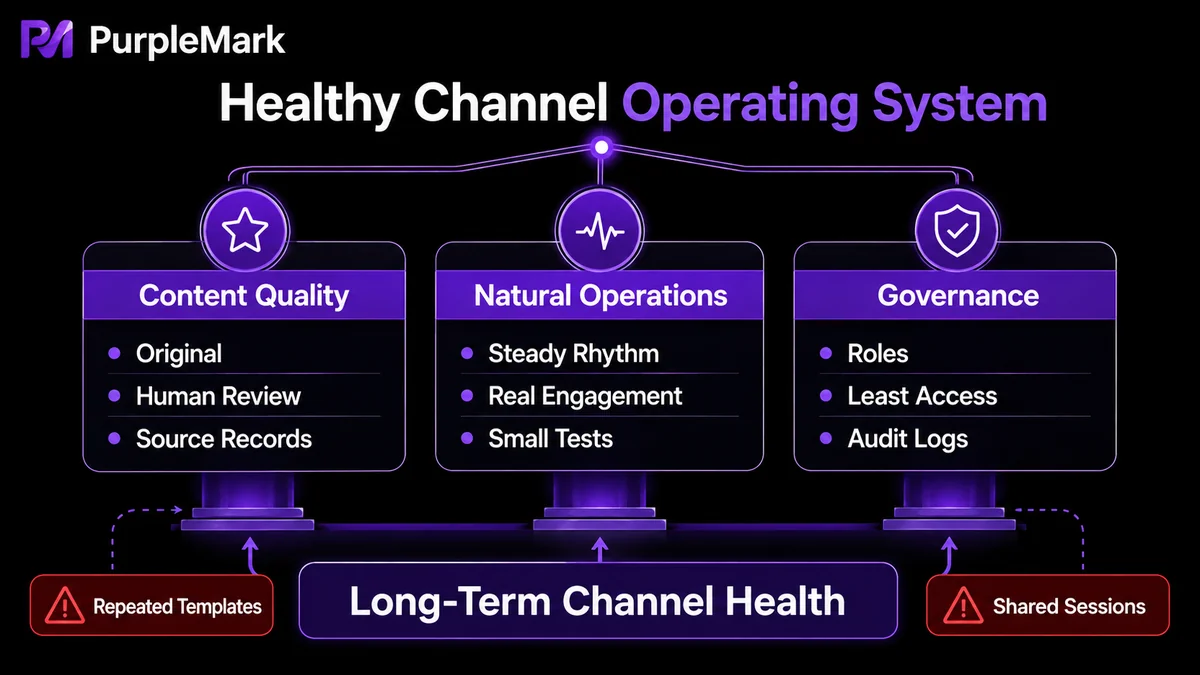
स्वस्थ account की पहचान केवल subscribers या views से नहीं होती। Content value, natural behavior और sustainable operations—तीनों एक साथ मजबूत होने चाहिए और इनके बीच स्थिर सकारात्मक संबंध होना चाहिए:
- Content सबसे पहले: हर video स्पष्ट value दे—जानकारी, समाधान, अलग दृष्टिकोण या भावनात्मक जुड़ाव—सिर्फ keyword stuffing या template filler न हो। AI को “draft + material research” tool की तरह इस्तेमाल किया जा सकता है, लेकिन scripts को मानव द्वारा fact-check करना, data या examples जोड़ना, और material sources व permissions के records रखना आवश्यक है;
- Stable publishing rhythm और real interaction: comments का जवाब देना, livestream करना और community संभालना जैसी वास्तविक और पहचानने योग्य human interaction यह दिखाने का महत्वपूर्ण प्रमाण है कि account active और trustworthy है। replies विविध और समयानुकूल हों, एक ही script को mechanical तरीके से दोहराया न जाए;
- Channel और branding: channel को short-term traffic tool नहीं, बल्कि brand का long-term asset समझें। multi-account portfolio में हर account की भूमिका—test account, main brand account, regional account—स्पष्ट रखें और accounts के संबंध explainable बनाए रखें।
Channel को “लंबे समय तक active” कैसे रखें?
1. Positioning और KPI स्पष्ट करें Publishing frequency, subscriber growth, average watch time और monetization goals जैसे short-, medium- और long-term KPI तय करें और weekly reports में नियमित समीक्षा करें। अस्पष्ट positioning अक्सर style में बार-बार बदलाव कराती है, जिससे subscribers भ्रमित होते हैं और platform misclassification का जोखिम बढ़ सकता है।
2. Publishing plan बनाएं और स्थिरता से लागू करें Spreadsheet में weekly topics, script/editing/thumbnail के जिम्मेदार व्यक्ति, publishing dates और upload account लिखें। नए content को पहले छोटे account पर test करें, 24–48 घंटे observe करें, और कोई समस्या न हो तो main account पर publish या promote करें। सभी accounts पर एक ही प्रकार का video एक साथ पोस्ट करने से बचें। Batched और staggered publishing अपनाएं ताकि “templated distribution” के रूप में classification का जोखिम घटे।
3. Content quality बनाए रखें और templating से बचें Pure AI batch production सबसे बड़े risk factors में से एक है। विषय एक ही हो तो भी narration style, thumbnail text और scene materials अलग रखें ताकि originality और localized information बनी रहे।
4. Real interaction की आदत बनाएं हर दिन 15–30 मिनट नए comments का जवाब देने में लगाएं और constructive questions को प्राथमिकता दें। महीने में एक बार livestream या community-post interaction करें और अच्छे comments को बाद के Q&A/FAQ content में बदलें। Interaction विविध हो और समय में स्वाभाविक अंतर के साथ हो।
5. Small batch में test करें, फिर धीरे-धीरे scale करें Unverified template को तुरंत बड़े पैमाने पर copy न करें। पहले 3–5 accounts पर एक ही creative idea का multivariable testing करें। समस्या न होने की पुष्टि के बाद 10–15 accounts तक expand करें। हर चरण में differences का record रखें और स्पष्ट “scale-up threshold” तय करें।
6. Role division और audit के साथ scale करें Scaling केवल अधिक tools जोड़ने से नहीं, बल्कि स्पष्ट जिम्मेदारियों और traceability से होती है। content planning, review और community operations के roles तय करें, least-privilege principle अपनाएं, और proxy changes, fingerprint adjustments, account credential changes जैसे critical operations का log रखें। समस्या होने पर traceable logs internal investigation में मदद करते हैं और appeal के समय useful evidence भी बन सकते हैं।
Compliance को वास्तविक operations में लागू करें
ऊपर की methods को लगातार लागू करने के लिए—विशेष रूप से जब अलग-अलग markets या brands के कई वास्तविक accounts को एक साथ manage किया जा रहा हो—“हर account के लिए एक independent, clean और traceable operating environment” लगभग baseline requirement है। PurpleMark का web workspace इस तरह की सहायता देता है:
- हर business account के लिए एक-दूसरे से स्वतंत्र browser environments बनाएं और Cookie, local storage, extensions व system parameters को isolate करें, ताकि sessions/data mix होने से association न बने;
- हर environment अपना proxy और network egress bind कर सकता है, market/region के अनुसार IP assign कर सकता है और कई accounts के एक ही network range में concentrate होने की समस्या कम कर सकता है;
- Groups, members और permissions के जरिए हर role केवल अपने assigned accounts संभाले, जिससे shared environments या credentials से बचा जा सके;
- Operation logs और team audits सुरक्षित रखें, ताकि critical operations traceable हों—यह internal management के साथ आवश्यकता पड़ने पर appeal-supporting material भी बन सकता है।
यह जोर देना जरूरी है कि environment isolation और tools compliant operations के लिए हैं, जहां वास्तव में अलग markets, brands, clients या business entities के accounts स्वतंत्र रूप से बनाए और चलाए जाते हैं। Technology का इस्तेमाल fake accounts बनाने या low-quality content पर platform governance से बचने के लिए न करें—यह sustainable नहीं है और platform rules के विरुद्ध है। जो channels “लंबे समय तक active” रहते हैं, वे हमेशा original content + real interaction + disciplined operations पर आधारित होते हैं।
अक्सर पूछे जाने वाले प्रश्न
अगर account को AI content समझकर गलती से restrict कर दिया जाए तो सबसे पहले क्या करें? पहले evidence सुरक्षित रखें: original video materials, scripts, upload records, editing records और operation logs। फिर YouTube restriction notice page पर दिए गए process के अनुसार appeal submit करें और इन evidences को attach करें। यदि third-party tools इस्तेमाल किए गए थे, तो audit logs और environment snapshots export करना troubleshooting को तेज कर सकता है।
हम bots नहीं चला रहे, फिर भी “Sign in to confirm you're not a bot” क्यों दिखता है? आमतौर पर इसका कारण login या behavior में atypical machine characteristics या IP patterns होता है—जैसे कम समय में बहुत IP switch करना, inconsistent या repeated browser fingerprints, या abnormal request frequency। Recent login IPs, proxies और device differences जांचें और team login practices को standardize करें ताकि ऐसी prompts कम हों।
Multi-account operations के लिए fingerprint browser इस्तेमाल करना नियमों का उल्लंघन है? Tool अपने आप में neutral है; असली मुद्दा उसका उपयोग और operation का compliant होना है। यदि इसका उपयोग अलग markets/brands के accounts manage करने, sessions isolate करने, हर account के लिए independent owner तय करने और platform rules का पालन करने के लिए हो, तो आमतौर पर यह compliant operational use में आता है। Audit logs और team permission controls वाली solutions को प्राथमिकता दें।
Account ban होने के बाद audit logs appeal evidence बन सकते हैं? हाँ। Complete operational audit—किसने, कब, कहाँ, क्या किया—के साथ original materials और authorization proof देने से appeal काफी मजबूत हो सकती है। अंतिम निर्णय फिर भी platform का ही होगा।


