
Income on Kick comes from four sources: subscriptions, tips, sponsorships, and off-platform clips. This article explains how each one pays out, the thresholds for unlocking it, and where the volatility comes from. It also covers easily overlooked details such as subscription churn and chargebacks, and gives new streamers a realistic picture of their first few months.
Streaming on Kick costs nothing, but for most people the first income they can actually withdraw takes months to arrive. The platform's headline selling point is that its subscription split leans clearly toward streamers, well above the standard rate on Twitch, but that does not mean money starts the moment you go live, and it does not mean income will find you on its own.
Look at the four income categories separately first, then talk about expectations.
Subscriptions are the steadiest piece
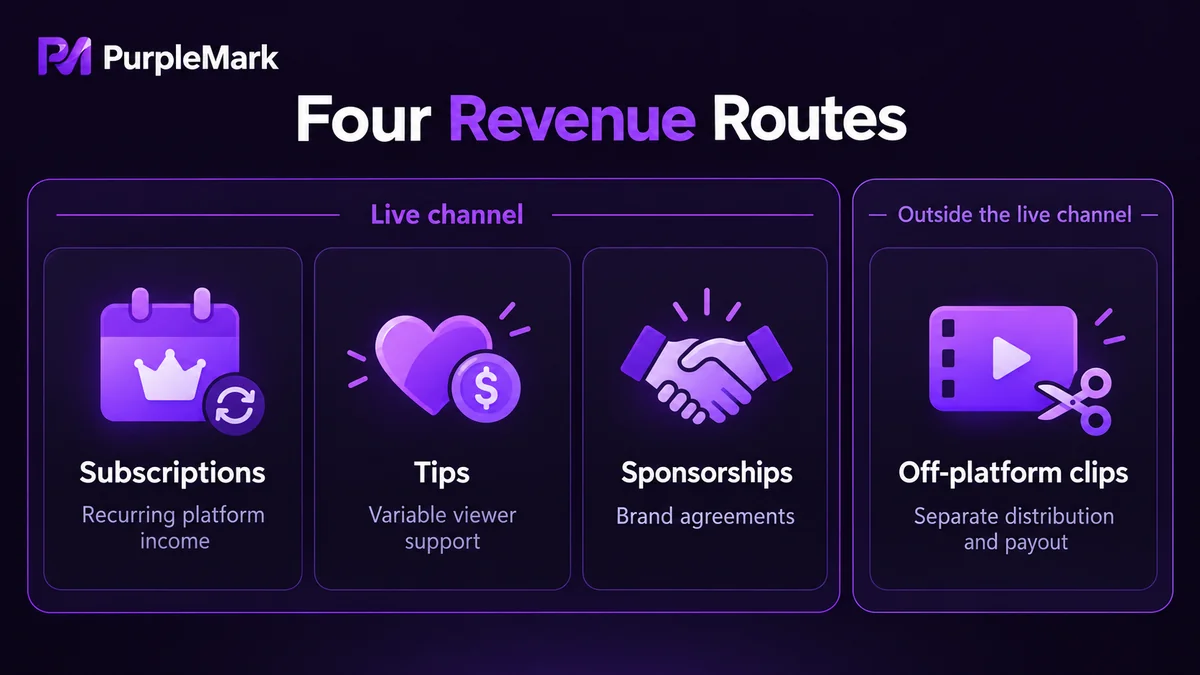
Subscriptions are the only predictable revenue: viewers pay a set amount each month, the platform takes its own share, and the rest is settled to the streamer monthly. Because the split favors streamers, the same number of subscriptions brings in more on Kick than on most platforms. The prerequisite is that the account first meets the activation conditions set by the platform, such as follower count, streaming hours, and activity level; these thresholds get adjusted, so what the creator dashboard states is what counts.
The ceiling on subscription income depends on how many viewers are in the habit of paying. Paid rates in most channels are low, and reaching single digits is already considered good, so the upper limit of subscription income is essentially stable audience size multiplied by paid rate. There is no shortcut.
One more thing that is often overlooked is churn. Viewers may cancel because they stop watching for a while, or a charge may fail because of a card change or insufficient balance. Every month you have to replace the churned portion to keep income flat, and people who only watch new subscriptions come in usually take home less than the figures on paper suggest.
Tips bring money fast, but they do not stick
Tips are one-off payments from viewers. They arrive quickly: on a good night, a single evening can match a month of subscriptions. The downside is that they swing wildly, platforms usually take a cut, and withdrawals come with minimum amounts and cycle limits.
There is another layer that is easy to miss: tips run through payment channels, so they involve refunds and chargebacks. If a viewer later disputes the charge with their bank, the platform will generally claw back the corresponding amount and may even affect the account's status. Treating tips as part of your income is fine; treating them as a steady paycheck will trip you up.
Sponsorships and advertising, where the real gap opens up
A sponsorship is a brand paying a fixed fee per post or per month. The price does not depend on your total viewership; it depends on your concurrent viewership for a single session and the category you are in. Brands in gaming peripherals, snacks, and drinks are constantly looking for slots among small and mid-sized streamers, and a stable channel with a few thousand viewers can already negotiate deals.
Ad revenue sharing on Kick is not as systematized as on video platforms, so many people turn off-platform: cutting stream segments into short videos and posting them on other platforms to top up income with that platform's playback share, or licensing footage and letting someone else run the highlight clips. This part is accounted for separately from streaming itself, so do not fold it into the same expectation.
The mindset new streamers should have
Hourly-rate claims circulating online should be discounted. Those numbers usually describe streamers who already stream consistently and have an established audience, or they are the result of spreading sponsorship and off-platform income across everything. In the first three months starting from zero, the more common situation is only sporadic tips, with income failing to cover equipment and internet costs.
What actually determines income is your stable concurrent viewer count, not your follower count. A channel that reliably has a few dozen people watching at the same time each night often monetizes better than an account with a high follower count but nobody showing up when it goes live.
Details in settlement and withdrawals
Most platforms settle monthly and only pay out once you reach the minimum withdrawal amount; before your first withdrawal you have to complete tax information, and cross-border receiving also involves choosing a payment method and losing value to exchange rates. You do not need to study these processes too early, but you should understand them before your first withdrawal, otherwise the money sits stuck in the account.
Keep good records of commission and tip transactions; once income reaches a certain scale it needs to be declared.
Do not rush to spread yourself thin
A common beginner mistake is going live on four or five platforms at once from day one, and ending up with all of them quiet. The more practical approach is to first get comfortable with one platform in one fixed time slot, so viewers know when to come, and only then consider multi-platform simulcasting. Before simulcasting, read each platform's exclusivity terms carefully; some contracts do not allow streaming elsewhere at the same time during the contract period.
Streaming monetization ultimately comes down to arithmetic: audience size, paid rate, and price per unit, the three multiplied together. Of the three, the easiest to improve is the viewer retention that comes from streaming consistently; the other two take time and content to grind out slowly.


