
Amazon generally allows one seller account per seller unless there is a legitimate business need. This article explains the policy boundaries, key signals used to link accounts, possible consequences, and the conditions for compliant multi-store operations.
Before discussing technical setups for running multiple stores, one point must be clear: technology can change whether accounts look like they use the same device, but it cannot change whether they belong to the same entity or sell the same products.
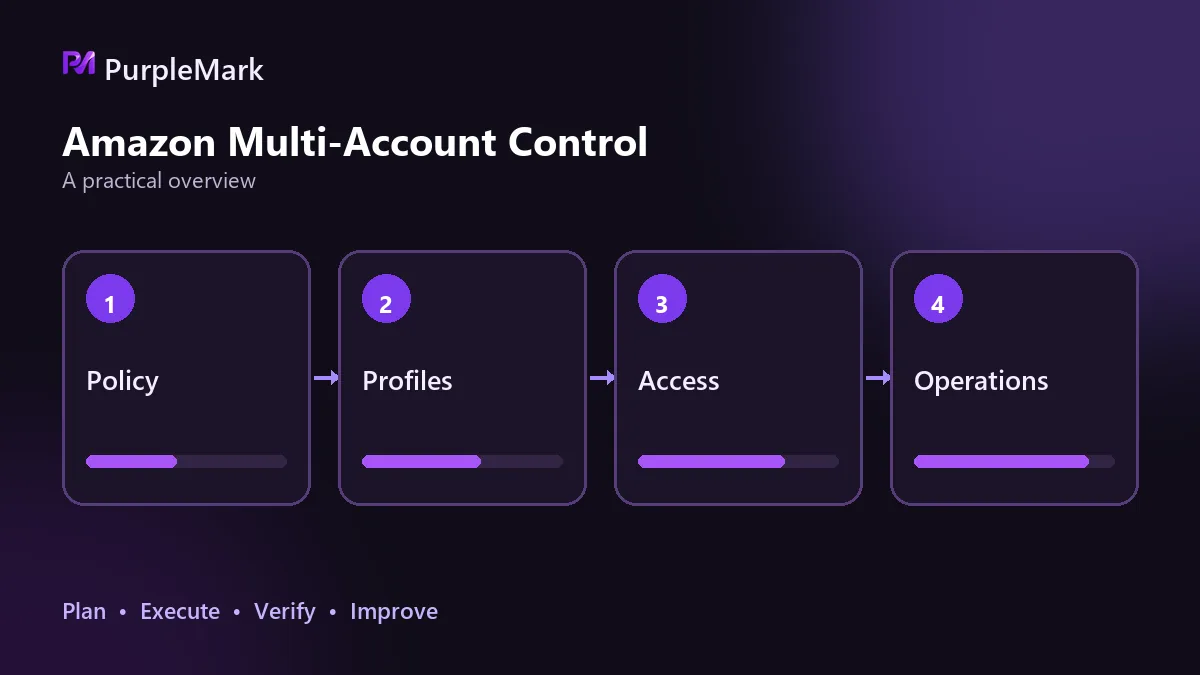
How far the policy allows multiple stores
Amazon’s basic position is that a seller should have only one store account unless there is a legitimate business need. Common examples include operating several brands with a separate store for each brand, selling products for two completely different companies, or joining certain platform programs that require separate accounts.
Even when the business reason is valid, each store must truly operate independently: use different email addresses and separate identity information, and do not reuse one set of details across several stores. In addition, an existing store should remain in good standing before a new one is requested. If the current account has violations or performance issues, the application may be rejected.
If multiple stores are opened without platform approval, enforcement may apply to all related accounts rather than only one store.
What dimensions are used to link accounts
The platform mainly looks for links between accounts in four areas.
IP address is the most direct layer. When several accounts log in through the same network exit, whether that exit is dynamic or static, it can be a common linking signal. Browser fingerprinting is the second layer: if cookies, plugins, fonts, operating-system versions, time zones, and language settings are highly similar across accounts, they may be attributed to the same operator. Registration information is the third layer. Repeated or highly similar names, email addresses, phone numbers, credit cards, or payout accounts can also trigger a linkage judgment. The fourth layer is operating behavior: similar search patterns, add-to-cart actions, and login times across accounts can provide additional clues.
These four areas work together. Cleaning up one layer while leaving traces in the others does not make the setup safe.
The cost after accounts are linked
Once accounts are judged to be related, enforcement usually covers all associated accounts rather than only one. Selling privileges may be restricted, and serious cases can lead to store suspension. After a store is suspended, account funds are often held while the platform reviews the case. During that period, inventory may still be in transit while payouts are unavailable, making the financial impact harder to absorb than the suspension itself.
That is why the risk structure of multiple stores is unusual: one account can create problems for the others, while revenue is separate but the consequences are shared.
What compliant operations require
When multiple stores are allowed by policy, several operational details still need to be handled properly.
Keep environments and network exits separate. Give each store its own browser environment so fingerprints, cookies, and local storage do not overlap, and bind each store to its own network exit rather than reusing an address. Using PurpleMark to create a separate, fixed login environment for each store and bind the appropriate exit is a common way to make this separation part of daily operations.
Keep registration information clearly separated. Email addresses, phone numbers, payout accounts, and identity details should not cross between stores or follow obviously similar patterns.
Differentiate operating rhythms. Listing times, login periods, and customer-service response speeds should not be synchronized. Several accounts doing the same thing in the same minute can itself be a signal.
One final point is easy to overlook: after isolation is established, do not change it frequently. Changing addresses today and parameters tomorrow can make an account appear to switch devices repeatedly during normal use, which may look more suspicious than a slightly unusual but stable environment. The goal is for each store to appear to be operated consistently by different people from different locations, not to make the environment as chaotic as possible.


