
For brands expanding overseas, working with TikTok influencers is hard to ignore. This guide covers the full process, from defining your target audience and finding creators through keywords, competitors, and official marketplaces to evaluating influence and sending partnership outreach, so you can launch TikTok influencer marketing efficiently.
Marketing on TikTok while ignoring influencer partnerships means missing a major opportunity. Fashion creator Sophia used a single 30-second video to show a dress she bought from an emerging brand, quickly attracting millions of likes and comments and multiplying the brand's sales several times over. This kind of influence can no longer be ignored, which is why brands expanding internationally are competing to work with TikTok influencers. So how do you find the right TikTok influencers and build partnerships with them?
What Is TikTok Influencer Marketing?
TikTok influencer marketing is the practice of a business promoting products or services by working with content creators who have sizable TikTok followings and can influence their followers' purchasing decisions. It uses creators' reach and creative content to deliver brand messages to a target audience.
Common strategies include:
- Content collaboration: Plan and produce promotional content with influencers, such as challenges, tutorials, and product reviews, to attract attention and drive engagement.
- Product placement: Have influencers use products in natural settings or recommend them directly in videos, creating subtle brand exposure.
- Participatory marketing: Use challenges, giveaways, and similar activities to encourage followers to join brand campaigns, increasing reach and participation.
- Long-term collaboration: Build ongoing relationships with influencers so they become brand ambassadors or long-term partners who can consistently influence the audience.
Because of TikTok's content distribution system, even new brands can gain attention quickly through influencer videos. When creators share genuine product experiences, their recommendations can feel more credible, making followers more likely to be influenced and purchase. This can improve brand visibility while increasing social sharing and user engagement.
How Do You Find the Right TikTok Influencers and Build Partnerships?
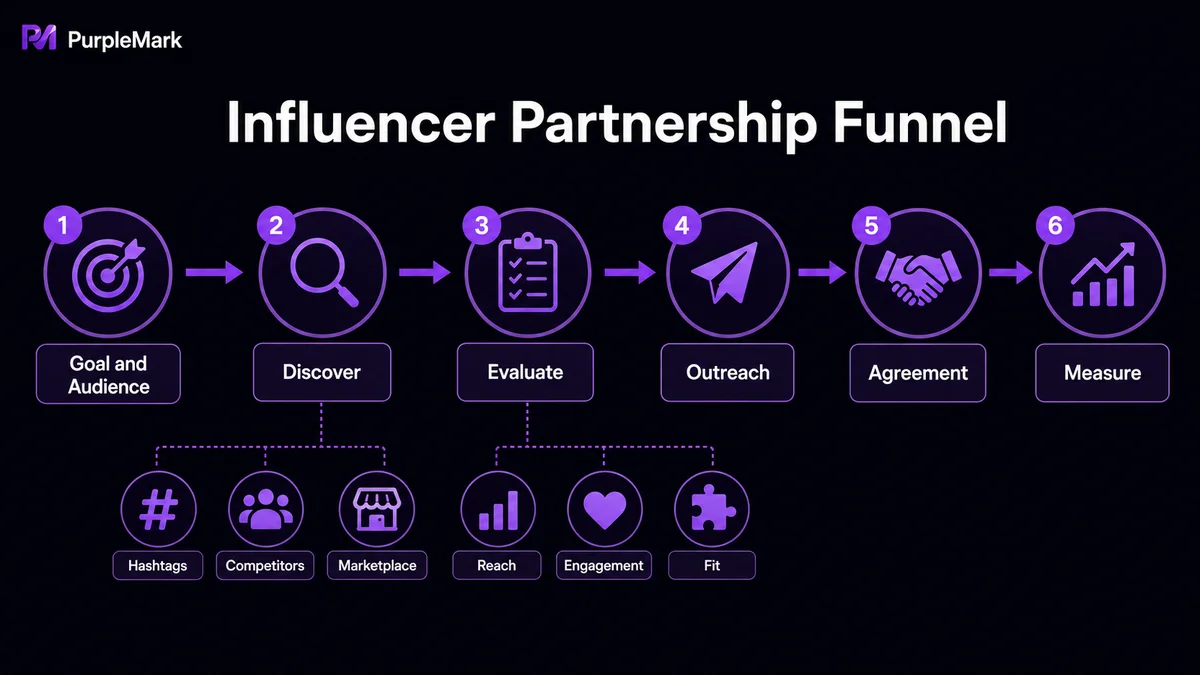
Step 1: Define Your Goals and Target Audience
Before launching influencer marketing, clearly define the campaign goals. Consider: What stage is the brand in—market expansion, a new product launch, or strengthening loyalty? Which metrics do you want influencer marketing to improve—website traffic, social engagement, or sales? How much budget can you allocate to influencer marketing? The budget directly affects the size and number of creators you can work with.
To define your target audience, analyze both existing and potential customers. Among TikTok users worldwide, women account for about 45.7% and men about 54.3%. Choose creators according to the characteristics of your product, and profile your audience across three dimensions: gender and age, geographic location, and interests and behavior.
Example: A women's fashion brand should look for influencers with large young female followings and influence in fashion, beauty, or lifestyle. If the target is the U.S. market, prioritize creators whose main audience is in the United States so the content is geographically relevant.
Step 2: Find Influencers Who Match Your Target Market
1. Search by industry keywords or hashtags. Use TikTok search directly and enter industry keywords or hashtags to find active creators. For wireless earbuds, for example, search #WirelessEarbuds or #EarbudsReview; for unboxing and review creators, try #Unboxing, #ProductReview, #HowToUse, and similar tags.
2. Search through competitors. Observe which TikTok influencers your competitors work with and learn from successful examples. These creators have already built influence in the relevant field, their followers may be interested in similar products, and their past campaigns can reveal what kinds of promotions resonate most with viewers.
3. Expand through related creators. Open the profile of a highly relevant influencer. TikTok will recommend related accounts, often with similar audiences or content styles. Review those recommended accounts for content style, audience interaction, and quality to judge whether they fit your partnership needs.
4. Use TikTok Creator Marketplace. This official TikTok tool lets you filter creators by region, topic category, audience gender and age, and other criteria. You can view follower counts, engagement rates, audience statistics, and past collaboration cases, and send partnership invitations directly on the platform.
5. Use third-party tools. Tools such as Upfluence analyze influencers' social media data and provide information about reach, audience characteristics, and content performance. You can set search conditions such as keywords, audience age ranges, and regions, then filter the data list to find creators who best match your product positioning.
Step 3: Analyze an Influencer's Impact
After identifying potential influencers, evaluate the following factors to improve the chances of an effective partnership:
- Follower count: The most direct reach indicator. Accounts with more followers can provide a baseline level of exposure.
- Engagement rate: Likes, comments, and shares show how frequently and deeply followers interact. Videos that consistently receive strong engagement suggest the audience is not only large but also highly involved, which supports better distribution.
- Quality and creativity: Well-produced videos show that a creator is willing to invest in high-quality content, while creative ideas can make a brand easier to remember.
Step 4: Make Contact and Negotiate the Partnership
Once you have selected target influencers, contact them to discuss the partnership format, content requirements, timeline, budget, and payment terms.
Ways to get in touch: You can use TikTok direct messages if the creator has DMs enabled. Many influencers list a business email in their profile or other social accounts, which is generally the most formal channel for international communication. You can also contact them through other active accounts on Instagram, X, YouTube, and similar platforms, or approach the management team or agency representing a top creator.
A strong collaboration email matters. It usually includes:
- Introduce yourself: Briefly explain your role and responsibilities to establish a professional identity.
- Show familiarity and explain the fit: Share what you appreciate about the creator's content, audience, and position in the niche, and explain why their style and followers match your brand.
- Present a specific proposal: State what you want the influencer to do—the number of videos, format, content direction, length, and other requirements—so they can evaluate the request clearly.
- Ask for past collaboration data: Request view counts, engagement rates, conversions, and other results from previous campaigns to support performance and investment decisions.
- Discuss budget and rates: Be transparent about your budget or ask for their rates. Providing a reasonable range can make the conversation more efficient.
How Can Marketing Teams Efficiently Manage Multiple Influencer Partnerships?
When a brand is running collaborations with multiple influencers across several markets at the same time, the team often needs to manage several social media accounts to monitor progress, publish related content, and track performance. Repeatedly logging in through a normal browser is cumbersome and can also mix cookies and login sessions across different accounts.
A more controlled approach is to assign a separate, fixed browser environment to each official business line or brand account. Brand-owned accounts and client accounts operated by agencies stay in their own environments, keeping sessions isolated and allowing fast switching without repeated logouts and logins. PurpleMark provides this type of environment management capability: in its web workspace, you can centrally create and manage browser environments, configure proxies, cookies, and browser fingerprint parameters for different business accounts, and organize operations through grouping, sharing, transfer, member permissions, activity logs, and window synchronization. For workflows that require scheduled posting or standardized follow-up, RPA can also reduce repetitive manual work.
Compliance note: This refers only to brands and agencies compliantly operating brand accounts and client accounts that they genuinely own or are authorized to manage for coordination, publishing, and performance tracking. It does not involve mass-creating fake accounts or bypassing platform rules. When working with influencers, also follow local advertising and commercial disclosure requirements.
Frequently Asked Questions
What are common ways to work with TikTok influencers? Common models include product placement, sponsored content, product reviews, event or challenge sponsorships, long-term brand ambassadorships, discount codes, and affiliate marketing, where influencers share a discount code and receive a commission when it is used.
How are collaboration fees calculated, and how should you set a budget? Fees vary by influence, engagement rate, and scope. Some creators charge per video or campaign, while others price based on exposure metrics such as CPM or CPC. Set the budget based on the overall marketing budget and expected ROI, and make sure expectations and terms are clearly agreed with the partner.
What does a typical influencer marketing collaboration process look like? A common process is: define marketing goals → select influencers who fit the target audience and brand image → contact the influencer or their team → draft and sign a collaboration agreement → jointly plan content and publishing schedules → execute and monitor the campaign → collect and analyze data to evaluate results → follow up and optimize the partnership.


